

The standard "ASTM F564-17 Standard specification and test methods for metallic bone staples" developed by the American Society for Testing and Materials (ASTM) describes test methods to determine the design and mechanical function characterization of metallic staples used in internal fixation of the musculoskeletal system. It is not the purpose of this standard to define or specify specific designs for metallic bone staples.
This standard includes the following four test methods to measure the mechanical properties of metallic bone staples:
These standard-compliant staples must be completed and identified in accordance with “ASTM F86-21 Standard Practice for Surface Preparation and Marking of Metallic Surgical Implants”.
Punch produced in accordance with “ASTM F75-23 Standard Specification for Cobalt-28 Chromium-6 Molybdenum Alloy Castings and Casting Alloy for Surgical Implants” shall be inspected in accordance with “ASTM F601-18 Standard Practice for Fluorescent Penetrant Examination of Metallic Surgical Implants” or X-rayed in accordance with “ASTM F629-20 Standard Practice for Radiography of Cast Metallic Surgical Implants”.
Staples should be maintained and used in accordance with “ASTM F565-21 Standard Practice for the Care and Use of Orthopedic Implants and Instruments,” as appropriate.
To identify potential hazards resulting from interactions between the device and the MR environment and to label the device for safety in the MR environment, the “ASTM F2503-23 Standard practice for marking medical devices and other items for safety in the magnetic resonance environment” is considered.
Bone staples should be manufactured from a metallic material designed for surgical implant applications. Additionally, the materials should be biocompatible for the intended application. Materials should be selected based on the design requirements of the specific device.
The test method for constant amplitude flexural fatigue testing of metallic bone staples (Annex A1) specifies the procedures for performing constant amplitude fatigue testing of metallic staples used in internal fixation of the musculoskeletal system. This test method can be used when testing in air at ambient temperature or in an aqueous or physiological solution.
According to this test method, metallic bone staples are tested under bending loads until the specimen fails or a predetermined number of cycles are applied. Bending tests can be performed in one of two modes: pure, in-plane bending, or in-plane bending combined with tension (or compression). Tests using either of these methods can be performed at ambient conditions or in aqueous or physiological solutions (room temperature or 37 degrees).
This test method is used to determine the fatigue resistance of metallic bone staples when subjected to cyclic loading for a large number of cycles. This information can also be useful for comparing the effect of changes in staple material, geometry, surface condition, or placement under certain conditions. It is essential that uniform fatigue practices be established so that such baseline fatigue data are comparable, reproducible, and can be correlated across laboratories.
The results of fatigue tests are suitable for direct application to design only when the service conditions exactly parallel the test conditions. This test method may not be suitable for all bone staple applications. The user is cautioned to consider the suitability of the test method in relation to the materials tested and their potential applications.
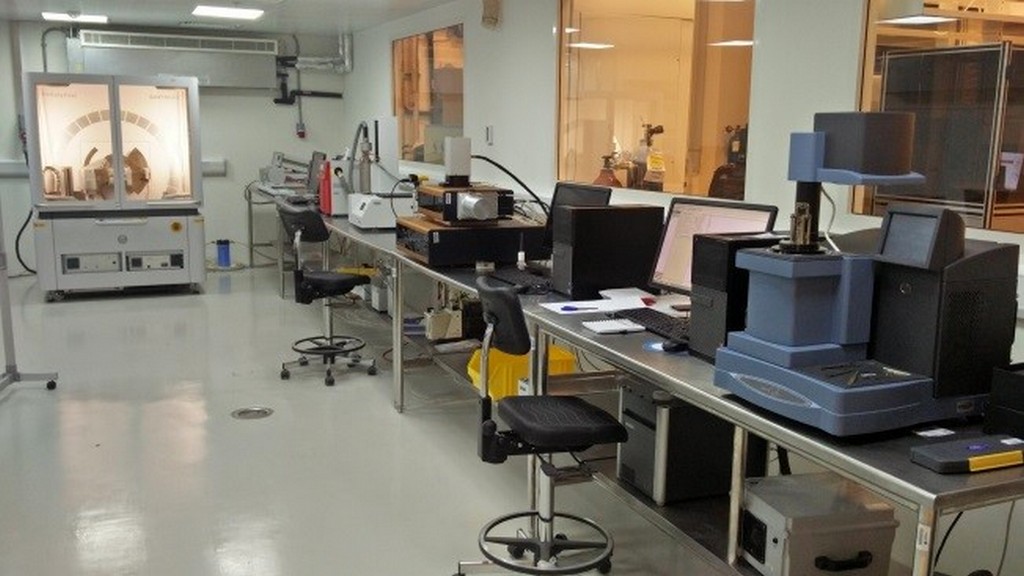
Among the numerous testing, measurement, analysis and evaluation studies that our organization has carried out for businesses in various sectors, it also provides testing services defined in the "ASTM F564-17 Standard specification and test methods for metallic bone staples" standard with its trained and expert staff and advanced technological equipment.
To get an appointment, to get more detailed information or to request an evaluation, you can ask us to fill in our form and reach you.

