

EN 622-5, a European standard, describes the requirements for dry process boards (MDF) as defined in another European standard, EN 316. Values described in this standard are related to product features, not characteristic values to be used in design calculations.
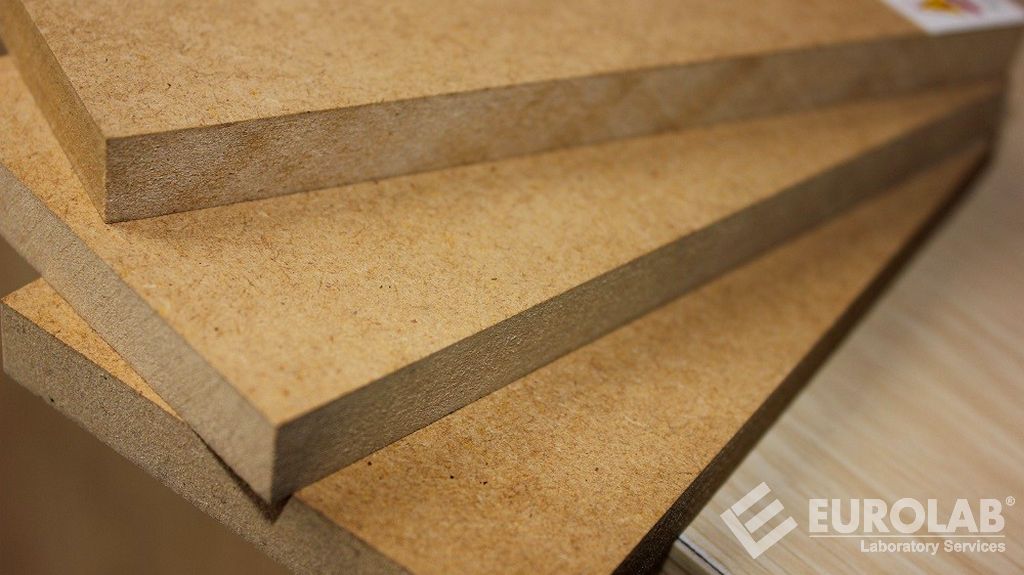
Medium density fiberboard, commonly known as MDF, is a carpentry material that competes in versatility with plywood and similar wood products. Often times MDF even surpasses all the others, because it is extremely easy to work with. Unlike real wood, MDF has no knots, grains or kinks, and its smooth surface cuts through the saw easily and leaves no splinters, burns or tears. MDF is an excellent material for lightweight carpentry projects such as shelving and flooring.
The main raw material of MDF is sawdust, which is the small wood chips produced as a by-product of industrial milling. After drying, these wood fibers are mixed with resin and wax and formed into panels. Under high heat and intense pressure, these panels are compacted and sanded.
MDF boards are marked with the aim of expressing a certain feature. For example, blue or red marking means that a board is fire retardant, while a green marking indicates that these boards are moisture resistant.
Working with MDF is the same as working with real wood. No new special skills or tools are required. In fact, MDF is probably much more flexible than cutting and detailing with solid lumber. Also, its surface accepts paint well.
In contrast, MDF, being heavier than plywood, requires care when handling because its corners are much more easily damaged and its surfaces scratched than plywood or real wood. It swells and cracks when exposed to excessive water. Another disadvantage is that it generates a lot of dust when working with MDF. Furthermore, MDF contains formaldehyde, a suspected carcinogen, posing a risk to workers' health.
Among the numerous test, measurement, analysis and evaluation studies it provides for businesses in various sectors, our organization also provides testing services based on the requirements determined for dry process boards (MDF) within the scope of EN 622-5 standard, with its trained and expert staff and advanced technological equipment.
To get an appointment, to get more detailed information or to request an evaluation, you can ask us to fill in our form and reach you.

