

The ASTM F3458-21 standard specification for the marketing, packaging, and labelling of adult magnet sets containing small, loose, powerful magnets (flux index ≥50 kG2 mm2) , published by the American Society for Testing and Materials (ASTM) , describes the marketing, packaging, labelling, and warning requirements for adult magnet sets containing small, powerful magnets. It aims to minimize the identified hazards for children and adolescents associated with ingestion of small, powerful magnets designed for adults, i.e., individuals aged 14 and over.
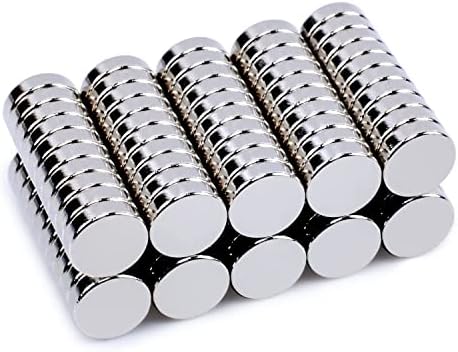
For the purposes of this standard, the following terms and definitions apply:
In the test method for determining small strength magnets, the individual magnets in a magnet set subject to this standard are tested for fit into a test cylinder of specified dimensions as given in the standard. Any magnet in a magnet set is considered a small magnet if it can fit completely into the cylinder in any orientation and without compression.
A direct current (DC) field gauss meter is used when measuring flux density, which has a resolution of 5 gauss and can determine the magnetic flux density of the field with an accuracy of 1,5 percent or better. The meter has an axial-type probe with the following specifications: an active field diameter of 0,76 mm plus/minus 0,13 mm and a distance from the active field to the probe tip of 0,38 mm plus/minus 0,13 mm.
The test method for determining label permanence is the test for warnings applied directly to the surface of a paper or zone-paper label attached to the product. A paper label (excluding sewn-on labels) is considered permanent if it cannot be removed without the aid of tools or solvents, if it breaks into pieces during removal, or if this action damages the surface to which it is attached.
A non-paper label (except sewn-on labels) is considered permanent if it cannot be removed without the aid of tools or solvents, or if this action would damage the surface to which it is attached.
A warning label attached with a seam is considered permanent if it does not separate when subjected to a tensile force of 2 N applied in any direction using a clamp surface of 67 cm diameter.
For adhesion testing of warnings applied directly to the surface of a permanent storage container, Test Method B as defined in the standard “ASTM D3359-23 Standard Test Methods for Adhesion Rating by Tape Testing” is applied (cross-cut tape test) and parallel cuts are eliminated. This test is performed once at each different location where the warnings are applied. If the print on the tested area is still legible and adherent after being subjected to this test, the warning statements are considered permanent.
The warning required by this standard for the product must consist of a safety alert symbol consisting of an exclamation mark inside a filled triangle and the signal word "Warning" in black letters on an orange background and must be located on a signal panel.
The safety alert symbol, when used with a signal word, must precede the signal word. The base of the safety alert symbol must be on the same horizontal line as the base of the letters of the signal word. The height of the safety alert symbol must be equal to or greater than the height of the signal word letters.
Among the numerous tests, measurements, analyses, and evaluations our organization provides for businesses in various sectors, we also offer testing services defined in the “ASTM F3458-21 Standard specification for the marketing, packaging, and labelling of adult magnet sets containing small, loose, strong magnets (flux index ≥50 kG2 mm2)” standard, utilizing a trained and expert staff and advanced technological equipment.
To get an appointment, to get more detailed information or to request an evaluation, you can ask us to fill in our form and reach you.

