

The ASTM D2596-20 standard, developed by the American Society for Testing and Materials (ASTM), describes a test method (four-ball method) for determining the load-bearing properties of lubricating greases. The following three values are determined by this test method:
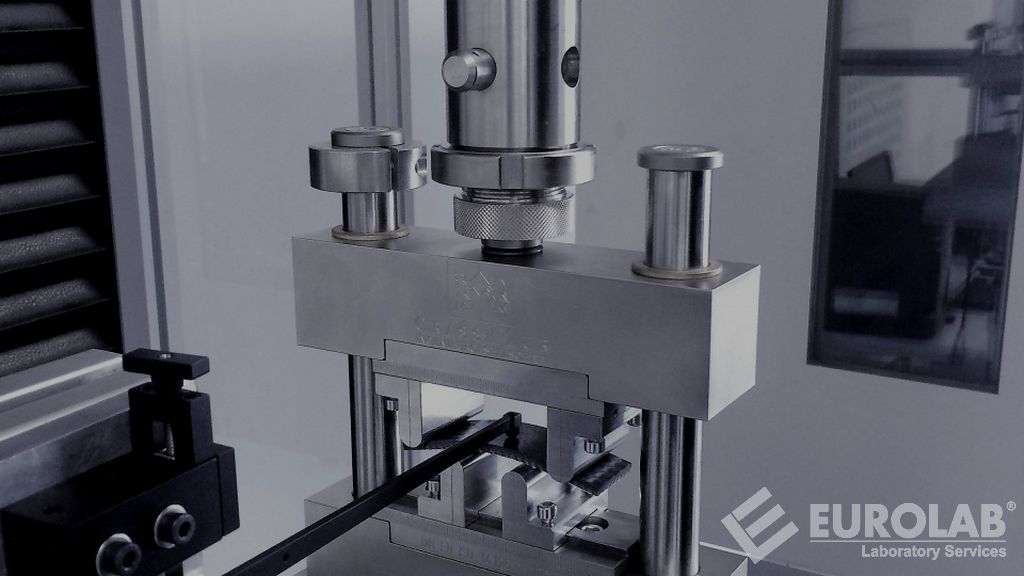
Used as a standard in the industry, this test method distinguishes between lubricating greases with low, medium and high extreme pressure characteristics. Results are not necessarily related to results from the service. Lubricating greases with silicone, halogenated silicone or a mixture of silicone fluid and petroleum oil as fluid components are not suitable for this test method.
The four-ball method is one of two lubricant testing procedures based on the same principle:
In these test methods, three steel balls are interlocked to form a cradle on which a fourth ball rotates on a vertical axis. The balls are immersed in the lubricant under investigation. The four-ball wear method is used to determine the anti-wear properties of lubricants operating under boundary lubrication conditions. The test is performed at a specific speed, temperature, and load. At the end of a specified test period, the average diameter of the wear marks on the bottom three balls is reported. The four-ball overpressure method is designed to evaluate performance at much higher unit loads. The load is increased in increments until the rotating ball engages and welds to the other balls. At the end of each increment, the average scar diameter is recorded. Generally, two values are reported: the load wear index (formerly Hertz load) and the weld point.
Among the numerous test, measurement, analysis and evaluation studies it provides for businesses in various sectors, our organization also provides standard testing services for the measurement of extreme pressure properties of lubricating grease within the scope of ASTM D2596-20 standard, with its trained and expert staff and advanced technological equipment.
To get an appointment, to get more detailed information or to request an evaluation, you can ask us to fill in our form and reach you.

