

The requirements for fixed point glazing systems are described in the standard "DIN 18008-3 Glazing in buildings - Design and construction rules - Part 3: Fixed point glazing" developed by the German Institute for Standardization (DIN).
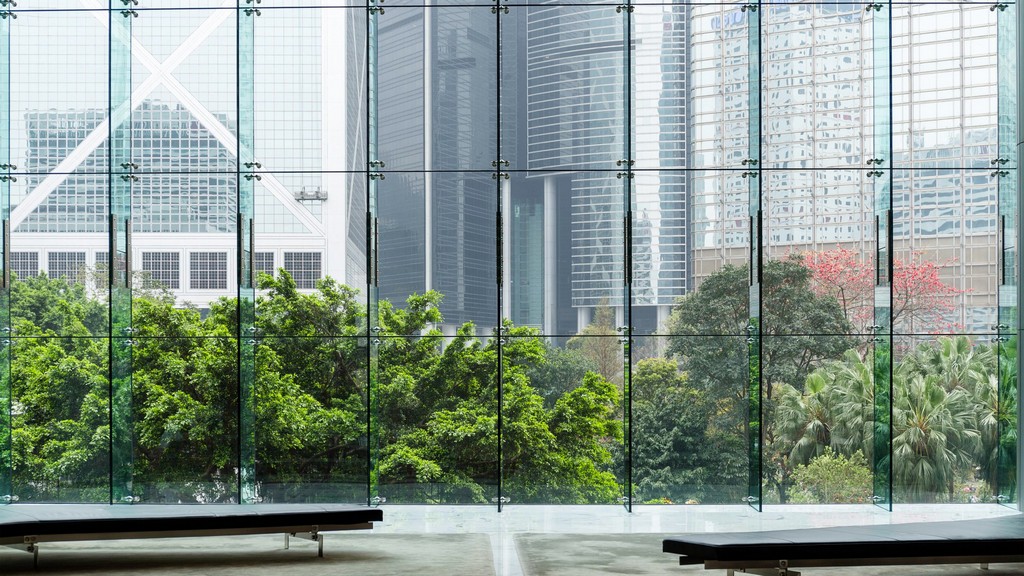
Fixed point glazing systems can be used to create a façade with almost transparent glass or a pitched roof with the appearance of flat glass. Fixed point glazing systems are manufactured from toughened glass sheets or toughened laminated glass.
The technical rules for the design and construction of point-mounted glass for vertical and ceiling-mounted glass, valid until the end of 2010, have been replaced by the DIN 18008-3 standard. This standard distinguishes between two types of support. On the one hand, there are disc brackets that are attached to the glass via a hole, and on the other hand, there are clamp brackets that are attached to the edge of the glass without a hole. Using the point fixing module, it is possible to calculate both in a short time.
Depending on the design required, various laminated glass structural fins are fabricated or usually a series of 304 or 316 stainless steel spider fittings and stainless steel bolts supported by a secondary steel structure. The point fixed structural glass wall can be designed to suit both single and double glazed requirements. Normal detailing requires the glass to terminate at the building interface with a series of stainless “U” shaped steel channels.
The use of extra clear or low iron glass can minimize the visual impact of the glass and maximize natural daylight into the building interior. The engineering challenges to overcome vary. These may include positive and negative wind loads, live and dead loads, snow loads, and thermal expansion and contraction issues. The influence of human behavior is also a factor. Soft and hard body impact tests are performed to ensure public safety.
Modern glazing systems are often bolted to steel support structures that are important architectural elements and combine structural stability with aesthetic expression. The bolts provide point support to the glass panels rather than the continuous edge support provided by traditional frames.
Applications for bolted glazing systems range from simple structures such as storefronts and residential buildings to more complex structures such as multi-story buildings and large atriums. Bolted fixings are usually located at the corners of the glass panels and also at intermediate points on the long edges. They connect the glass panels to the glass support brackets, which in turn connect to the support structures. Frameless glass support systems therefore operate as a group of elements connected together to transfer loads and movements.
Although there are different types of bolted systems, each consists of four basic components that need to be analyzed: the glass panels, bolted fixings, glass support inserts, and the main support structure. These systems play a significant role in reducing steel corrosion and preventing glass from being damaged by wind stress. Because point-fixed systems eliminate mullions and frames in the façade plane, architectural expression now depends as much on the geometric configuration as on the structural performance of the steel-supported glazing system.
Point fixed glazing systems can be either flat or single filled glazing systems. Possible support types include:
The types of glass allowed depend on the mounting angle and the type of support. The emphasis here is also on the safety risk from glass breakage.
Among the numerous testing, measurement, analysis and evaluation studies that our organization has carried out for businesses in various sectors, it also provides testing services defined in the standard “DIN 18008-3 Glass in buildings - Design and construction rules - Part 3: Fixed point glazing” with its trained and expert staff and advanced technological equipment.
To get an appointment, to get more detailed information or to request an evaluation, you can ask us to fill in our form and reach you.

