

The American Society for Testing and Materials (ASTM) standard, "ASTM C1353/C1353M-20 Standard Test Method for Abrasion Resistance of Dimensioned Stone Subjected to Foot Traffic Using a Rotary Platform Abrasive", describes a procedure for establishing an abrasion resistance index by determining the volume loss resulting from abrasion of dimensioned stone as described in ASTM C119. This standard is based on the standard "ASTM G195-22 Standard Guide for Conducting Abrasion Tests Using a Rotary Platform Abrasive". This test method uses a rotary platform abrasive to determine the volume loss of dimensioned stone caused by abrasion under controlled conditions. This test method is useful in demonstrating differences in abrasion resistance among various dimensioned stones. This test method provides a means of comparing stones of the same type.
For the purposes of this standard, the following terms and definitions apply:
For definitions of other terms used in this standard, the “ASTM C119-20 Standard Terminology for Dimensional Stone” standard applies.
The sample is abraded using rotary friction action under controlled conditions of pressure and abrasive action. The test sample is mounted on a turntable and rotates about a vertical axis against the sliding rotation of two abrasive wheels. One abrasive wheel rubs the sample outwards towards the periphery and the other inwards towards the centre, while a vacuum system removes the wear debris generated during the test. The resulting wear tracks form a pattern of cross-arcs over an area of approximately 30 cm2. Resistance to abrasion is assessed by determining the volume loss due to abrasion and calculating the abrasion resistance index.
This test method provides a means of measuring the wear resistance of dimension stone and can be related to end-use performance or used to rank material performance comparatively, or both. The wear resistance of dimension stone as measured on a laboratory testing machine is usually only one of several factors contributing to the wear performance experienced in actual use of the material. The calculation of estimated life should not be based solely on specific wear data.
The resistance of dimension stone to wear can be affected by factors such as test conditions, type of abrasive, pressure between the sample and the abrasive, mounting of the sample, and type, grade, or quantity of finishing materials.
Wear tests using a rotary platform abrasive may be subject to variation due to changes in the abrasive during certain tests. Depending on the type of abrasive and the test specimen, the abrasive wheel surface may change (i.e. become clogged) due to removal of finish or other material from the test specimens. Abrasive wheels may need to be resurfaced to reduce this variation.
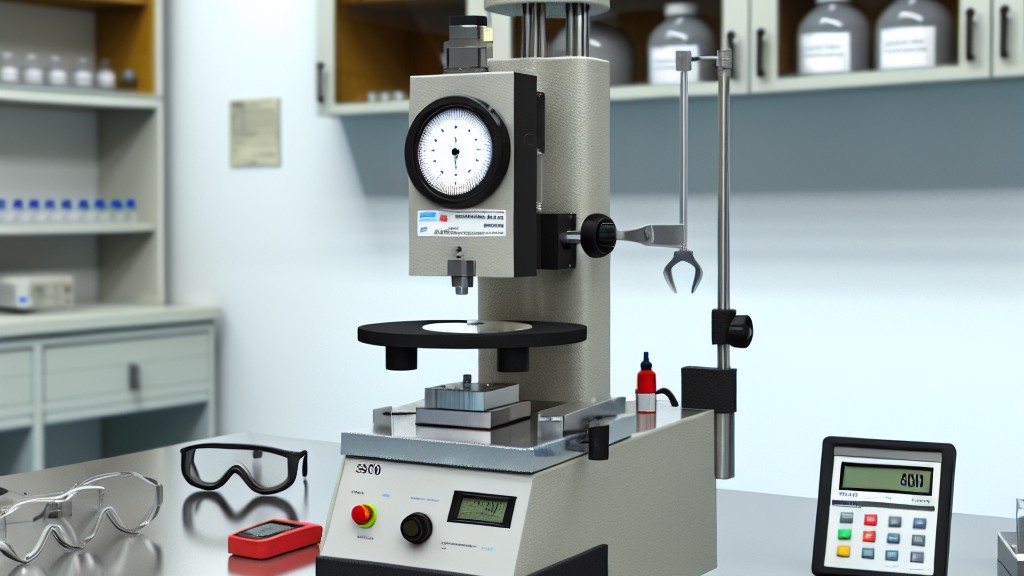
These tests use a rotary platform abrasive consisting of the following elements:
The tests also use abrasive wheels that are attached to the free end of pivoted arms and can rotate freely horizontally.
Our organization, which has been trying to support businesses from every sector with its testing, measurement, analysis and evaluation studies carried out in a wide range for years, has a strong staff that closely follows the developments in the world in the field of science and technology and constantly improves itself. In this context, testing services are also provided to businesses in accordance with the standard “ASTM C1353/C1353M-20 Standard test method for abrasion resistance of dimensioned stone exposed to foot traffic using rotating platform abrasive”.
To get an appointment, to get more detailed information or to request an evaluation, you can ask us to fill in our form and reach you.

