

The standard “VDA 230-206 Investigation of the stick-slip behavior of material pairs” published by the German Association of the Automotive Industry (VDA) describes various methods used to determine the stick-slip behavior of materials used in vehicle interiors.
The following materials are the subject of this standard:
Other materials may also be tested to this standard in consultation with the customer.
The causes of stick-slip behavior are, on the one hand, mutual bonding between the microstructures of the body surfaces, and, on the other hand, intermolecular forces between the bodies (adhesion). In addition, the stick-slip effect also depends on the order of motion of the bodies in contact.
The stick-slip effect is transmitted through structure-borne noise due to the damping of the material coupling and can lead to very unpleasant noises in vehicles, for example. This is noticeable in squeaking doors, rattling wipers or squeaking noises from vehicle interiors. Furthermore, stick-slip can lead to increased wear and material fatigue, much more than smooth friction, and can completely stop even the slightest movements in precision machinery, gear shafts and other drive units.
Just as the physical properties of materials can change under the influence of temperature and humidity, climate also affects stick-slip behavior. This is often exacerbated at high temperatures, such as when leather and artificial leather come into contact with themselves or with hard plastics.
Other polymer materials, such as polyamide, respond to high humidity, resulting in increased stick-slip effects. Components used in conjunction with glass or painted surfaces, such as seals made of elastomer materials, are also subject to stick-slip vibration and squeaking when exposed to high humidity.
Noise behavior is also affected by factors such as relative speed. While soft-surfaced solids have a greater tendency to stick-slip at low speeds, many hard plastics have the opposite effect. Countermeasures must be adapted accordingly. The effects of stick-slip on noise generation always depend on the natural frequency of the component and hence on its mass. In materials development, the prevention of stick-slip is therefore an increasingly important aspect of material requirements.
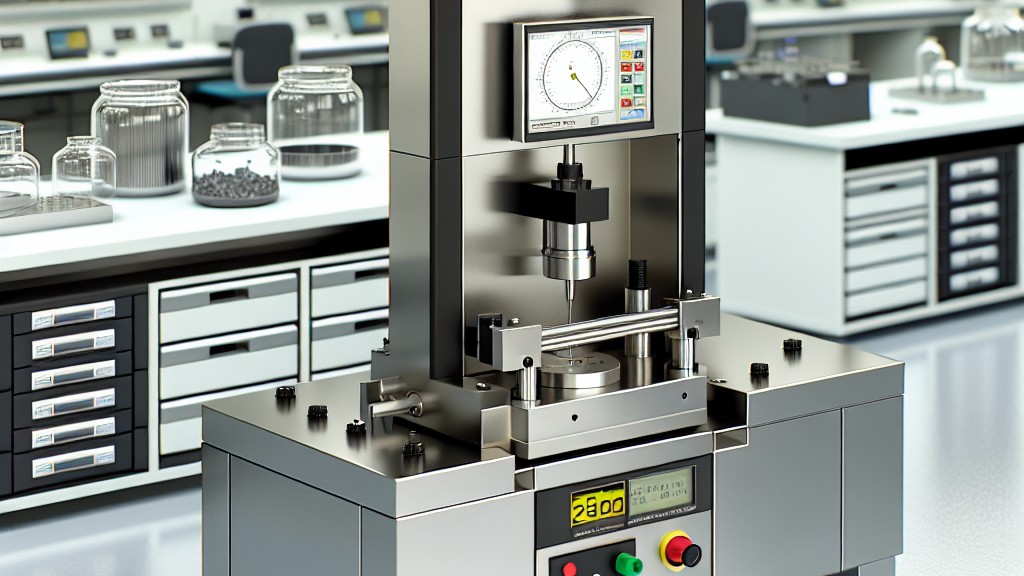
In the first equipment used in stick-slip tests, two materials are brought into contact with an adjustable normal force and moved transversely at an adjustable speed. Static friction deflects a flat spring in the direction of motion. At some point, the restoring force of the spring exceeds the static friction of the two materials and there is a sudden transition from adhesion to a sliding state. Energy is released in this process. This energy is detected by an accelerometer.
There are many industries affected by stick-slip behavior. Not only in the automotive sector, but also as a result of different vibrations and contact between materials at different temperatures, the stick-slip effect and related disturbing sounds can occur. Disturbing sounds such as creaking and crackling are undesirable, as are the halting of movements and the resulting failures.
In passenger car interiors, combinations of genuine or artificial leather are frequently encountered. These often cause disturbing noises, not only in the luxury segment. Due to the resulting customer complaints and the resulting high costs for car manufacturers, the VDA 230/206 standard was developed to fully solve this problem.
Most German and many global automotive manufacturers have adopted this standard in their test specifications to ensure that their suppliers supply stick-slip-free materials. Leather, for example, can be optimized with a modified finish. In the case of synthetic leather, this is achieved with a modified material formulation.
Our organization, which has been trying to support businesses from every sector with its testing, measurement, analysis and evaluation studies carried out in a wide range for years, has a strong staff that closely follows the developments in the world in the field of science and technology and constantly improves itself. In this context, testing services in accordance with the "VDA 230-206 Examination of the stick-slip behavior of material pairs" standard are also provided to businesses.
To get an appointment, to get more detailed information or to request an evaluation, you can ask us to fill in our form and reach you.

