

The ASTM C871 Standard Test Methods for Chemical Analysis of Thermal Insulation Materials for Leakable Chloride, Fluoride, Silicate and Sodium Ions, developed by the American Society for Testing and Materials (ASTM), describes laboratory test methods for determining water-soluble chloride, fluoride, silicate and sodium ions in thermal insulation materials in parts per million (ppm) ranges.
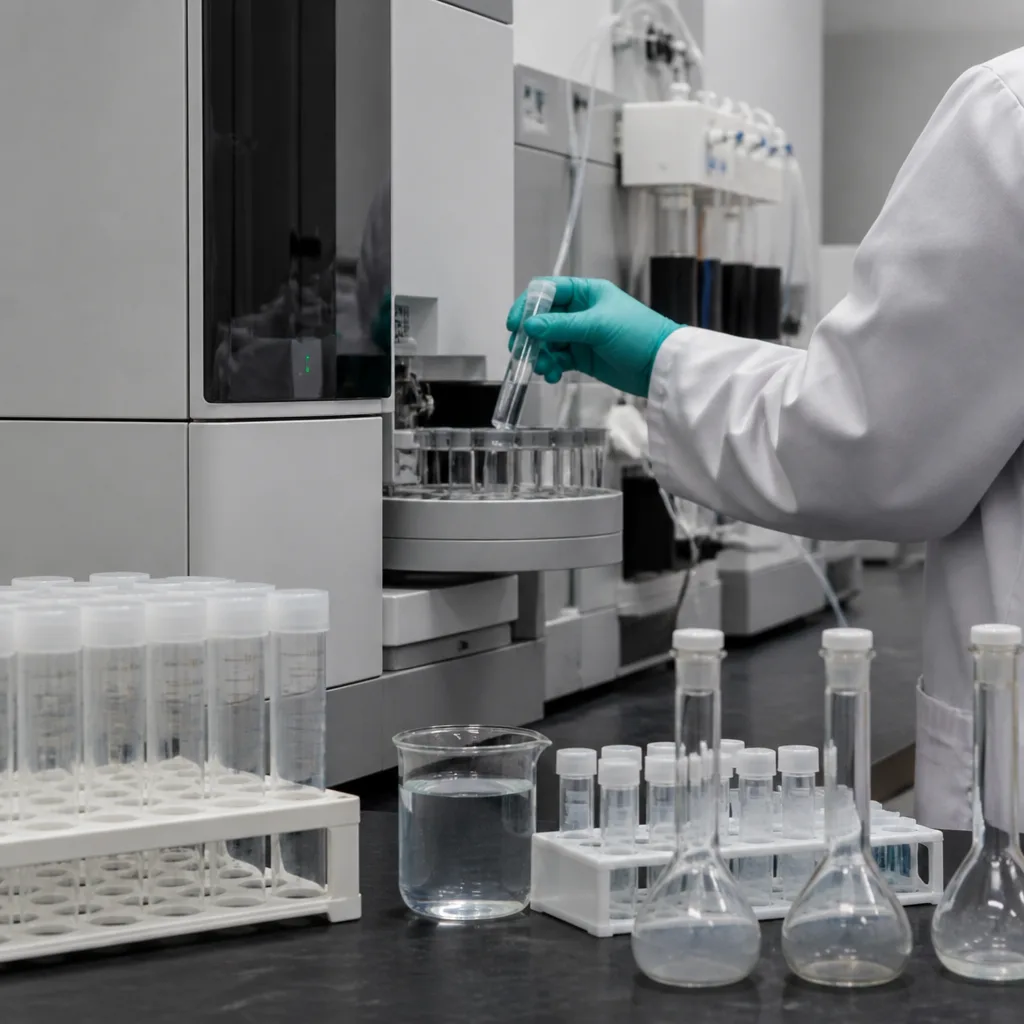
The choice of one of the listed test methods for each of the required ion determinations should depend on the laboratory capacity, the availability of necessary equipment, the ion concentration, and suitability for any potential ion interference in the extraction solution.
Studies have shown that, in addition to the halide ion chloride, fluoride ions, when deposited and concentrated on the surface of austenitic stainless steel, can contribute to external stress corrosion cracking in the absence of inhibitory ions. Two common insulation specifications specific to external stress corrosion cracking allow the use of the same ASTM C692 and ASTM C871 test methods for evaluating insulation materials. Both standards require the inclusion of fluoride ions along with chloride ions when evaluating extractable ions.
Chlorides (and fluorides) can be components of the insulation material, the environment, or both. Moisture in the insulation or from the environment can cause chlorides (and fluorides) to migrate through the insulation and condense on the hot stainless steel surface.
ASTM C871 is a standard that establishes laboratory procedures for determining the concentration of ionic contaminants. These contaminants are particularly important because they can contribute to the corrosion of metal equipment, especially stainless steel operating at high temperatures. This standard is widely used as part of material qualification and quality assurance programs in the energy generation, petrochemical, nuclear, chemical processing, and industrial insulation sectors.
The primary purpose of the ASTM C871 standard is to measure the amounts of the following ions that can be removed from thermal insulation materials using water under specified laboratory conditions:
Unlike total chemical composition analysis, the ASTM C871 standard only evaluates the portion of these ions that are soluble in water. This represents contaminants that may migrate to metal surfaces during use.
Thermal insulation typically surrounds stainless steel pipes, pressure vessels, boilers, heat exchangers, and reactors. If the insulation contains excessive amounts of soluble chlorides or other aggressive ions, moisture can dissolve these contaminants and carry them to the metal surface. This can lead to:
The ASTM C871 standard provides a standardized method for determining the quantity of these contaminants so that insulation materials can be evaluated before installation. This standard applies to many insulation products, including:
This standard applies to both raw materials and finished insulation products.
The ions measured using the described test methods are as follows:
Although the ASTM C871 standard includes detailed laboratory instructions, the basic procedure involves the following:
The procedure emphasizes careful sample handling to prevent contamination and ensure reproducible results.
The ASTM C871 standard permits appropriate laboratory analytical techniques, including:
The chosen analytical method must provide reliable measurements within the concentration ranges specified by the standard.
The ASTM C871 standard is commonly used in the following areas:
This standard is widely used in the following areas:
The ASTM C871 standard is often used in conjunction with the ASTM C692 standard. While ASTM C871 measures the quantity of leaching chemical contaminants, ASTM C692 assesses whether an insulating material actually promotes stress corrosion cracking of stainless steel under laboratory conditions. Chemical analysis performed according to ASTM C871 generally supports the interpretation of ASTM C692 test results.
The main advantages provided by the ASTM C871 standard are as follows:
However, the ASTM C871 standard has several limitations:
In conclusion, the ASTM C871 standard is a fundamental analytical standard for evaluating the chemical cleanliness of thermal insulation materials. By determining the levels of soluble chloride, fluoride, sodium, and silicate ions, it helps manufacturers, laboratories, and plant operators assess the potential corrosion risk posed by insulation products. This standard plays a vital role in protecting stainless steel equipment, enhancing the reliability of insulated systems, and supporting long-term safe operation in challenging industrial environments.
For many years, our organization, with its competent and experienced team, has been understanding the needs of its clients, providing the advanced testing services they require, and assisting them in the establishment, implementation, and improvement of management systems. Within this framework, we also provide testing services in accordance with the ASTM C871 standard.
To get an appointment, to get more detailed information or to request an evaluation, you can ask us to fill in our form and reach you.

