

The "DIN 53508 Rubber tests - Accelerated aging" standard, published by the German Institute for Standardization (DIN), describes five methods for the accelerated aging of rubber: Methods A to D involve storage at high temperatures, while method E involves storage in oxygen at high pressure.
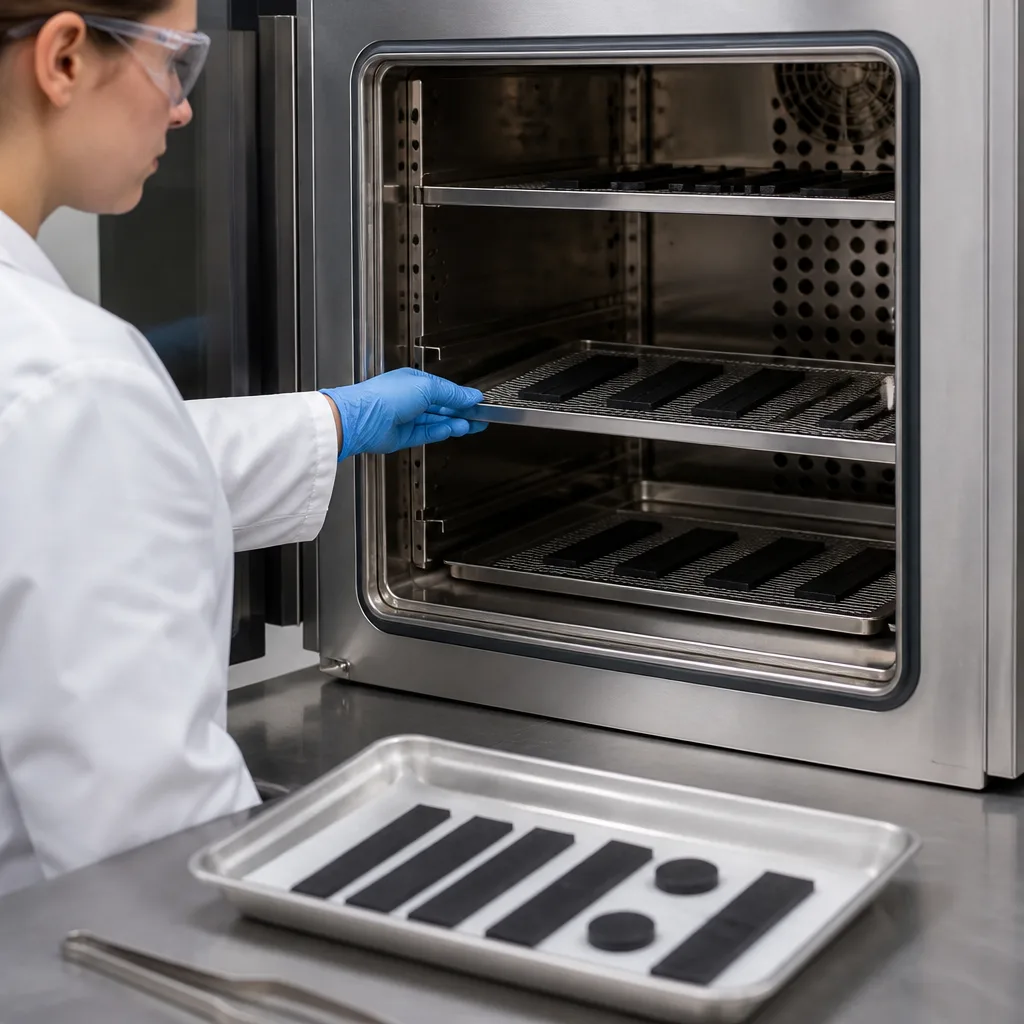
The test methods described in this standard are not suitable for evaluating the effects of light or ozone on rubber aging.
DIN 53508 is a technical standard that defines methods for evaluating how rubber and elastomer materials behave under accelerated aging conditions, thus helping to predict their long-term performance.
Rubber materials are widely used in industries where durability is critical, such as automotive, construction, and sealing systems. This standard provides a controlled way to simulate aging in a short period of time.
This standard specifies test procedures for artificially aging rubber materials under controlled laboratory conditions. It includes:
These methods simulate long-term environmental exposure over a shorter period of time.
The DIN 53508 standard defines five main aging methods:
These tests do not cover UV or ozone aging, which are addressed by other standards.
The testing process generally follows these steps:
The DIN 53508 standard is widely used in the following areas:
This standard helps ensure compliance with product specifications, safety regulations, and quality control. Laboratories often use it in conjunction with other international standards for hardness (Shore A/D), tensile properties, and compressive permanent deformation. This standard helps manufacturers ensure that materials will maintain their performance over time.
In short, this standard is widely used in the rubber and polymer industry to assess how materials degrade over time under heat, oxygen, or other environmental stresses, and to help predict long-term performance in real-world applications.
Rubber products (such as seals, tires, hoses, gaskets, and vibration dampers) naturally age due to oxidation, heat, and environmental factors, leading to changes in hardness, elasticity, tensile strength, and elongation at break. The DIN 53508 standard provides standardized laboratory procedures to simulate this aging process in a short period, enabling manufacturers and testing laboratories to assess durability without waiting years for natural aging to occur.
This standard is often cited alongside its international equivalents, such as “ISO 188 Vulcanized or thermoplastic rubber - Accelerated aging and heat resistance tests” and “ASTM D573 Standard test method for rubber - Degradation in an air oven”. While the DIN 53508 standard has some specific deviations, it largely overlaps with them for many test conditions.
Test specimens are typically prepared in the form of standard dumbbell-shaped pieces or plates. After the aging process, the properties are measured and compared to unaged specimens to calculate changes (e.g., percentage change in tensile strength or stiffness). The basic parameters are:
The DIN 53508 standard is considered important for the following reasons:
For many years, our organization, with its competent and experienced staff, has been understanding the needs of its clients, providing the advanced testing services they require, and assisting them in the establishment, implementation, and improvement of management systems. Within this framework, we also provide testing services in accordance with the DIN 53508 standard.
To get an appointment, to get more detailed information or to request an evaluation, you can ask us to fill in our form and reach you.

