

The standard "ASTM D2137 Standard Test Methods for Rubber Properties - Brittleness Point of Flexible Polymers and Coated Fabrics" published by the American Society for Testing and Materials (ASTM) describes test methods covering the determination of the lowest temperature at which rubber vulcanizes and at which rubber-coated fabrics will not exhibit fracture or coating cracks when subjected to specified impact conditions.
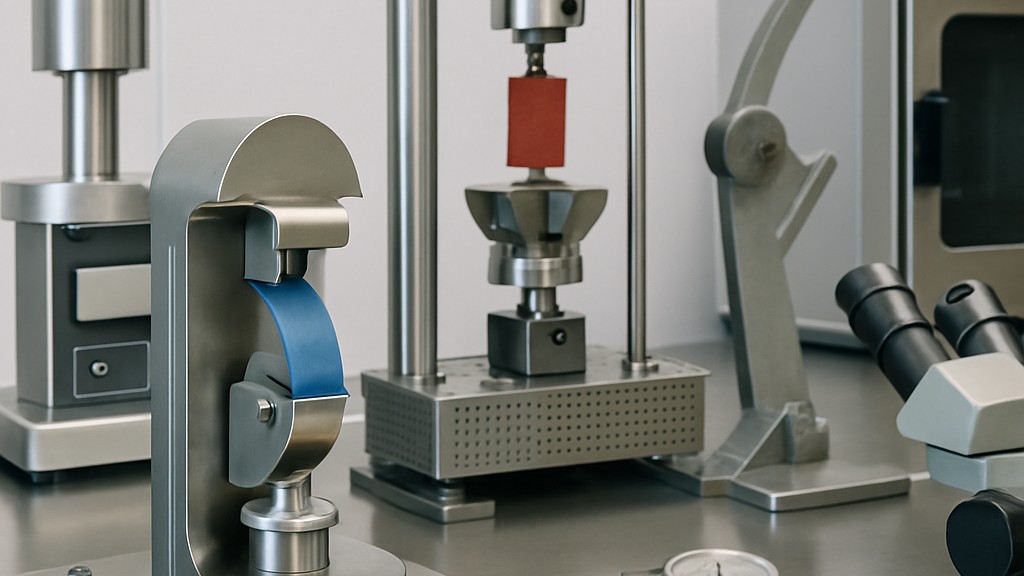
These test methods involve the evaluation of rubber materials or fabrics coated with them subjected to low-temperature flexing under well-defined impact velocity conditions. The response depends largely on the effects of low temperatures, such as crystallization, plasticizer incompatibility, or the inherent dynamic behavior of the material. Data obtained from these test methods can be used to predict product behavior in applications where conditions are similar to those specified in these test methods.
These test methods have been found to be useful for specification and development purposes, but do not necessarily indicate the lowest temperature at which the material can be used.
In short, this standard specifies the lowest temperature at which rubber vulcanizes or rubber-coated fabrics prevent cracking or breaking in a single-impact flexing test.
When preparing specimens for testing, they are typically cut to precise dimensions into cantilever beams and immersed in a cold bath (liquid or gas medium) at a specified temperature for at least 5 minutes. A motorized, solenoid-driven, or spring-driven striker then imparts at least 3 J of energy to each specimen edge at a speed of approximately 2 m/s. The tester incorporates precise alignment and clearance criteria based on specimen thickness. The fracture point is the lowest temperature at which no cracks or fractures occur in the test group. If cracks occur, the temperature is increased (usually in 2-degree increments) until the specimen passes through successfully.
Test results help predict material performance under low-temperature impact conditions, but with the caveat that actual service limits may differ.
Method A, described in this standard, is for rubber vulcanizates. Method B is for rubber-coated fabrics and includes gaps adjusted for thickness. The following equipment is generally used in these tests:
This standard ensures that materials do not fracture under cold impact conditions. It is critical for seals, hoses, O-rings, and protective coatings. It is also often used as a complementary test in conjunction with tests such as ASTM D1329 (temperature retreat) and ASTM D1053 (curing ratio), providing a more comprehensive picture of low-temperature behavior. Meanwhile, in materials development, this standard provides guidance for the formulation of polymers with low brittle points for harsh environmental applications.
The brittle point tests described in this standard determine the lowest temperature required to prevent cracking under flexible impact.
ASTM D2137 evaluates brittleness under impact in cold temperatures by subjecting samples to a calibrated impact and determining the lowest safe temperature. It is a standardized and repeatable method and is useful for material qualification, R&D studies, and ensuring product reliability under harsh conditions. However, passing the test does not always guarantee usability in real-world conditions. Complementary assessments (e.g., flexibility, leakage) are also important. Comparison with other low-temperature measurements is necessary to determine a product's true operating limits.
The main reasons why this standard is important are:
By testing to this standard, manufacturers prevent unexpected cracking, leaking, and breaking. Knowing the fracture point helps engineers avoid unsafe temperature limits.
Results are reproducible across laboratories and companies, which is critical for compliance with specifications, contracts, and regulations.
Ultimately, the ASTM D2137 standard is important because it provides a reliable, repeatable, and objective method for ensuring that materials can withstand sudden impact at low temperatures. This is critical for safety, performance, and long-term reliability. This standard is essential because it provides a reliable and industry-accepted method for measuring the cold temperature brittleness of rubber materials.
Our organization, which has been serving for many years and meticulously following global developments in science and technology, employs a skilled team and extensive infrastructure to conduct testing, measurement, and analysis in a wide range of areas for businesses across all sectors. In this context, we also provide testing services in accordance with ASTM D2137 Standard Test Methods for Rubber Properties - Brittle Point of Flexible Polymers and Coated Fabrics.
To get an appointment, to get more detailed information or to request an evaluation, you can ask us to fill in our form and reach you.

