

A European standard, “EN 1518-1 Paints and varnishes - Determination of scratch resistance - Part 1: Constant loading method”, describes a test method for determining the resistance of a single coating or a multi-coat system of paint, varnish or related product to penetration by scratching with a scratch pen loaded with a defined load, under specified conditions.
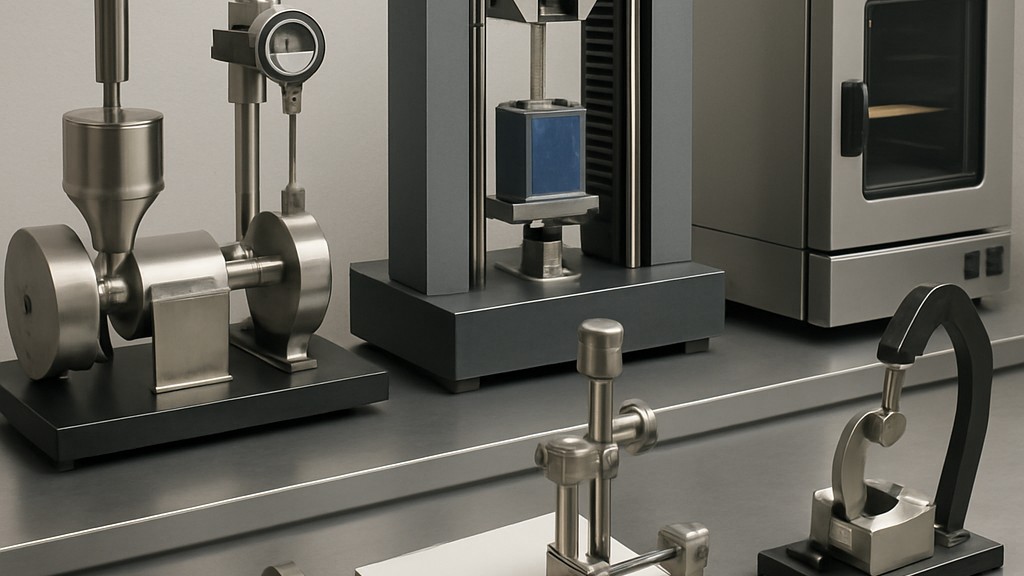
Penetration of the stylus is directed toward the substrate, except in the case of a multi-layer system. In a multi-layer system, the stylus can penetrate the substrate or an intermediate layer. This method can be implemented in two ways:
Neither this standard nor ISO 1518-2 specifies a method using a curved stylus, as specified in ISO 12137. The choice between the three methods depends on the specific practical problem.
In principle, a scratch pen loaded with a specified load is drawn across a coating at a constant speed. The following test parameters are specified:
The scratch is examined to determine whether the coating has penetrated to the specified extent for a single specified test load (pass/fail testing) or to determine the minimum test load required for penetration. In some cases, scratches are detected on the coating surface. This assessment should be repeated after 24 hours.
At the beginning of testing, a representative sample of the product to be tested, or of each product in the case of a multi-layer system, is taken as described in ISO 15528. Each sample is examined and prepared for testing as described in ISO 1513.
Substrate test panels must be conductive, 0,7 mm to 1,0 mm thick, and comply with the requirements of ISO 1514. The panels should preferably be 200 mm x 100 mm in size. Each test panel is prepared in accordance with ISO 1514 and coated according to the method specified for the product or system being tested. The coating application method is determined by the manufacturer or agreed upon between the relevant parties and included in the test report.
Each coated test panel is dried (or kiln-dried) and aged under the specified time and conditions. Before testing, the coated panels are conditioned for at least 16 hours at 23°C (plus or minus 2°C) and 50% (plus or minus 5%) relative humidity (in accordance with ISO 3270). The test procedure is performed immediately after the test panels are removed from the conditioning chamber. The drying (or kiln-dried) and aging times and conditions are specified by the manufacturer or agreed upon by the parties involved and included in the test report. Coated panels should be stored and handled in a manner that prevents contamination from fingerprints and dust. Fingerprints, dust, or other contamination on the surface will result in lower accuracy.
The dried coating thickness is determined in microns using one of the procedures specified in ISO 2808. The dry film thickness is determined by the manufacturer or is included in the test report after agreement between the parties involved.
Tests are performed at a temperature of 23 degrees plus/minus 2 degrees and a relative humidity of 50 percent plus/minus 5 percent.
The testing procedure consists of the following steps:
Procedure for a single specified load (pass/fail test): The above-mentioned procedure is performed three times on each of two test panels. If the coating did not penetrate beyond the specified limit in any of the six test runs, the result is reported as "pass." If the coating penetrated beyond the specified limit in one or more of the six test runs, the result is reported as "fail."
Procedure for determining the minimum load that will cause penetration: The procedure outlined above is performed, starting with a load slightly lower than that expected to cause penetration of the coating. The load on the needle is gradually increased in appropriate increments until the coating penetrates. The minimum load at which the needle penetrates the coating to the specified extent is recorded. The procedure is repeated on two more panels. The lowest result of the three determinations is reported in Newtons.
The EN 15818-1 standard is considered important for the following reasons:
In short, this standard is essential to ensure the quality, durability and reliability of paints and varnishes, to support innovation and to maintain consistency in the global coatings industry.
Consequently, the ISO 1518 standard supports quality control and product development in the coatings industry by providing robust, standardized methods for assessing the scratch resistance of paints and varnishes. By offering both constant and variable loading approaches, it meets a variety of testing needs and provides reliable and repeatable results.
Our organization, which has been providing services for many years and meticulously following global developments in science and technology, employs a team of experienced professionals and a broad infrastructure to conduct testing, measurement, and analysis in a wide range of areas for businesses across all sectors. In this context, we also provide testing services in accordance with the standard "EN 1518-1 Paints and varnishes - Determination of scratch resistance - Part 1: Constant loading method."
To get an appointment, to get more detailed information or to request an evaluation, you can ask us to fill in our form and reach you.

