

The “DIN 1748 Aluminum and wrought aluminum alloy extruded profiles” standard, developed by the German Institute for Standardization (DIN), consists of several sections published under the same title. Namely,
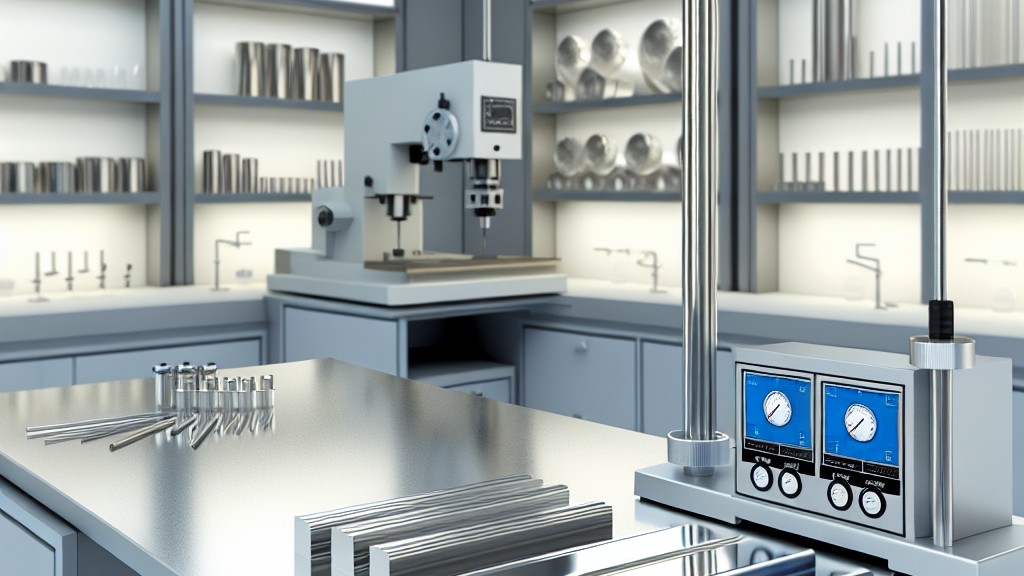
The DIN 1748-1 standard describes the properties of wrought aluminium and extruded aluminium alloy profiles. Here, the minimum wall thicknesses are taken into account, depending on the diameter of the perimeter circle (as described in DIN 1748 Part 3) and the material.
Wrought aluminum is made by melting pure aluminum ingots and adding the exact amounts of the necessary alloying elements. The metal is then formed into billets or sheets that can be hammered, rolled, or formed into the desired shape.
Depending on the alloy (heat treatable or not), heat treatment can also be applied to improve its mechanical properties. Depending on the amount of wrought aluminum used in industrial production, there are several advantages compared to casting aluminum into the desired part. First, due to the casting process, cast aluminum parts tend to have lower tensile strength and lose some of the inherent properties of an alloy. This is due to naturally occurring casting defects such as porosity and alloy segregation.
On the other hand, wrought aluminum tends to retain its mechanical properties because the forming processes performed are mechanical in nature. While cast aluminum is generally cheaper and more cost-effective, its lower tensile strength and other disadvantages make it less desirable in many applications.
Among their many advantages, wrought products have a number of outstanding mechanical properties compared to cast products. They maintain structural integrity more effectively, exhibit superior surface finishes, and are more amenable to welding, machining, and other fabrication techniques.
The DIN 1748-2 standard was later replaced by the standard "DIN EN 755-1 Aluminium and aluminium alloys - Extruded rod/bar, tube and profiles - Part 1: Technical conditions for inspection and delivery". This standard describes the technical conditions for inspection and delivery of wrought aluminium and aluminium alloy extruded rod, tube and profile for general engineering applications. However, the following are not covered by this standard:
The DIN 1748-3 standard describes the design features for pure aluminium and wrought aluminium alloys (highest grade aluminium, high grade aluminium and wrought aluminium alloys).
Because of its prevalence in industry and manufacturing, wrought aluminum can be found in countless applications, especially when high-performance alloys are required. For example, in the airline and aerospace industries, wrought aluminum alloys, including 7075 and above, are prominent. Due to wrought aluminum’s high strength-to-weight ratio, it is an excellent material for aerospace applications.
In the transportation sector, cars and motorcycles rely heavily on aluminum. The lightness of this material increases fuel efficiency, while its enormous strength makes it safe, reliable and durable. Meanwhile, trains and subway cars use aluminum for both its strength and environmental benefits, as well as its aesthetic appearance.
Architecture and construction are other industries transformed by aluminum. Whether it’s structural fixtures for window frames or glass openings that are emblematic of tall buildings, anything that can use extrusion can be made with aluminum alloys.
Other examples of applications where wrought aluminum is used include electrical conductors, cooking pots and tools, welding rods, beverage cans, pressure vessels, medical instruments and all types of electrical devices.
The DIN 1748-4 standard describes the permissible deviations of standardized and non-standardized aluminum and wrought aluminum alloy extruded profiles with cross-sectional shapes within a circumference of up to 600 mm in diameter.
Among the numerous testing, measurement, analysis and evaluation studies that our organization has carried out for businesses in various sectors, it also provides testing services defined in the "DIN 1748 Aluminum and forged aluminum alloy extruded profiles" standard with its trained and expert staff and advanced technological equipment.
To get an appointment, to get more detailed information or to request an evaluation, you can ask us to fill in our form and reach you.

