

The standard "ASTM C1895 Standard Test Method for Determining Mohs Scratch Hardness," published by the American Society for Testing and Materials (ASTM), describes a test method for determining the Mohs scratch hardness of ceramic tile, glass tile, and other hard surfaces. Mohs scratch hardness is a useful tool for determining the scratch resistance of ceramic tiles. Scratch resistance is determined by visually observing the surface of the ceramic tile after attempting to scratch it with a tool of known hardness.
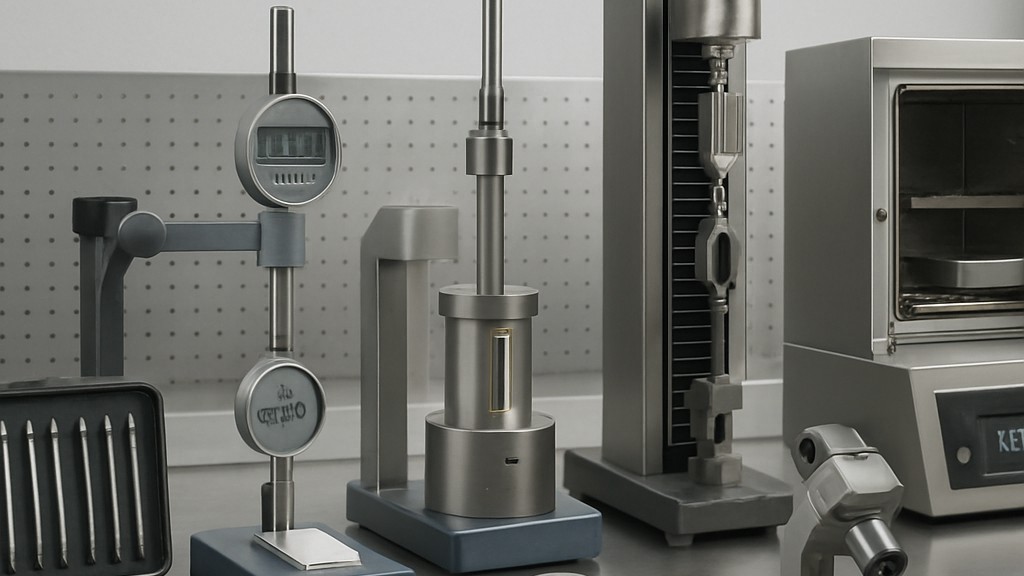
The equipment used in these tests includes:
The test sample must consist of at least one tile. Test samples up to 15 cm x 15 cm should be left uncut for testing. Samples with sides greater than 15 cm may be reduced to no less than 15 cm for ease of use.
Hardness tips can wear with use. Before testing, examine the tip of the tip under a magnifying glass to ensure a sharp tip with even taper. Hardness tips may need to be sharpened to remove flat spots or imperfections. To sharpen a hardness tip, remove the hardness tip and place it in the chuck of an electric drill. Hold the hardness tip at an angle of approximately 20 degrees to the grinding stone, and use the electric drill to rotate the hardness tip. Excessive heat from friction can alter the hardness of the tip. To prevent overheating, keep the sharpening stone wet and do not attempt to sharpen for more than 10 seconds.
In short, ASTM C1895 is a standard test method designed to evaluate the Mohs scratch hardness of ceramic tile, glass tile, and other hard surfaces. This method determines which standard mineral (based on the Mohs scale) can visibly scratch the surface of a sample under specified conditions. This standard provides a simple and reproducible way to measure a material's scratch resistance and compares it to Mohs hardness standards (ranging from softer minerals such as talc to the hardest corundum).
This method is widely used in quality control, material selection and research, especially in the construction, ceramics, aerospace, electronics and coating industries.
In general, this testing method consists of the following steps:
The test relies on visual detection of surface traces, so operator consistency and appropriate lighting are critical. Because it does not address all safety concerns, users should wear appropriate personal protective equipment and adhere to laboratory protocols.
Friedrich Mohs was a German mineralogist best known for developing the Mohs scale for measuring mineral hardness. This scale ranks minerals based on their ability to scratch each other. It is a simple yet effective method for determining and comparing the hardness of natural materials.
The Mohs scale was one of the first practical and systematic ways to classify minerals and made hardness testing both accessible and easily reproducible in the field. While more precise hardness tests are available today, the Mohs scale remains a fundamental concept in mineralogy and materials engineering.
The hardness level of each mineral on the classic Mohs scale, where each mineral can be scratched off, is as follows:
Mohs scratch hardness is important because it provides a quick and practical way to assess a material's scratch resistance. This directly impacts its durability, function, and appearance, especially in real-world use. This method is considered important for the following reasons:
As a result, ASTM C1895 is a widely used testing approach for evaluating scratch resistance using the Mohs scale. Its simplicity, affordability, and applicability to ceramic and hard surfaces make it a valuable tool in quality control and specifications across industries.
Our organization, which has been supporting businesses across all sectors for years through a wide range of testing, measurement, analysis, and evaluation activities, has a strong team of employees who closely follow global developments in science and technology and are constantly improving themselves. In this context, we also provide testing services in accordance with the ASTM C1895 Standard Test Method for Determining Mohs Scratch Hardness.
To get an appointment, to get more detailed information or to request an evaluation, you can ask us to fill in our form and reach you.

