

In the ASTM D638-14 standard developed by the American Society for Testing and Materials (ASTM), a test method for determining the tensile properties of unreinforced and reinforced plastics in the form of standard dumbbell-shaped test specimens when tested under defined conditions of pretreatment, temperature, humidity, and test machine speed. is explained. This test method is applicable to testing materials of any thickness up to 14mm. However, for testing thin sheet specimens, including film, with a thickness of less than 1 mm, the ASTM D882 standard test method is preferred. Materials with a thickness of more than 14 mm are reduced by processing.
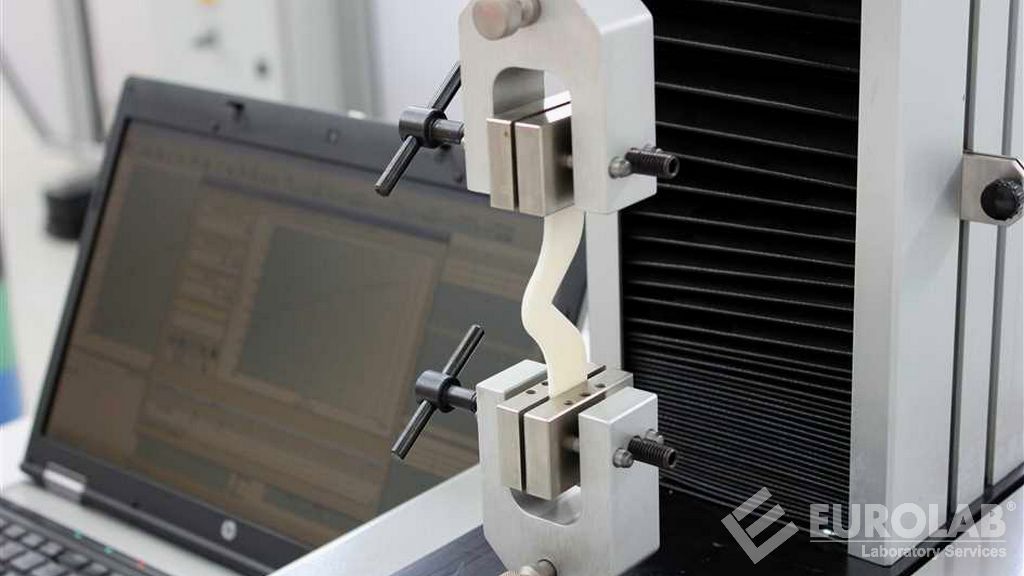
This testing method includes the option of determining the Poisson ratio at room temperature. In materials science, the Poisson ratio is a measure of the Poisson effect, which is the deformation of a material in directions perpendicular to the direction of a given load.
The ASTM D638-14 standard and the ISO 527-1 standard developed by the International Standards Organization (ISO) deal with the same subject, but their technical contents are different from each other.
The ASTM D638-14 standard test method, as described in ASTM D638-14, is suitable for testing phenolic molded resin or laminated materials. However, in cases where these materials are used as electrical insulation, they should be tested according to the test methods outlined in ASTM D229 and ASTM D651 standards.
The ASTM D638-14 test method is designed to generate tensile property data for the control and specification of plastic materials. These data are also seen as useful for qualitative characterization and research and development.
Tensile properties vary according to sample preparation, speed and test environment. Consequently, where precise comparative results are desired, these factors should be carefully controlled.
Meanwhile, due to the high sensitivity of many plastics to strain rate and environmental conditions, the data obtained with this test method cannot be considered valid for applications involving load time scales or for environments very different from this test method.
Our organization also provides standard testing services for the tensile properties of plastics within the scope of the ASTM D638-14 standard developed, with its trained and expert staff and advanced technological equipment, among the numerous test, measurement, analysis and evaluation studies it provides for businesses in various sectors.
To get an appointment, to get more detailed information or to request an evaluation, you can ask us to fill in our form and reach you.

