ISO 2782-1 Rubber, Vulcanized or Thermoplastic - Determination of Permeability to Gases - Part 1: Differential Pressure Methods
The standard “ISO 2782-1 Rubber, vulcanized or thermoplastic - Determination of permeability to gases - Part 1: Differential pressure methods” developed by the International Organization for Standardization (ISO) describes three methods for determining the permeability of vulcanized or thermoplastic rubber to gases under different partial pressures. These methods include:
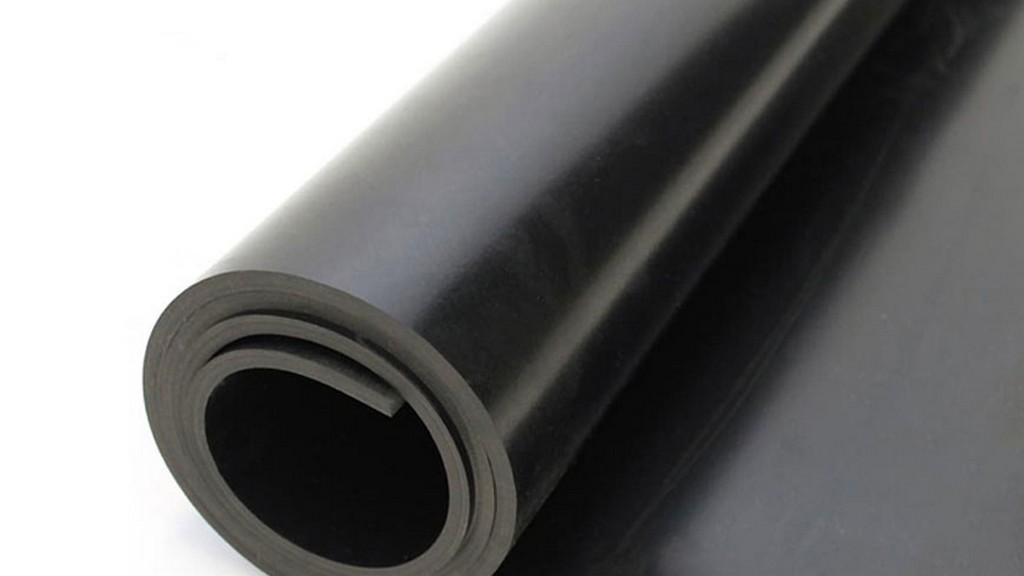
- A pressure sensor method (using vacuum): This method is applied to determine the gas transmission rate, gas permeability coefficient, gas diffusion coefficient and gas solubility coefficient.
- A simplified sensor method (using applied pressure): This method is applied only to determine the gas permeability coefficient.
- A gas chromatography method: This method is applied to determine the gas transmission rate and gas permeability coefficient.
These methods are applicable to vulcanized and thermoplastic rubbers having a hardness of not less than 35 IRHD (international rubber hardness rating) and to both single gases and gas mixtures.
For the purposes of this standard, the following terms and definitions apply:
- Gas transmission rate is the number of moles of test gas passing through a test piece per unit area, per unit time, with a unit partial pressure difference between the two sides of the test piece.
- Gas permeability coefficient, It is the number of moles of test gas passing through a test piece of unit thickness, per unit area, per unit time, with unit partial pressure difference between the two sides of the test piece.
- The gas diffusion coefficient is the amount of test gas passing through a test piece of unit thickness by diffusion, per unit area, per unit time, when there is a unit gas concentration gradient across the test piece.
- The gas solubility coefficient is the test gas concentration in a test piece divided by the partial pressure of the test gas at the surface of the test piece.
- The gas transmission curve (pressure sensor method curve) is the plot of the pressure change on the low pressure side of the test cell with respect to time until the gas transmission reaches steady state.
When performing tests, the space of a test cell maintained at a constant temperature is divided into high-pressure and low-pressure sides by a test piece. The high-pressure side of the cell is filled with test gas. The amount of gas diffusing from the test piece to the low-pressure side is determined by a pressure sensor or a gas chromatograph. In the pressure sensor method, an average value for a gas mixture is produced by measuring the gas transmission rate, gas permeability coefficient, gas diffusion coefficient, and gas solubility coefficient.
In the simplified pressure sensor method only the gas permeability coefficient is measured. In the gas chromatography method, measurements can be made on test gases containing water vapor, and it is also possible to analyze gas mixtures to determine the components.
The equipment used in the pressure sensor method consists of the test cell, pressure sensors, a test gas supply chamber, a vacuum pump, and associated piping and valves:
- The test cell consists of two parts, the low pressure side and the high pressure side, and the gas transmission area is clearly defined when a test piece is inserted into it. The high pressure side has an inlet port to supply the test gas, and a pressure sensor is connected to the low pressure side to detect the pressure change caused by the gas transmitted from the test piece. The surfaces of the two halves of the cell in contact with the test piece should be smooth and flat to prevent any gas leakage.
- A seal such as an O-ring may be used between these areas and the test piece, in which case the gas transmission rate of the seal should be significantly lower than the gas transmission rate of the material being tested and thus not affect the result of the test. The material of the test cell should be inert to the test gas and should not absorb the gas used. The diameter of the gas transmission area should be in the range of 10 mm to 150 mm, depending on the expected gas transmission rate.
- The cell shall be equipped with a heating system capable of raising the temperature to 80 degrees. Temperature accuracy shall be for temperatures between 40 degrees and 80 degrees plus/minus 1 degree. An example of a heating system is an electric heating jacket and an oven designed to hold the test cell and the test gas supply chamber.
- The test piece support is a part mounted on the low-pressure side of the test cell to prevent deformation of the test piece due to the pressure difference between the high- and low-pressure sides. Any material that does not affect the test result, such as filter paper or wire mesh, can be used. When using filter paper, a type of paper used in chemical analysis with a thickness of 0,1 mm to 0,3 mm is recommended, depending on the depth of the low-pressure side of the cell.
- One of the two pressure sensors is a sensor capable of reading 5 Pa or better to measure the pressure change on the low-pressure side of the test cell. A mercury-free vacuum gauge, an electronic diaphragm-type sensor, or other suitable sensor is used as this pressure sensor. The other of the two pressure sensors is used to measure the pressure of the test gas supply reservoir, capable of reading 1 percent or better.
- The test gas supply chamber is for supplying test gas at constant pressure to the high pressure side of the test cell. The volume of the chamber shall be sufficient to ensure that the pressure drop on the high pressure side due to the delivery of test gas from the test piece to the low pressure side during the test does not exceed 1 percent of the test pressure.
- The vacuum pump is a pump that can evacuate the test cell to a pressure of 10 Pa or less.
- The temperature sensor is a sensor that is placed in the test cell, used to measure the test temperature, and can read to within 0,1 degrees or better.
Among the numerous tests, measurements, analyses and evaluation studies that our organization has carried out for businesses in various sectors, it also provides testing services defined in the standard “ISO 2782-1 Rubber, vulcanized or thermoplastic - Determination of permeability to gases - Part 1: Differential pressure methods” with its trained and expert staff and advanced technological equipment.



