

The “ASTM F3018-17 Standard guide for evaluation of rigid-rigid joint total hip replacement and hip resurfacing arthroplasty devices” standard developed by the American Society for Testing and Materials (ASTM) describes materials, design recommendations, and general test methods for the chemical, mechanical, and preclinical evaluation of implantable devices with rigid-rigid joints designed to replace the hip joint.
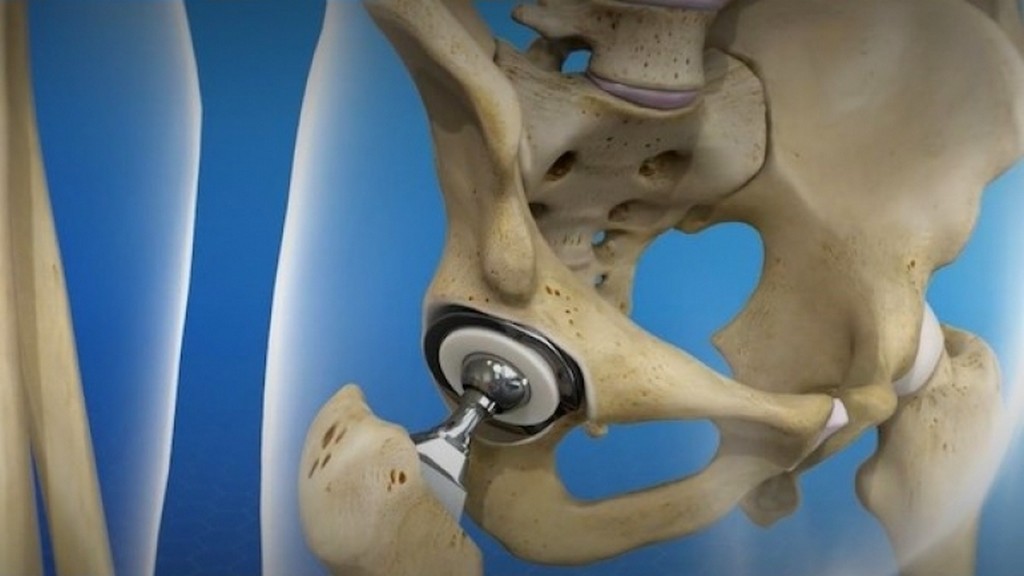
The guidance provided is intended to cover total hip replacement devices with stems that extend or are anchored within the intramedullary canal, as well as hip resurfacing arthroplasty in which only the hip joint surfaces are replaced. Long-term clinical experience has been gained with metal-on-metal joint components fabricated from cobalt-28 percent chromium-6 percent molybdenum alloys or high-purity alumina, and ceramic-on-ceramic joint components fabricated from high-purity alumina or alumina matrix composite ceramics. This guidance is based on the current understanding gained from these clinical histories.
Device articulating components fabricated from other metallic alloys, ceramics, or with coated or elementally modified articulating surfaces may also be evaluated with this guideline. However, such materials without a history of clinical use may present different risks.
This guideline applies to the acetabular and femoral articulating components of rigid-rigid hip replacement devices. The acetabular components may be monoblock or a modular component with a separate acetabular shell and acetabular liner. As noted above, the articulating components are constructed of a cobalt-28 percent chromium-6 percent molybdenum alloy for the metal-on-metal bearing, high-purity alumina or alumina matrix composite ceramics for the ceramic-on-ceramic bearing, and cobalt-28 percent chromium-6 percent molybdenum and alumina matrix composite for the metal-on-ceramic bearing. The shell is considered part of the acetabular component. Acetabular components may have an external coating or porous structure designed for uncemented, press-fit, or biological fixation, or may be used with bone cement.
This standard provides guidance for a range of evaluations and assessments to assist in preclinical research and device development of rigid-rigid total hip replacement and hip resurfacing devices used in the repair of musculoskeletal disorders.
The user is encouraged to use appropriate ASTM or ISO standards to conduct physical, chemical, mechanical, biocompatibility, and preclinical testing on alloy fabricated forms, ceramic material samples, device components, or devices prior to evaluation in an in vitro model.
Studies performed to support regulatory submissions must comply with appropriate regulatory requirements and guidelines for the development of medical devices.
Assessments made through preclinical testing on physical, chemical, mechanical, biocompatibility, and rigid-rigid hip prosthesis components are not necessarily predictive of human outcomes and therefore should be interpreted cautiously with respect to potential applicability to clinical conditions.
The standard “ASTM F2068-15 Standard specification for femoral prostheses - Metallic implants” provides appropriate descriptions and performance requirements for the femoral prosthetic portion of the total hip replacement system.
The standard “ASTM F2091-15 Standard specification for acetabular prostheses” provides appropriate descriptions for the acetabular component of total hip replacement and hip resurfacing arthroplasty systems.
Rigid joint components are constructed of materials that comply with the requirements of ASTM F75-18, ASTM F799-02, ASTM F1537-11, ISO 5832-4, ISO 5832-12, ISO 6474-1, or ISO 6474-2 standards. These standards include, but are not limited to, chemical, mechanical, inspection (including microstructure), and supplier quality system requirements.
Among the numerous testing, measurement, analysis and evaluation studies that our organization has provided for businesses in various sectors, our organization also provides testing services defined in the “ASTM F3018-17 Standard Guide for the Evaluation of Rigid-rigid Joint Total Hip Prosthesis and Hip Resurfacing Arthroplasty Devices” standard with its trained and expert staff and advanced technological equipment.
To get an appointment, to get more detailed information or to request an evaluation, you can ask us to fill in our form and reach you.

