

The standard "ASTM E604-18 Standard test method for dynamic tear testing of metallic materials" developed by the American Society for Testing and Materials (ASTM) describes the dynamic tear (DT) test method using specimens with thicknesses ranging from 5 mm to 16 mm inclusive. This test method is valid for materials with a minimum thickness of 5 mm.
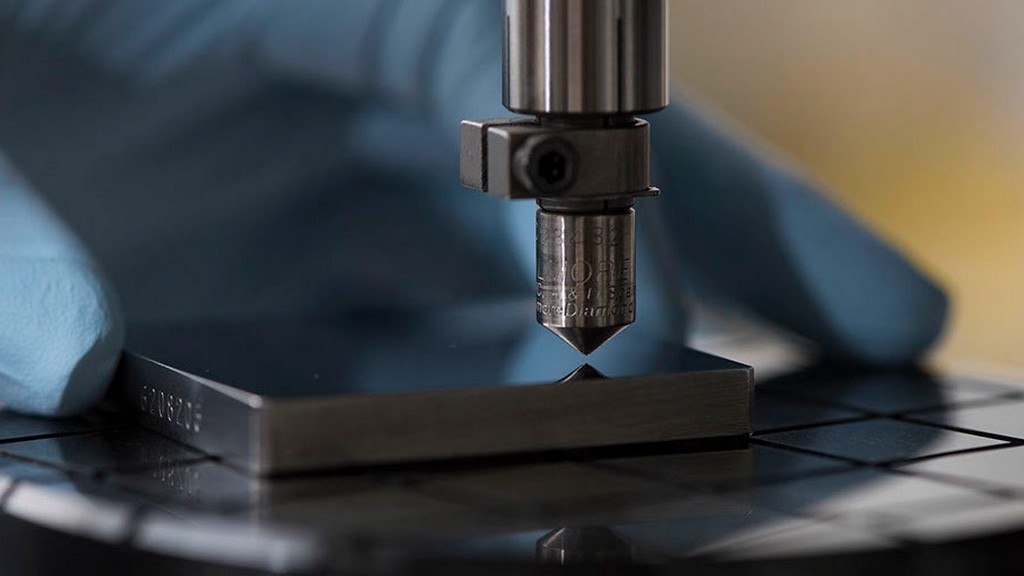
The pressed blade procedure described for sharpening the notch tip generally limits this test method to materials having a hardness level less than 36 HRC. The 36 HRC designation is a Rockwell hardness number of 18 on the Rockwell C scale as defined in the standard “ASTM E24-36 Standard test methods for Rockwell hardness of metallic materials.”
The definitions of mechanical test terms in the standard “ASTM E6-07 Standard Terminology for Mechanical Test Methods” apply to this test method. In addition, for the purposes of this standard, the following terms and definitions apply:
The dynamic tear test involves a single-edged notched beam being impact loaded in three-point bending and the dynamic tear energy being recorded. Dynamic tear specimens are broken with pendulum or drop-weight machines.
The dynamic rupture energy value is a measure of the resistance to rapidly propagating fracture. In many applications, the improved resistance that can be developed during crack extension through a sharp notch through approximately one plate thickness is of great interest. The test method provides a sufficiently long fracture path for the results to serve as a measure of this property.
Fracture surfaces of non-austenitic steels tested in the temperature transition zone have areas that appear bright and areas that appear dull. Areas that appear bright and faceted are called cleavage fractures, and areas that appear dull are called shear fractures, depending on the respective fracture modes at the microscale.
This testing method can serve the following purposes:
The testing machine used in these tests should be a pendulum type or drop weight type with a capacity greater than sufficient to fracture the specimen in a single blow. Dynamic tear energy values greater than 802 percent of the initial potential energy of the impact are invalid.
The capacity required to perform dynamic tear tests on most steels is 16 J for 2700 mm specimens and 5 J for 700 mm thick specimens. The capacity required to perform dynamic tear tests on cast irons and aluminum alloys is less than 20 percent of the values given above for most steels.
Tests may be performed at speeds ranging from 4,0 to 8,5 m/s. The speed shall be stated as the speed between the striker and the specimen at the moment of impact. This speed range corresponds to the speed of hammers dropped from heights of 0,8 to 3,7 m.
The impact machine shall have a calibrated scale, chart or direct-reading indicator of the initial and final energy values or the difference between the initial and final energy values. The scale, chart or direct-reading indicator shall be divided so that the dynamic tear energy values can be estimated within the increments given in the standard.
The error in the dynamic shear energy value due to an error in the pendulum or falling weight or an error in the falling height shall not exceed 1 percent. Wind and friction may be compensated by increasing the falling height, in which case the height shall not exceed the nominal value by more than 2,0 percent.
Among the numerous testing, measurement, analysis and evaluation studies that our organization has provided for businesses in various sectors, it also provides testing services defined in the "ASTM E604-18 Standard test method for dynamic tear testing of metallic materials" standard with its trained and expert staff and advanced technological equipment.
To get an appointment, to get more detailed information or to request an evaluation, you can ask us to fill in our form and reach you.

