

Tensile adhesion testing is a testing method that helps determine how durable and long-lasting coatings will be once a product is put to real-world use. Therefore, it is a crucial part of a robust quality assurance process.
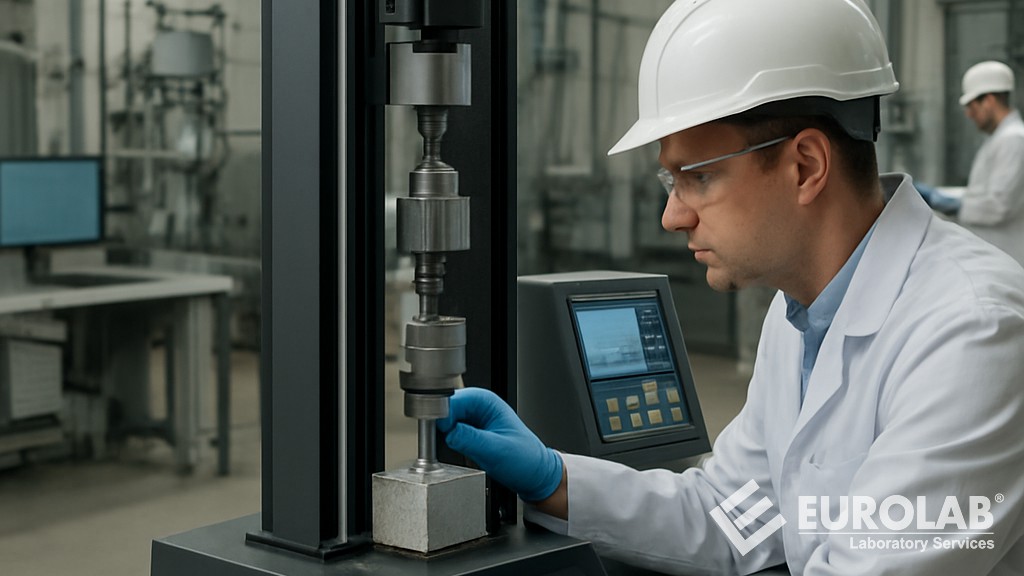
Tensile adhesion testing is a method of measuring a coating's resistance to separation from a substrate when a perpendicular tensile force is applied. This test is typically performed on a variety of substrate materials, including metal, plastic, concrete, wood, and glass.
A wide variety of coatings, finishes, and primers can be tested. These include paint films and powder coatings, UV-cured ceramics, epoxies, bitumens (tar enamel, asphalt mastics), thermoplastic resins (polyethylene, vinyl, and plastisols), laminates, lacquers, varnishes, specialty resins (urethanes, fluorocarbons, phenolics, and polyesters), elastomerics, and inorganic materials such as glass, zinc, and lead.
Tensile adhesion testing works by applying a tensile force perpendicular to a coating and substrate. Typically, these tests involve a digital or manual tensile adhesion testing machine with a carrier. Both the carrier and the coating must be cleaned before starting the test. The adhesive is then prepared and added to the carrier, and then adhered to the coated surface. The adhesive is allowed to cure. The machine's actuator is then placed on the carrier, and pressure is applied until the adhesion disappears. Pressure can be provided using a hydraulic pump.
Knowing how well a coating adheres to a surface is important for a wide variety of applications and industries. From ensuring protective film stays in place on flexible packaging to guaranteeing a vehicle's exterior paint remains weather-resistant, adhesion testing can help in many ways.
This is not just a cosmetic concern, but can also have significant safety implications. For example, in construction and maintenance work, epoxy coatings used to protect steel require strong bonds to prevent abrasion and corrosion. If the adhesion fails and the epoxy peels off, the steel can rust, ultimately causing very costly damage that could affect safety.
Unlike many other tests, there are very few industry or application-specific standards for evaluating whether a particular coating and surface passes a tensile adhesion test. When conducting the test and deciding whether a sample meets your requirements, it is generally up to the tester to determine the required level of adhesion.
When it comes to adhesion, there are some variations that can make a big difference in the bond between the coating and the substrate. These variations, which may seem very small but can have big effects, are as follows:
These factors underscore the importance of conducting comprehensive adhesion tests, taking into account the substrate, coating, and the final use of the product, whenever any of these factors change.
To minimize variations in results, it is important to use an adhesion testing device that minimizes shear forces (forces acting parallel to the coating, not perpendicular).
The ASTM D4541 Standard Test Method for Determining the Tensile Strength of Coatings Using Portable Adhesion Testers, developed by the American Society for Testing and Materials (ASTM), describes a test method for evaluating the tensile strength of a coating system on metal substrates. The tensile strength of coatings on concrete is described in the ASTM D7234 standard.
The ASTM D4541 standard provides two test protocols:
Fracture will occur along the weakest plane in the system, consisting of the test setup, adhesive, coating system, and substrate, and will be revealed by the fracture surface. This test method maximizes tensile stress compared to shear stress applied by other methods such as scratch or knife adhesion, and the results may not be comparable.
This standard procedure was developed for metal substrates, but may also be suitable for other rigid substrates such as plastic and wood. Factors such as loading speed and substrate flexibility must be considered by the user/specifier.
This standard procedure is designed for use on flat surfaces. For uneven surfaces, results may show greater variability, with lower values and averages.
Tensile strength measurements depend on the material, instrument, and test parameters. Results obtained with each test method may vary. Results should only be evaluated for each test method and not compared with other instruments.
This testing method describes a class of devices known as portable tensile adhesion testers. These are capable of applying a concentric load and counterload to a single surface, allowing coatings to be tested even if only one side is accessible. Measurements are limited to the strength of the adhesive bonds between the loading apparatus and the sample surface, or the cohesive strength of the adhesive, coating layers, and substrate.
This test can be destructive and may require spot repairs.
Coating tensile strength is a performance characteristic. This test method serves as a tool for homogeneously preparing coated surfaces, testing them, evaluating the results, and reporting them. This test method is applicable to any portable device that meets the requirements for determining coating tensile strength in this standard.
For many years, our organization, with its competent and experienced staff, has been understanding the needs of its clients, providing the advanced testing services they require, and assisting in the establishment, implementation, and improvement of management systems. Within this framework, we also provide tensile adhesion testing and testing services in accordance with the ASTM D4541 standard to businesses.
To get an appointment, to get more detailed information or to request an evaluation, you can ask us to fill in our form and reach you.

