

The standard “DIN 52351 Testing of wood fiberboard; determination of moisture content, water absorption and thickness swelling”, published by the German Institute for Standardization (DIN), describes test methods for wood fiberboard (fiberboard or hardboard/medium/hard fiberboard) and focuses on fundamental properties related to moisture behavior. This standard has been widely referenced in material testing for wood-based panels, particularly in older specifications, quality control, and product data sheets.
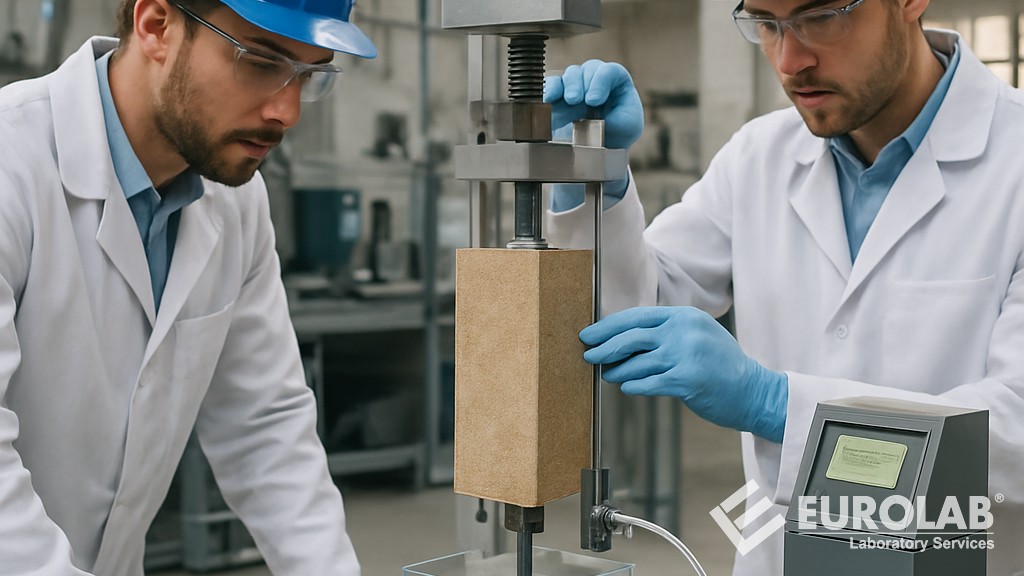
The DIN 52351 standard includes procedures for evaluating how wood fiberboards interact with moisture. This is critical for applications in construction, furniture, automotive interiors, and other areas where dimensional stability and durability in humid conditions are important. Excessive water absorption or thickness swelling can lead to warping, reduced strength, or layer separation.
This standard covers the following basic requirements:
To determine moisture content (moisture percentage), samples are weighed, oven-dried (typically at 103 degrees plus/minus 2 degrees until a constant mass is reached), and weighed again. The moisture content is calculated as a percentage of the initial (wet) mass. This method is similar to modern oven-drying methods in standards such as DIN EN 322.
When determining water absorption and thickness swelling, test specimens are immersed in water (usually at room temperature, for a specific period such as 24 hours or longer depending on the reference). Water absorption is measured as the percentage increase in mass after immersion and surface drying. Thickness swelling is the percentage increase in plate thickness after exposure to water (measured with calipers or micrometers at specific points). These values indicate the plate's resistance to expansion due to moisture.
Lower values generally indicate better moisture resistance, often achieved through binders, density, or surface treatments.
The DIN 52351 standard is no longer valid. Many older DIN standards for wood-based panels have been replaced by compatible European standards. Modern equivalents include:
Although the DIN 52351 standard is obsolete, it is still referenced in the following places:
In short, the DIN 52351 standard outlines methods for testing specific physical properties of wood fiberboard (a type of engineered wood panel made from wood fibers). This standard is quite brief and focuses on defining uniform laboratory procedures for measuring how wood fiberboard behaves when exposed to moisture.
As explained above, the DIN 52351 standard addresses three main test areas:
Together, these tests help measure how moisture affects wood fiberboard, which is important for quality control, engineering design, and compliance with building or product specifications.
This standard is no longer in effect, and modern tests are instead carried out under the following European standards: DIN EN 322 and DIN EN 317. These standards also harmonize test approaches across Europe.
Although the DIN 52351 standard is no longer valid, it retains its historical and technical importance because:
In conclusion, the DIN 52351 standard is a concise standard defining how to measure the moisture-related properties of wood fiberboard. Although no longer applicable, it forms the basis of modern testing regimes that enable consistent evaluation of wood-based panels in terms of moisture behavior, a crucial factor for durability and performance.
For many years, our organization, with its competent and experienced staff, has been understanding the needs of its clients, providing the advanced testing services they require, and assisting them in the establishment, implementation, and improvement of management systems. Within this framework, we also provide testing services in accordance with the DIN 52351 standard.
To get an appointment, to get more detailed information or to request an evaluation, you can ask us to fill in our form and reach you.

