

Test to determine the flexural properties of unreinforced and reinforced plastics, including high modulus composites and electrical insulating materials, that use a three-point loading system to apply a load to a simply supported beam, in the ASTM D790-17 standard developed by the American Society for Testing and Materials (ASTM). methods are described. These test methods are generally applied to both rigid and semi-rigid materials. However, for materials that do not break or do not flow within the 5 percent strain limit on the outer surface of the test specimen, the flexural strength is not determined by these methods.
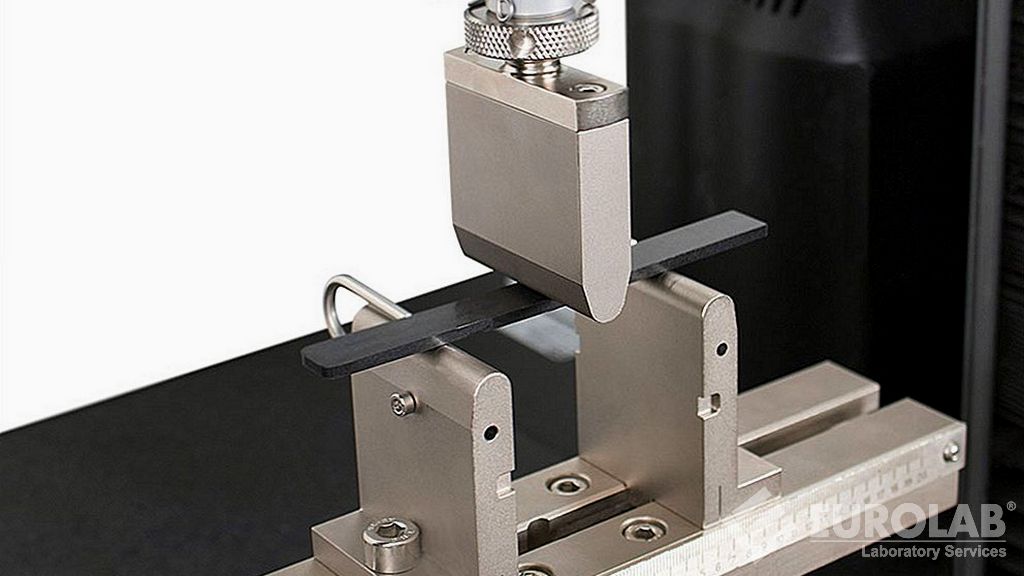
During testing , rectangular sample specimens are injection molded or cut from molded or extruded sheets or plates. The specimens must be solid and perfectly rectangular.
The deflection is measured in one of two ways: by the crosshead position or by using a deflector. However, it differs from the obtained values.
In production environments, quality control requirements are often met by measuring deviation using the crosshead position. However, more accurate measurement is obtained by using a deviation indicator such as a deviation meter.
Materials that do not break with the maximum strain allowed under this test method are more suitable for the 4-point bending test. The main difference between the two test methods is in the location of the maximum bending moment and maximum axial fiber stresses. The 4-point bend test is described in the ASTM D6272 standard.
The bending properties determined by the test methods provided by the ASTM D790-17 standard are generally useful for quality control and specification purposes. The tests included in this standard are:
Flexural properties vary with sample depth, temperature, atmospheric conditions, and strain rate.
Among the numerous test, measurement, analysis and evaluation studies it provides for businesses in various sectors, our organization also provides testing services for the bending properties of non-reinforced and reinforced plastics and electrical insulation materials within the scope of ASTM D790-17 standard, with its trained and expert staff and advanced technological equipment. .
To get an appointment, to get more detailed information or to request an evaluation, you can ask us to fill in our form and reach you.

