

ASTM D2510 Test Method for Adhesion of Solid Film Lubricants
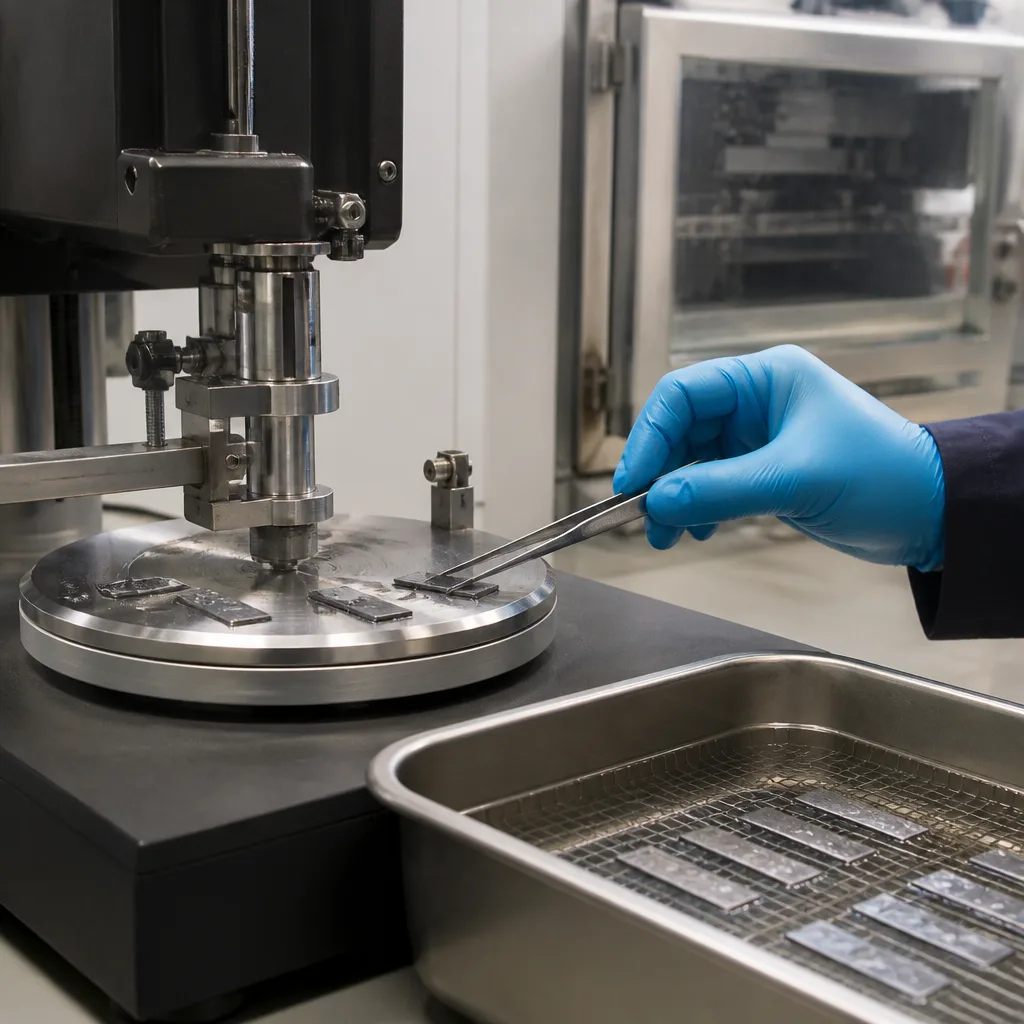
The “ASTM D2510 Test method for adhesion of solid film lubricants” standard, developed by the American Society for Testing and Materials (ASTM), provides a standardized procedure for evaluating how well dry solid film lubricant coatings adhere to metal surfaces, especially after exposure to water or other liquids.
Solid film lubricants are widely used where conventional liquid lubricants are impractical, such as in aerospace, automotive, military, and industrial equipment; this equipment operates at extreme temperatures, in vacuum environments, or in inaccessible locations.
Effective solid-film lubricant coatings must adhere to surfaces to provide adequate lubrication in applications where access is restricted and liquid lubricants cannot be easily replenished. Loss of coating adhesion leads to metal-to-metal contact and significant wear on the contacting surfaces. Adhesion is critical to the performance of a solid-film lubricant. Examples of solid-film lubricant applications include fasteners, bearings, and sliding elements in automotive, aerospace, and other equipment.
This test method aims to determine the adhesion of solid film lubricant coatings when in contact with water and other liquids. The results of this test provide an indication of the suitability of the lubricant coating for applications where contact with water or other liquids is likely.
The primary purpose of the ASTM D2510 standard is to determine whether a dry lubricating coating remains firmly adhered to the surface after environmental exposure. Good adhesion is crucial because coating failure can expose bare metal surfaces, increasing friction, wear, and premature component failure.
The ASTM D2510 standard covers the following:
The described test method follows a simple procedure:
If the coating separates and the metal substrate is exposed, the sample is considered to have failed the adhesion test.
Typical equipment required for testing includes:
The ASTM D2510 standard is applied to evaluate lubricating coatings commonly used in:
The ASTM D2510 standard is considered important for the following reasons:
The main benefits of this standard are as follows:
Despite its usefulness, the ASTM D2510 standard has some limitations:
The ASTM D2510 standard is frequently used in conjunction with other standards that address coating and lubricant performance:
Industries that commonly rely on the ASTM D2510 standard include:
In conclusion, the ASTM D2510 standard provides a practical and standardized method for evaluating the adhesion of solid film lubricant coatings after exposure to moisture or other liquids. Although the method is relatively simple, it plays a crucial role in ensuring that lubricant coatings remain securely bonded under service conditions. Its widespread use in aerospace, automotive, defense, and industrial manufacturing helps improve component reliability, reduce maintenance costs, and ensure consistent coating quality.
For many years, our organization, with its competent and experienced team, has been understanding the needs of its clients, providing the advanced testing services they require, and assisting them in the establishment, implementation, and improvement of management systems. Within this framework, we also provide testing services in accordance with the ASTM D2510 standard.
To get an appointment, to get more detailed information or to request an evaluation, you can ask us to fill in our form and reach you.

