

ASTM F3346 High Temperature Polyethylene/Aluminum/High Temperature Polyethylene Composite Pressure Tube
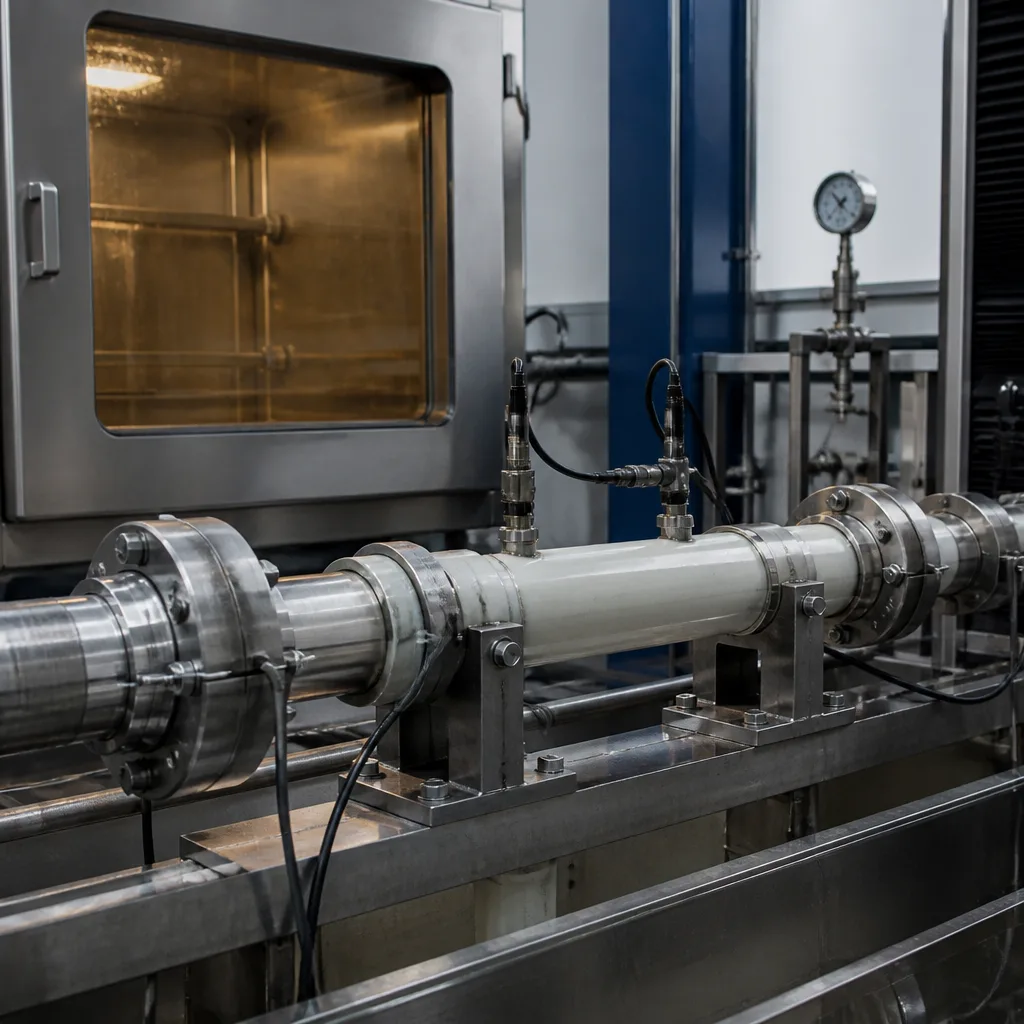
The “ASTM F3346 Standard Specification for High Temperature Polyethylene/Aluminum/High Temperature Polyethylene (PE-RT/AL/PE-RT) Composite Pressure Tube” standard, developed by the American Society for Testing and Materials (ASTM), covers co-extruded polyethylene composite pressure tubes with butt-welded aluminum tube reinforcement between the inner and outer layers. The inner and outer polyethylene layers are bonded to the aluminum tube with melt adhesive.
A nomenclature system for high-temperature polyethylene-aluminum-polyethylene (PE-RT/AL/PE-RT) pipes is provided, including material requirements and test methods, dimensions and strengths of component pipes and finished pipe, adhesion tests, and burst and sustained pressure performance. Marking requirements and methods are also given.
The piping covered by this specification is designed for use in air conditioning and refrigeration, underground irrigation systems, radiant panel heating systems, skirting boards, snow and ice melting systems, and with gases compatible with composite piping.
This specification applies only to composite pipes containing butt-welded aluminum tubing with both inner and outer polyethylene layers. Welded aluminum tubing is capable of withstanding internal pressures. Pipes where the metallic layers are not butt-welded and consist of plastic layers other than polyethylene are outside the scope of this specification.
Specifications for fittings to be used with pipes meeting the requirements of this specification are included in the standard annex (Annex A1).
The ASTM F3346 standard defines the material requirements, dimensional tolerances, mechanical performance, pressure ratings, test procedures, and marking requirements for multilayer composite tubing systems used in heating, cooling, refrigeration, and compatible gas applications.
The primary purpose of the ASTM F3346 standard is to ensure that PE-RT/AL/PE-RT composite pipes meet the following requirements:
This standard helps manufacturers produce piping systems with consistent quality and performance by establishing uniform production and testing requirements.
The ASTM F3346 standard applies to coextruded composite pressure tubes consisting of the following:
The specifications include the following:
This standard specifically excludes the following:
The ASTM F3346 standard defines a multilayer composite structure consisting of the following components:
This structure combines the following:
Pipes manufactured according to the ASTM F3346 standard are suitable for many applications, including:
These applications require tubing capable of operating at high temperatures while maintaining long-term mechanical integrity.
The ASTM F3346 standard specifies performance requirements in various fields.
Correct dimensions ensure compatibility with approved fittings and reliable assembly.
These features ensure reliable operation throughout the product's lifespan.
One of the most important aspects of this standard is the evaluation of adhesion between PE-RT layers and aluminum reinforcement. This standard includes tests to verify the following:
Proper adhesion is crucial because failure between layers can significantly reduce pipe performance.
The ASTM F3346 standard requires multiple pressure-related assessments:
These tests confirm that the pipe can withstand prolonged exposure to high temperatures and internal pressure.
The ASTM F3346 standard specifies marking requirements to ensure traceability. Typical product markings include:
Proper labeling allows installers, inspectors, and end-users to verify compliance.
PE-RT/AL/PE-RT composite tubing conforming to ASTM F3346 standard offers several advantages:
The ASTM F3346 standard is used in conjunction with various related standards, including:
Together, these standards provide a comprehensive framework for the design, manufacture, and qualification of plastic and composite piping systems.
The ASTM F3346 standard is important for the following reasons:
For many years, our organization, with its competent and experienced team, has been understanding the needs of its clients, providing the advanced testing services they require, and assisting them in the establishment, implementation, and improvement of management systems. Within this framework, we also provide testing services in accordance with the ASTM F3346 standard.
To get an appointment, to get more detailed information or to request an evaluation, you can ask us to fill in our form and reach you.

