DIN 18180 Plasterboards - Types and Requirements
The "DIN 18180 Gypsum Boards - Types and Requirements" standard, developed by the German Institute for Standardization (DIN), describes the types of gypsum boards and the properties they should possess. This standard applies to gypsum boards. It is also applicable to mechanically processed board types in the factory, with the necessary modifications.
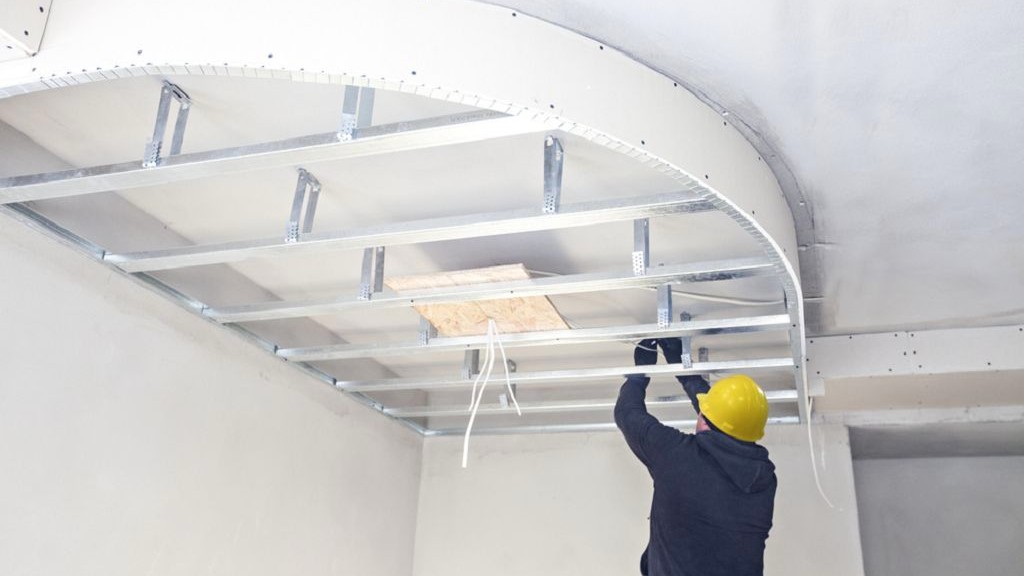
Meanwhile, other standards must be taken into account for different processes:
- For processing: DIN 18181 Plasterboards in building construction - Processing
- For partition walls and cladding:
- DIN 4103-1 Non-load-bearing internal partitions - Part 1: Requirements and validations
- DIN 4103-4 Non-load-bearing internal partitions - Part 4: Timber-framed partitions
- DIN 18183-1 Partitions and wall cladding with plasterboards on metal framework - Part 1: Cladding with plasterboards”
- For suspended ceilings and ceiling coverings:
- DIN 18168-1 Plasterboard ceiling coverings and suspended ceilings - Part 1: Construction requirements
- DIN 18168-2 Plasterboard ceiling coverings and suspended ceilings - Part 2: Verification of the load-bearing capacity of metal substructures and metal suspension rods
Gypsum boards are used particularly as wall and ceiling cladding, as cladding for partition walls and cladding, and in the production of prefabricated components.
Plasterboards are useful for building lightweight and durable walls. Synthetic plasterboards are increasingly used, but traditional ones use dehydrated calcium sulphate and heat it to turn it into plaster. After dehydration, the resulting product is mixed with various additives and water. It is then placed in cardboard that runs on a conveyor belt. In a short time, the product commonly known as plasterboard emerges. When water is added to the plaster powder, it absorbs water again and hardens quickly.
Gypsum material has many natural properties that make it an excellent option for construction. The main characteristics of drywall as a building material are:
- Fire resistance: Since gypsum is a fire resistant material in itself, gypsum board can hold fire for up to four hours. The reason behind this is the presence of water in gypsum products. Water starts to evaporate when it comes in contact with fire. It helps the board to develop a protective layer that helps in preventing the spread of fire for a period of time.
- Fireproof: When gypsum board comes into contact with fire, it starts a process called calcination. Calcination refers to the process of dehydrating the board and helping it form an additional layer. It makes the wall fireproof for several hours and also maintains normal temperature.
- Acoustic properties: Plasterboards are inherently soundproof to some extent. They are more effective than traditional walls of the same thickness. This is because they contain sound deadening and reduce reverberation. For example, approximately 60mm of plasterboard is as effective at blocking sound as an 85mm wall.
- Thermal properties: Drywalls contain crystalline water. They also contain voids, allowing users to achieve the right balance between humidity and temperature. If fiberglass is added, it further prevents fire because it helps maintain the integrity of the fiberglass board. The extra insulation acts as a vapor barrier, helping to manage indoor humidity.
The main types of drywall include:
- Plasterboard whiteboard (drywall for short): This is the standard type. It is useful for creating suspended ceilings and is also used as a covering material. Their thickness varies from 9,5 mm to 25,4 mm. They provide basic fire protection, but do not contain any additives to increase resistance.
- Plasterboard underlayment: Backing plasterboard is a combination of several layers of plasterboard. Thicknesses range from 6,4 mm to 25,4 mm. It is generally used for walls, ceilings, self-leveling screeds and partitions. It has a grey lining paper on the front and back, providing improved sound control, durability and fire resistance.
- Moisture-resistant drywall: A type of moisture-resistant drywall known as greenboard. The added layer reduces the effect of moisture on it. However, it is not completely waterproof. Constant exposure to water will cause corrosion.
- Modified moisture resistant drywall: For better moisture resistance and better properties, purple or modified moisture resistant drywall is preferred. These drywalls offer superior mold protection. Therefore, they are perfect for kitchen and bathroom environments.
- Blueboard drywall or plaster skirting: These have a surface layer that is highly absorbent. However, their use is limited and they are primarily used for veneer plastering. These work great in bathrooms and kitchens but are not strong against mud, paint and taping materials.
- Paperless drywall: These are improved versions of the regular drywall version. Paperless board eliminates paper and replaces it with fiberglass. They offer higher mold resistance and are more durable. They are easy to cut.
- Fire-resistant drywall: These drywalls provide excellent protection against fire hazards. They contain non-combustible fibers that increase their tendency to catch fire. However, they are thicker and more difficult to cut and shape.
- Soundproof plasterboards: The normal variant offers a certain degree of sound protection. But for more, a soundproof plasterboard with acoustic properties is preferred. These are ideal for acoustic needs such as music rooms or environments requiring high sound suppression.
- Exterior gypsum ceiling board: Unlike many other types, these are designed for outdoor use. They range in thickness from 12,7mm to 15,9mm and are used on soffits to prevent unwanted indirect air exposure.
Among the numerous testing, measurement, analysis and evaluation studies that our organization has carried out for businesses in various sectors, it also provides testing services defined in the “DIN 18180 Plasterboards - Types and Requirements” standard with its trained and expert staff and advanced technological equipment.



