

The ISO 37 standard developed by the International Standards Organization (ISO) defines a test method for determining the tensile stress-elongation properties of vulcanized and thermoplastic rubbers. The properties that can be determined are tensile strength, elongation at break, stress at a given elongation, elongation at a given stress, stress at yield, and elongation at yield. Measurement of stress and strain at yield point is only valid for some thermoplastic rubbers and some other compounds.
For the purposes of this standard,
The ISO 37 standard is used in a wide variety of industries to determine the tensile stress-elongation properties of vulcanized and thermoplastic rubbers. This standard is similar, but not considered equivalent, to the ASTM D412 standard published by the American Society for Testing and Materials (ASTM) (ASTM D412-16 Standard test methods for vulcanized rubber and thermoplastic elastomers – Tension). Many companies adhere to one of these standards, depending on where they are located in the world.
The ISO 37 standard is widely used by companies engaged in the production of raw materials, the development of elastomer technology, and the manufacture of rubber-based consumer products and medical supplies such as rubber gloves. This standard is a widely used standard by tire manufacturers, as well as by the energy and automotive sectors.
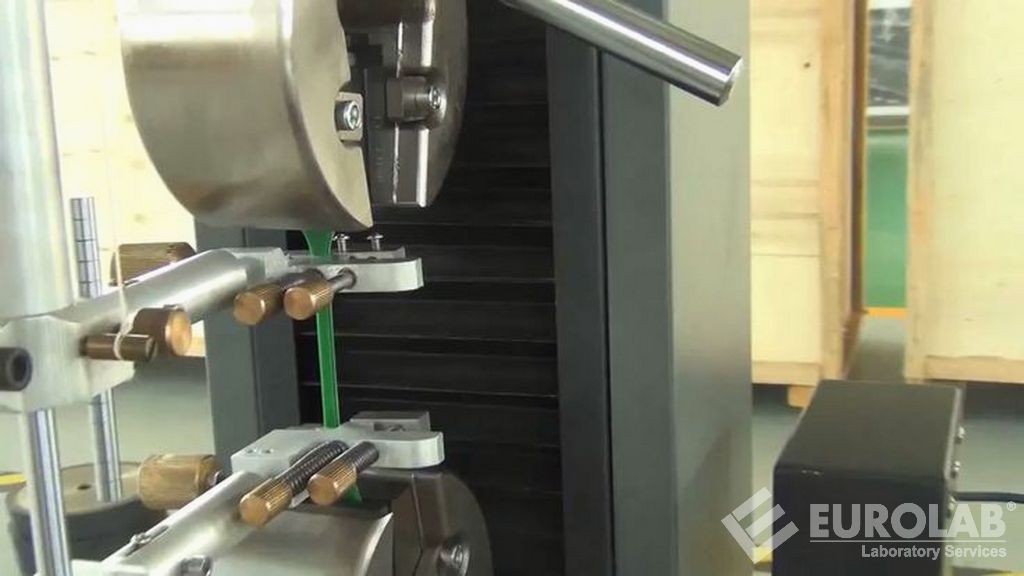
The test methods defined in the ISO 37 standard are performed on a universal testing machine. System capacity is dependent on the strength of the elastomer, but most tests to this standard fall within the capacity range of 1 kN and 5 kN. Many elastomers tested to the ISO 37 standard are high elongation materials and require an extra height frame.
For voltage measurements, both contact and non-contact extensometers meet the accuracy requirements of this standard.
Among the numerous test, measurement, analysis and evaluation studies it provides for businesses in various sectors, our organization also provides test services for the determination of tensile stress-elongation properties in rubber, vulcanized or thermoplastic products within the scope of ISO 37 standard, with its trained and expert staff and advanced technological equipment. .
To get an appointment, to get more detailed information or to request an evaluation, you can ask us to fill in our form and reach you.

