

The European standard “EN 13302 Bitumen and bituminous binders - Determination of dynamic viscosity of bituminous binders using a rotary shaft apparatus” describes the method for determining the dynamic viscosity of various bituminous binders (modified and unmodified bituminous binders, bituminous emulsions, withdrawn and fluidized bituminous binders) using a rotary shaft apparatus (coaxial viscometer).
This specifies standard application temperatures, but dynamic viscosity can be measured at other temperatures if required. Similarly, measurements at standard shear rate values can be replaced or supplemented with measurements at additional shear rates if necessary.
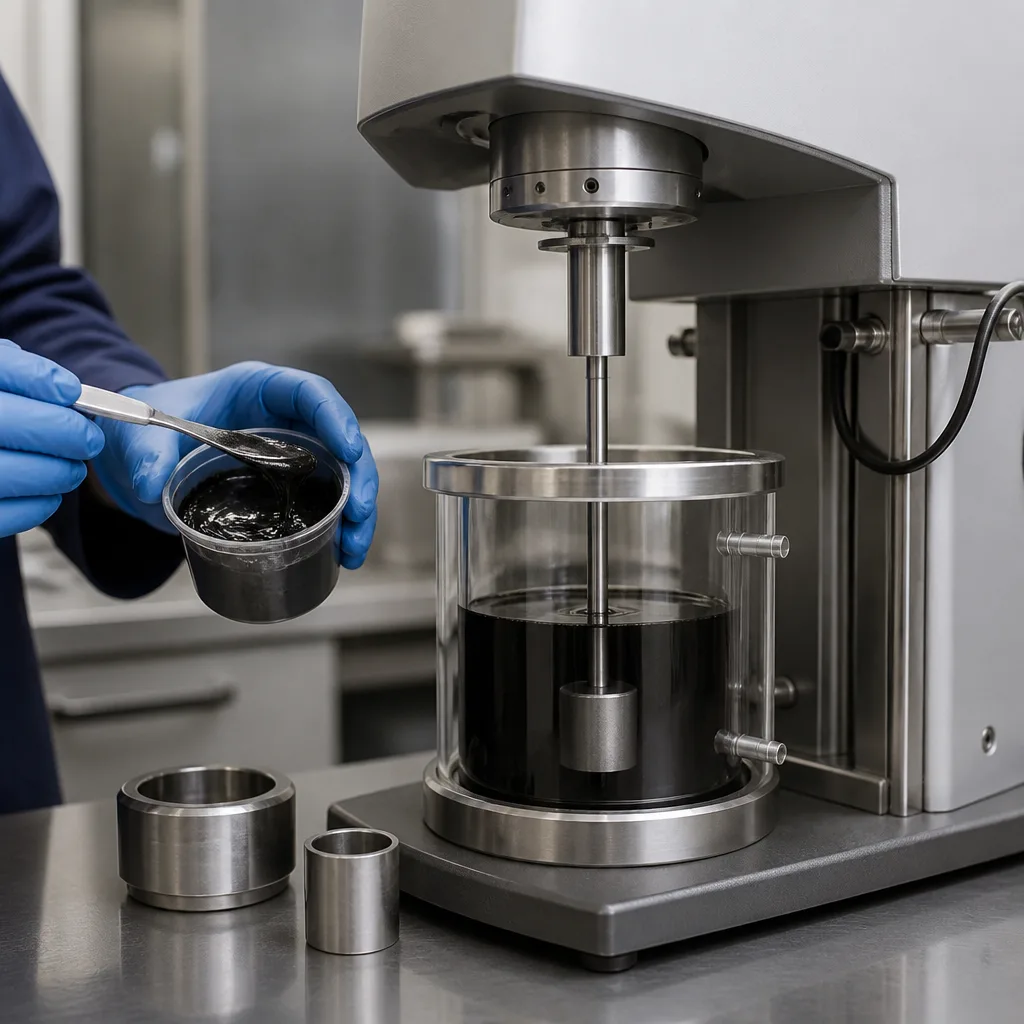
In principle, torque applied to a rotating shaft (e.g., a cylinder) in a special sample container holding the test specimen measures the relative resistance of the shaft to rotation and provides a measure of the dynamic viscosity of the specimen. To obtain the true dynamic viscosity at the test temperature, it may be necessary to apply a shape factor.
Since non-Newtonian viscosity values reflect the behavior of the fluid and the measurement system, not unique material properties, it is acknowledged that measurements made using this method may not always predict performance under operating conditions. Comparisons between non-Newtonian viscosities should only be made for measurements taken under similar shear stress conditions.
Bitumen and bituminous binders are widely used in road construction, roofing, waterproofing systems, and industrial applications. One of their most important rheological properties is dynamic viscosity, which describes the material's resistance to flow under an applied force. Determining dynamic viscosity using a rotary shaft device is a method described in detail in the EN 13302 standard.
This standard specifies a procedure for measuring the dynamic viscosity of bituminous binders at high temperatures using a rotary viscometer equipped with a shaft. The test is applicable to:
This method provides viscosity values that help characterize the usage and performance characteristics of binders during production, transportation, and application.
The test principle is based on the resistance encountered by a rotating shaft in a heated sample of bituminous binder. The shaft is immersed in the binder and rotated at a constant speed. The device measures the torque required to make the shaft rotate. This torque is directly related to the viscosity of the material. Higher torque indicates:
Conversely, lower torque indicates the following:
The device automatically converts torque measurements into dynamic viscosity values.
The equipment used in the tests includes the following:
The test generally follows these steps:
Several factors can significantly affect viscosity measurements:
The described method is used in the following areas:
Dynamic viscosity is an important parameter because it affects the following:
Viscosity measurement is particularly important for polymer-modified bitumen because modifications can significantly alter flow behavior.
The advantages offered by the rotary shaft method are as follows:
Some of the limitations included in this standard are:
In conclusion, the EN 13302 standard defines a standardized method for determining the dynamic viscosity of bituminous binders using a rotating shaft apparatus. This test method allows manufacturers, laboratories, and road authorities to assess flow properties, manufacturing suitability, and quality consistency by measuring the resistance of heated bitumen to shaft rotation. Accurate viscosity measurement is crucial for the proper handling, mixing, transportation, and long-term performance of bituminous materials used in road pavements and industrial applications.
For many years, our organization, with its competent and experienced staff, has been understanding the needs of its clients, providing the advanced testing services they require, and assisting them in the establishment, implementation, and improvement of management systems. Within this framework, we also provide testing services in accordance with the EN 13302 standard.
To get an appointment, to get more detailed information or to request an evaluation, you can ask us to fill in our form and reach you.

