Oxidation Induction Time (OIT) Test
Oxidation induction time (OIT) is a measure used in materials science to evaluate the thermal stability and resistance to oxidative degradation of materials, particularly polymers and plastics. It represents the time it takes for a material to begin oxidizing when exposed to a specific temperature in an oxygen-rich environment, and is typically measured using techniques such as differential scanning calorimetry (DSC).
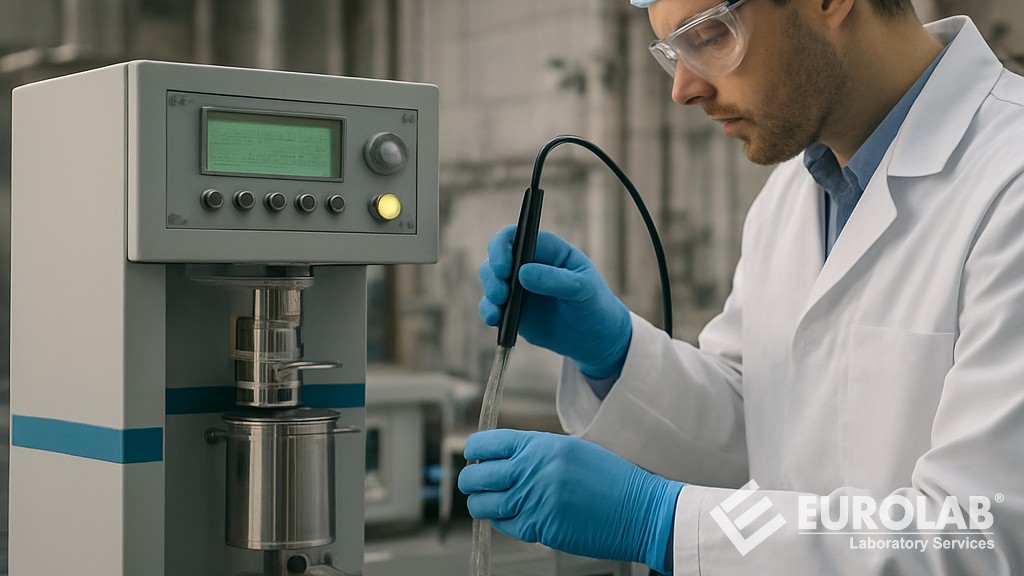
During an oxidation induction time test, a sample is heated to a set temperature in a controlled atmosphere (usually nitrogen), then passed into a medium of oxygen or air. The time from the introduction of oxygen to the onset of an exothermic oxidation reaction (detected as a sharp increase in heat flux) is the oxidation induction time.
Oxidation induction time (OIT) is critical for evaluating the durability and lifespan of materials in applications exposed to heat and oxygen, such as packaging, piping, or cables.
Oxidation induction time (OIT) is considered important because it provides critical information about a material's resistance to oxidative degradation, directly impacting its durability, performance, and lifespan in real-world applications. These tests are also considered important for the following reasons:
- Material lifespan: Oxidation induction time indicates how long a material, such as a polymer or plastic, can withstand oxidative stress before degrading. A longer oxidation induction time allows materials to maintain their mechanical properties (e.g., strength, flexibility) over time, providing better protection against degradation.
- Quality control: Oxidation induction time is used to evaluate the effectiveness of antioxidants or stabilizers added to materials. This helps manufacturers ensure consistent quality and predict how materials will perform when exposed to heat and oxygen.
- Application reliability: In products such as pipes, cables, packaging, or medical devices, oxidative degradation can lead to cracking, brittleness, or failure. Oxidation induction time helps assess whether a material is suitable for harsh environments, preventing costly failures or safety issues.
- Aging and shelf life prediction: Oxidation induction time data helps predict how materials will age under specific conditions, guiding decisions regarding storage, use, and replacement schedules.
- Cost efficiency: Manufacturers can balance performance and cost by optimizing antioxidant formulations based on oxidation induction time results, preventing over- or under-stabilization of materials.
Essentially, oxidation induction time is a crucial metric for ensuring materials remain functional and safe in applications where exposure to heat and oxygen is a concern, ultimately supporting product reliability and sustainability.
Oxidation induction time (OIT) is determined by a standardized laboratory test, typically using differential scanning calorimetry (DSC), which measures the time required for a material to begin oxidizing under controlled conditions. The steps of this method are generally as follows:
- Sample preparation: A small, representative sample (typically 5-15 mg) of the material to be tested (e.g., polymer, plastic) is selected. To ensure consistent heat transfer, the material is cut or ground to a uniform size (e.g., thin film, powder, or small pellets). The sample is placed in a DSC container, usually aluminum, ensuring good contact with the container's surface.
- Setting up the DSC equipment: A differential scanning calorimeter (DSC) capable of precise temperature control and gas passage is used. This device must be calibrated for temperature and heat flow accuracy using standard reference materials (e.g., indium or zinc).
- Defining test conditions: To ensure consistency, established standards such as ASTM D3895 (for polyethylene) or ISO 11357-6 are followed. An appropriate test temperature is selected depending on the material (e.g., 190-210 degrees for polyethylene). The temperature should be high enough to accelerate oxidation, but not so high as to immediately degrade the sample. Two gaseous environments are prepared as the atmosphere:
- Inert gas: Nitrogen or argon to prevent oxidation during initial heating.
- Oxidizing gas: Oxygen or air for the oxidation step.
- The test is run: The sample is placed in the DSC and heated under an inert gas (e.g., nitrogen) at a controlled rate (e.g., 10-20 degrees/min) to the target test temperature. During the stabilization process, the sample is held under the inert gas at the target temperature (typically 1-5 minutes) to stabilize the baseline and establish thermal equilibrium. During the gas transition process, the atmosphere is transitioned to oxygen or air at a controlled flow rate (e.g., 50 mL/min). This marks the start of the oxidation induction time measurement. The heat flow is monitored and recorded as a function of time. When oxidation begins, the DSC detects an exothermic reaction (a sharp increase in heat flow).
- Measurement of oxidation induction time: Determine the onset of oxidation: On the DSC thermogram, find the point where the heat flow deviates significantly from the baseline due to the exothermic oxidation reaction. Calculate the oxidation induction time: Measure the time (in minutes) from the moment the gas is converted to oxygen until the onset of oxidation. This is the oxidation induction time.
- Analysis and interpretation of results: A longer oxidation induction time generally indicates better oxidative stability, often due to effective antioxidants or stabilizers. Results are compared to material specifications or standards to assess quality or suitability for an application. Tests are repeated to ensure reproducibility, as minor changes in sample preparation or equipment can affect the results.
Important points:
- Sample homogeneity: The sample must be homogeneous, as inconsistencies can distort the results.
- Temperature selection: The test temperature should be appropriate for the material; a temperature that is too high may lead to an unrealistically short oxidation induction time.
- Antioxidant volatility: Some antioxidants may evaporate during heating, which can affect the accuracy of oxidation induction time.
- Equipment sensitivity: A high-sensitivity DSC must be used to accurately detect the onset of oxidation.
For many years, our organization, with its competent and experienced team, has been understanding the needs of its clients, providing the advanced testing services they require, and assisting in the establishment, implementation, and improvement of management systems. Within this framework, we also provide oxidation induction time (OIT) testing services to businesses.



