

The standard “GA 141-2010 Ballistic resistance of police body armor” published in China in the “GA Professional standard - Security” class describes the terms and definitions, classification and nomenclature, technical requirements, test methods, inspection rules, quality assurance principles and packaging, transportation and storage requirements of products for use in the field of police body armor. This standard applies to police body armor.
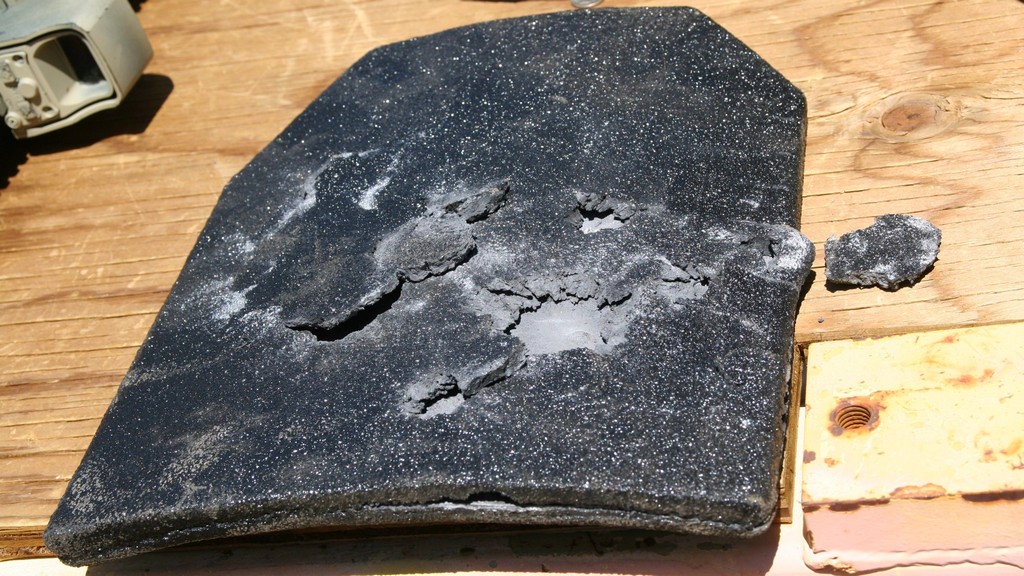
For the purposes of this standard, police ballistic resistance of body armor refers to a garment that effectively protects the protected parts of the body, including body armor vests, body armor panels, ballistic resistance accessories, which absorb and dissipate the energy of a warhead, prevent penetration, and mitigate blunt trauma. Armor panels refer to protective structures that effectively prevent the penetration of warheads and prevent or reduce blunt trauma to the human body. A schematic diagram of body armor construction is included in the standard.
This standard specifies minimum performance requirements and test methods for ballistic resistance of body armor used by law enforcement officers to protect the torso against handgun and rifle ammunition. The primary purpose of this standard is to test, evaluate and certify ballistic resistant body armor.
This standard is designed to be used in conjunction with other standards to test and evaluate specific ballistic-resistant equipment, such as ballistic-resistant body armor, against contemporary ballistic threats that pose a life-threatening safety hazard to law enforcement officers.
According to this standard, the ballistic resistance of the body armor material should be non-toxic and should not cause natural harm to the human body. The ballistic resistance of the body armor should be flexible and easy to put on and take off. After wearing, the free movement of the two arms and the movements of the human body such as kneeling, jumping, squatting, throwing, turning should not be restricted. The ballistic resistance jacket of the body armor should comply with the characteristics of the armor panels and should be detachable. The body armor panel should be marked with the impact face or the wear face.
At the same time, the body armor jacket should be free of defects such as damage, floating lines, missing seams. There should be no holes, deep pits, scratches, cracks, corner burrs and other defects on the surface of the ballistic panel material. Metal materials should be subjected to anti-rust treatment. Non-metal materials should be smooth and smooth. The ballistic material of the same layer should be smooth and consistent, without defects such as jointing, local protrusions, wrinkles. For ballistic panels composed of multiple layers of ballistic materials, the properties and dimensions of each layer should be consistent. For soft ballistic materials, the raw materials should not be chemically treated and thermally bonded. The ballistic panel structure of the body armor and the material of the ballistic resistance accessory should be consistent with the body armor panels. There should be clear and permanent product marks on the body armor and the ballistic insert plate. The position of the body armor mark should be 10 cm below the neckline on the inside of the back and in the middle of the impact surface on the protective cover of the ballistic panel. The mark of the ballistic insert plate should be in the lower right corner of the impact surface.
The color of the ballistic resistance of the body armor vest should be police uniform blue. The protective cover of the ballistic panel should be black, lightproof and waterproof, and the edge seal should be uniform. The material of the protective cover of the ballistic panel should have anti-leakage performance. The hydrostatic pressure resistance should be greater than or equal to 18 kPa.
Meanwhile, the actual projected protection area of the ballistic resistance of body armor should be 0,25 m2 or more. For body armor with protection level above 4, if a ballistic additional plate is used, it should be placed outside the ballistic panel. The effective ballistic size of the ballistic additional plate is 250 mm × 300 mm. The chamfer of the four corners should be 25 mm or less.
Among the numerous tests, measurements, analyses and evaluation studies carried out for businesses in various sectors, our organization also provides testing services defined in the “GA 141-2010 Ballistic resistance of police body armor” standard with its trained and expert staff and advanced technological equipment.
To get an appointment, to get more detailed information or to request an evaluation, you can ask us to fill in our form and reach you.

