

The standard “ASTM C484-20 Standard test method for thermal shock resistance of glazed ceramic tiles” published by the American Society for Testing and Materials (ASTM) describes a test method for determining the resistance of glazed ceramic tiles to thermal shock under normal use conditions.
For the purposes of this standard, the terms and definitions given in the "ASTM C242-18 Standard Terminology for Ceramic White Goods and Related Products" standard are valid.
This test method consists of determining the thermal shock resistance of ceramic tiles by subjecting a sample to ten cycles at temperatures between 15 degrees plus/minus 5 degrees and 145 degrees plus/minus 5 degrees. This test method includes two procedures, with and without immersion, for tiles with water absorption of 10 percent or less and tiles with water absorption greater than 10 percent, respectively. After ten cycles are completed, the tiles are examined for any damage resulting from the cycle.
This test method is intended for testing glazed ceramic tiles that will be used in areas that may be exposed to rapid or severe temperature changes.
The water bath used in these tests is one through which 15°C plus/minus 5°C water flows at a rate of approximately 4 L/min for the immersion test. The bath should hold at least 19 L of water and should be sized so that the test specimen is completely immersed when placed vertically in the bath.
A closed water bath is a bath formed by covering the water bath described above with an aluminum sheet and a layer of aluminum particles for testing without immersion. The aluminum sheet should be 5,18 mm thick and of such dimensions that the test specimen can be placed on it with the glazed side down. The aluminum sheet should cover the mouth of the bath through which the water flow is directed to contact the bottom surface of the aluminum sheet. The entire upper surface of the aluminum sheet should be covered with a layer of aluminum particles 3 mm thick. The diameters of the aluminum particles should be in the range of 0,3 to 0,6 mm.
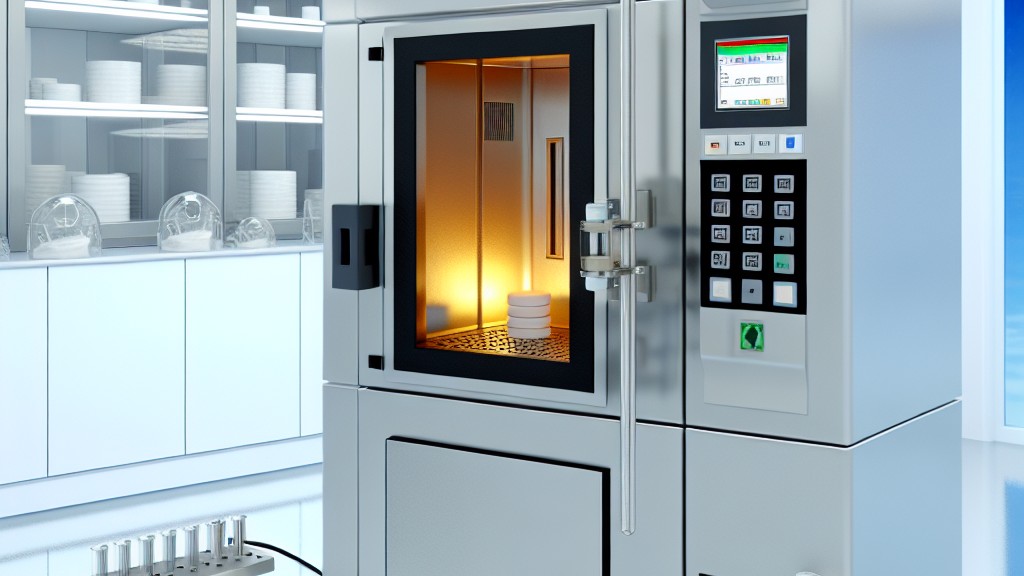
Additionally, an oven that can maintain a constant temperature of 145 degrees plus/minus 5 degrees is used in these tests.
Test samples shall consist of at least five tiles or trim units selected at random from the lot to be tested. Test samples measuring up to 30 cm × 30 cm shall be left uncut for testing. Samples with sides greater than 30 cm may be cut to size not less than 30 cm.
Before testing for thermal shock resistance, the tiles are examined for visible defects. A suitable stain such as water-resistant black china ink or a 1 percent methylene blue aqueous solution may be used to aid in the detection of defects. The ink or dye solution is applied to the surface of the tiles and wiped off with a damp cloth after 1 minute. All tiles must be free of defects before testing.
The immersion testing method consists of immersing the tiles vertically in a water bath without contact with each other for 10 minutes under low temperature conditions for tiles with water absorption of 5 percent or less.
The non-immersion testing method, for tiles with water absorption greater than 10 percent, consists of placing the tiles with their glazed sides down in a closed water bath under low temperature conditions without contact with each other for 5 minutes.
In the testing method with and without immersion, after spending 5 minutes in the low temperature condition, the tiles are immediately transferred to the oven kept at a temperature of 145 degrees plus/minus 5 degrees.
Ceramics have exceptional thermal properties compared to metals and plastics. Thermal expansion is low for all types of ceramics. Other properties such as thermal conductivity, resistance to thermal shock, and resistance to extreme temperatures vary from one ceramic group to another.
Thermal shock resistance refers to the ability of a material to withstand extreme and rapid temperature changes. These temperature fluctuations cause thermal stresses in the ceramic and thus the propagation of microcracks that permanently damage the material. Most isotropic ceramics have excellent resistance to extreme temperatures with low coefficients of expansion, giving them very high thermal shock resistance (for example, ZTA composites and zirconium, which are composite ceramic materials containing zirconium grains in an alumina matrix). A ceramic that is resistant to temperature changes, high temperatures and thermal shock is classified in the group of refractory ceramics.
Our organization, which has been trying to support businesses from every sector with its testing, measurement, analysis and evaluation studies carried out in a wide range for years, has a strong staff that closely follows the developments in the world in the field of science and technology and constantly improves itself. In this context, testing services in accordance with the "ASTM C484-20 Standard test method for thermal shock resistance of glazed ceramic tiles" standard are also provided to businesses.
To get an appointment, to get more detailed information or to request an evaluation, you can ask us to fill in our form and reach you.

