

The European standard “EN 60243 Electrical strength of insulating materials - Test methods” consists of the following subsections published under the same title:
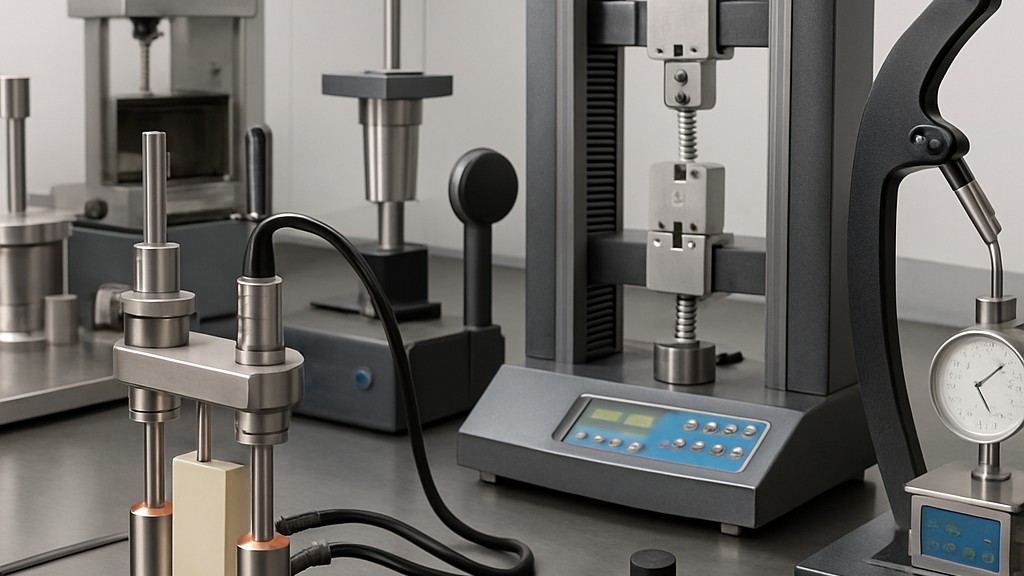
Electrical strength test results obtained in accordance with this standard are useful for detecting changes or deviations from normal properties resulting from processing variables, aging conditions, or other manufacturing or environmental conditions. However, they are not intended to be used to evaluate the behavior of insulating materials in an actual application.
The measured values of a material's electrical strength can be affected by many factors, including:
The effects of all these factors must be considered when examining materials for which no experience is available. This standard defines specific conditions that allow rapid discrimination between materials and can be used for quality control and similar purposes. While the results obtained by different methods are not directly comparable, each can provide information about the relative electrical strengths of materials. The electrical strength of most materials decreases as the thickness of the sample between the electrodes and the duration of voltage application increases. The measured electrical strength of most materials is significantly affected by the intensity and duration of surface discharges before failure. For designs that are free of partial discharges up to the test voltage, it is crucial to know the discharge-free electrical strength before failure.
The EN 60243-1 standard outlines test methods for:
This standard is used to evaluate insulation in the following sectors:
By understanding the electrical strength of insulation materials, manufacturers can select the right materials for their applications and comply with product safety regulations.
Testing the dielectric strength of insulating materials helps:
In short, the EN 60243-1 standard plays a vital role in the design, testing, and certification of electrical insulation systems. By providing standardized methods for assessing electrical strength at power frequency conditions, it helps ensure the safety, durability, and performance of electrical and electronic products. Understanding and implementing this standard is crucial for designers, technicians, and product developers to meet both legal requirements and market expectations.
Certain considerations must be taken into account when using direct voltage tests. For a non-homogeneous test specimen with alternating voltage, the distribution of voltage stress within the specimen is determined by impedance (largely capacitive). With increasing direct voltage, the voltage distribution can be largely capacitive but depends in part on the rate of voltage increase. The resistive voltage distribution after the application of a constant voltage represents a steady-state condition.
The choice between direct or alternating voltage depends on the purpose for which the breakdown test is to be used and, to some extent, the intended application of the material.
When a direct voltage is applied, the following currents are generated: capacitive current, electrical absorption current, leakage current, and, in some cases, partial discharge currents. Furthermore, in materials with distinct layers or discontinuities, as a result of interface polarization, the voltage distribution across the test specimen is also affected by charges of opposite polarity that can accumulate on either side of the interface and create local fields strong enough to cause partial discharges or failure of the test specimens.
For most materials, the direct current (DC) breakdown voltage is higher than the peak power frequency breakdown voltage. For many materials, especially those that are not homogeneous, the direct current (DC) breakdown voltage is three times or more the alternating current (AC) breakdown voltage.
The primary objective of the EN 60243-2 standard is to provide standardized procedures for determining how insulating materials perform under electrical stress at frequencies other than power frequency (50 or 60 Hz). These frequencies can range from a few hertz to several kilohertz, depending on the application.
Testing at different frequencies is important for:
This standard EN applies to:
This standard is particularly applicable in the following sectors:
The benefits of using this standard include:
In short, EN 60243-2 is essential for evaluating how insulating materials respond to AC electrical voltage at non-standard frequencies. It allows materials engineers, quality testers, and product designers to ensure that the insulation will perform safely and effectively in real-world applications where electrical frequencies vary significantly. Its flexibility in electrode configurations and frequency selection makes it a vital tool in modern electrical insulation testing.
This standard focuses on uniform test procedures for measuring the breakdown voltage of insulating materials. These tests are critical for manufacturers and engineers working with high-voltage equipment such as transformers, cables, switchgear, and other power system components. Understanding how insulation behaves under electrical stress ensures safety, reliability, and compliance with international quality standards.
This standard specifically addresses tests using electrodes of the prescribed form at power frequencies (typically 50 or 60 Hz). It is applicable to a variety of solid insulating materials, such as plastics, rubber, and composite materials. This standard describes different electrode arrangements to simulate a variety of real-world stress conditions. Common configurations include spherical electrodes, cylindrical electrodes, and rod-and-plane arrangements. Electrode selection depends on the intended application and the material form (e.g., sheet, plate, film).
The ambient conditions (temperature, humidity) for the tests are standardized for consistency. The material is subjected to increasing AC voltage until electrical breakdown occurs. The voltage at which the material breaks down is recorded as the dielectric strength.
This standard describes how to prepare test specimens, including size, thickness and conditioning (e.g. drying procedures).
This standard is widely used in the following areas:
The main benefits of complying with the EN 60243-3 standard are:
In short, EN 60243-3 is a vital standard for ensuring the performance and safety of solid electrical insulating materials used in high-voltage applications. By defining uniform testing procedures, it supports quality assurance and global harmonization within the electrical industry. For engineers and manufacturers, compliance with this standard is both a technical necessity and a strategic advantage.
Our organization, which has been operating for many years and meticulously follows global developments in science and technology, employs a team of experienced professionals and a broad infrastructure to conduct testing, measurement, and analysis in a wide range of areas for businesses across all sectors. In this context, we also provide testing services in accordance with the EN 60243 "Electrical Strength of Insulating Materials - Test Methods" standard.
To get an appointment, to get more detailed information or to request an evaluation, you can ask us to fill in our form and reach you.

