

The ISO 7231 standard, “Polymeric materials, cellular, flexible - Determination of airflow value at constant pressure drop,” published by the International Organization for Standardization (ISO), describes two methods for determining the airflow value of flexible cellular polymeric materials:
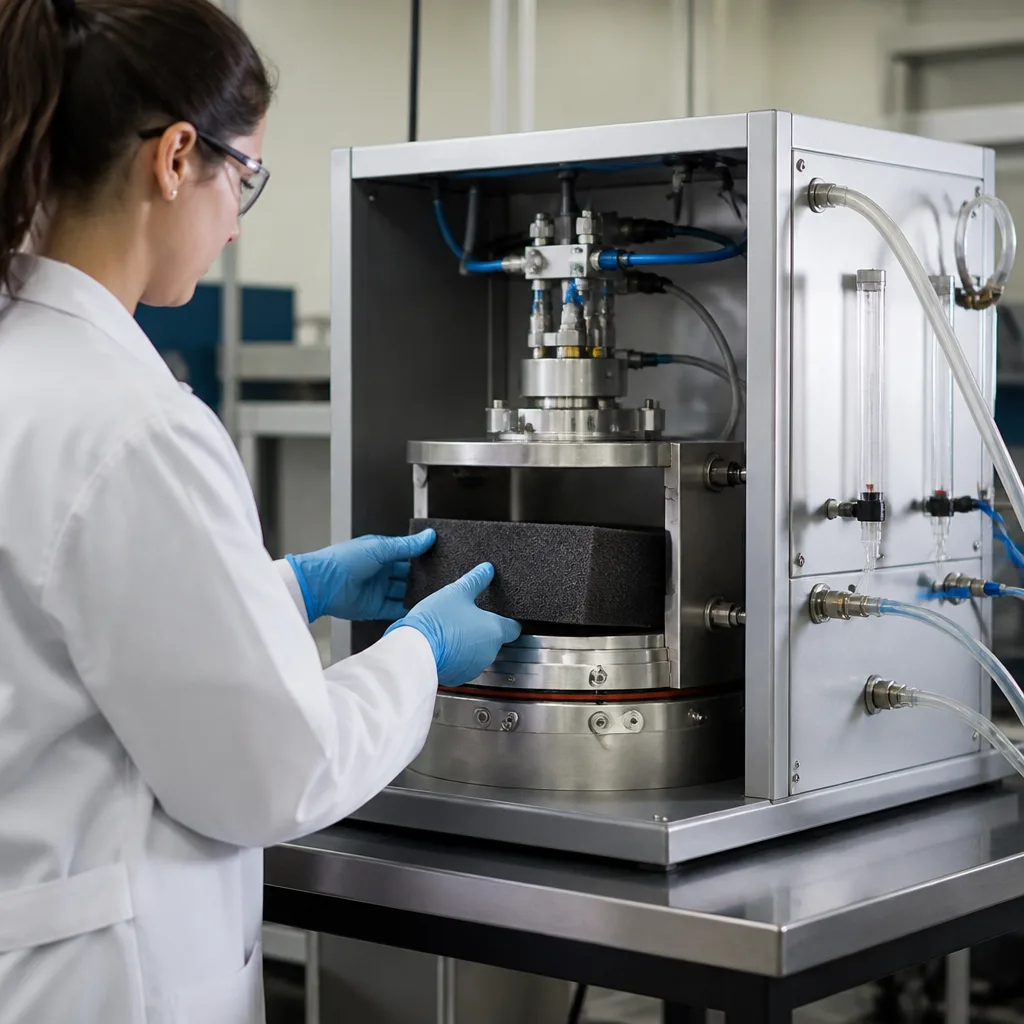
Airflow values can be used as an indicator of the effects of formulation and production variables on cellular structure.
In this standard, the term "conventional flexible cellular polymeric material type" refers to types unsuitable for sealing purposes.
For the purposes of this standard, the airflow value refers to the volumetric flow rate required to maintain a constant pressure difference in a flexible foam test piece.
ISO 7231 is an international standard that specifies a method for determining the resistance of rubber and plastic hoses and hose assemblies to kinking under pressure or vacuum conditions. This standard plays a crucial role in evaluating how hoses behave when subjected to kinking in real-world service environments.
Hoses used in industries such as oil and gas, automotive, and manufacturing are often subjected to constant kinking, vibration, and pressure fluctuations. The ISO 7231 standard was developed for these purposes:
The ISO 7231 standard applies to the following:
This standard is commonly used in the following sectors:
The ISO 7231 standard test method evaluates how a hose performs when bent to a specific radius under pressure or vacuum. Generally, this method follows these steps:
The importance of the ISO 7231 standard is based on a simple fact: hoses rarely operate in straight, static conditions. In real-world applications, they are constantly bent, stretched, and subjected to pressure. This standard ensures that hoses can withstand these conditions. Here are the main reasons why this standard is important:
Without proper verification, bending can lead to the following:
This standard simulates these conditions, allowing for the identification of weak points before the hose is put into use.
Failure during bending can lead to the following:
This standard helps significantly reduce these risks by verifying bending performance.
Ignoring this can significantly shorten hose life or cause sudden failure.
This results in hoses that last longer and perform reliably under stress.
Together, these standards ensure that a hose is robust against combined mechanical and compressive stresses.
This standard helps ensure that hoses can withstand bending stresses, thereby:
In short, these standard tests ensure system reliability by demonstrating that the hose can withstand kinking without collapsing, leaking, or cracking.
In conclusion, the ISO 7231 standard is a vital testing standard for ensuring the mechanical reliability and flexibility of hoses under real-world conditions. By simulating kinking under pressure, it helps manufacturers design safer and more durable hose systems, giving end-users confidence in their performance.
For many years, our organization, with its competent and experienced staff, has been understanding the needs of its clients, providing the advanced testing services they require, and assisting them in the establishment, implementation, and improvement of management systems. Within this framework, we also provide testing services compliant with the ISO 7231 standard.
To get an appointment, to get more detailed information or to request an evaluation, you can ask us to fill in our form and reach you.

