

The standard “DIN 53504 Rubber testing - Determination of tensile strength at break, tensile stress at yield, elongation at break and stress values in tensile testing”, published by the German Institute for Standardization (DIN), describes the procedures for determining the tensile strength at break, tensile stress at yield, elongation at break and stress values of test specimens of specific shapes made of rubber and elastomers, when the test specimens are stretched at a constant rate until fracture.
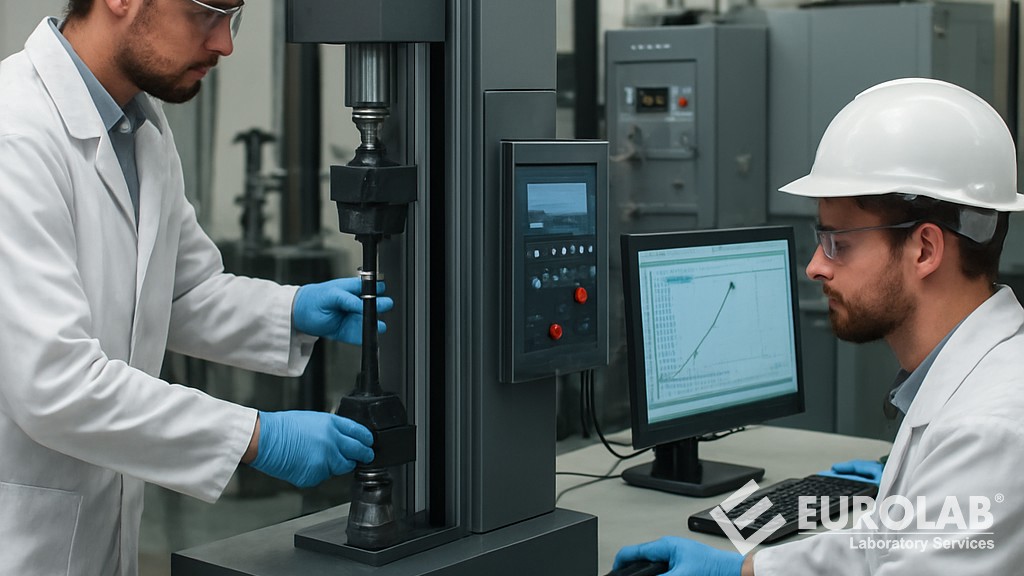
In tensile testing, since tensile strength and elongation at fracture alone do not adequately characterize the behavior of elastomers under tensile stress, the complete force-elongation curve must be recorded.
DIN 53504 is a standard for defining the method of determining the tensile stress-strain properties of vulcanized rubber and elastomers. This standard has been in use for many years and continues to be widely applied, particularly in the European rubber industry, for quality control, material specification, and product development of elastomeric materials such as seals, hoses, tires, vibration dampers, conveyor belts, and technical rubber products.
The test pulls a standardized rubber sample at a constant speed until it breaks and records the force-elongation behavior. The key properties determined are as follows:
These values help to evaluate material quality, compound formulation, degree of vulcanization, filler distribution, aging resistance, and suitability for specific applications.
This standard primarily uses dumbbell-shaped (dog bone) test specimens with defined dimensions. The most common types are:
The S2 sample is very commonly used, particularly popular for routine testing due to its practical size and reliable results. Typical S2 sample characteristics are as follows:
Samples are cut from molded sheets (typically 2 mm thick) using precision molds. A minimum of 5 samples per test condition is recommended for statistical reliability.
The testing procedure generally follows these steps:
This procedure largely conforms to the ISO 37 standard (the international equivalent standard for rubber tensile testing), but there are some national preferences and minor differences.
In rubber testing laboratories worldwide, the results from the DIN 53504 standard are included in almost every material data sheet for elastomers. High tensile strength and elongation indicate good compound quality, while stress values at constant elongations reveal the stiffness behavior under load.
In short, the DIN 53504 standard is one of the most widely used test standards for evaluating the mechanical performance of vulcanized rubber and thermoplastic elastomers. This standard plays a critical role in quality control, product development, and material comparison in sectors such as automotive, construction, medical devices, and industrial products.
This standard applies to:
It is used to determine the following:
This standard is often referenced alongside ISO 37 because it defines similar tensile testing methods for rubber materials.
The test is performed using a universal tensile testing machine equipped with the following:
Test speed is determined based on sample type and material requirements.
The key parameters measured are as follows:
Tensile strength = Maximum force / Original cross-sectional area.
Elongation at break (percentage) = Elongation at break / Original measured length x 100.
The DIN 53504 standard is required for the following:
Industries that rely heavily on this standard include:
In conclusion, the DIN 53504 standard remains one of the most important mechanical testing standards for rubber materials. By defining precise sample geometries, test conditions, and calculation methods, it ensures reliable and comparable tensile property measurements. For manufacturers and laboratories working with elastomers, compliance with the DIN 53504 standard is essential for maintaining product performance, safety, and market acceptance.
For many years, our organization, with its competent and experienced staff, has been understanding the needs of its clients, providing the advanced testing services they require, and assisting them in the establishment, implementation, and improvement of management systems. Within this framework, we also provide testing services in accordance with the EN 53504 standard.
To get an appointment, to get more detailed information or to request an evaluation, you can ask us to fill in our form and reach you.

