

The standard “EN ISO 6892 Metallic materials - Tensile testing”, which is based on a European standard and later published by the International Organization for Standardization (ISO), consists of the following sections published under the same title:
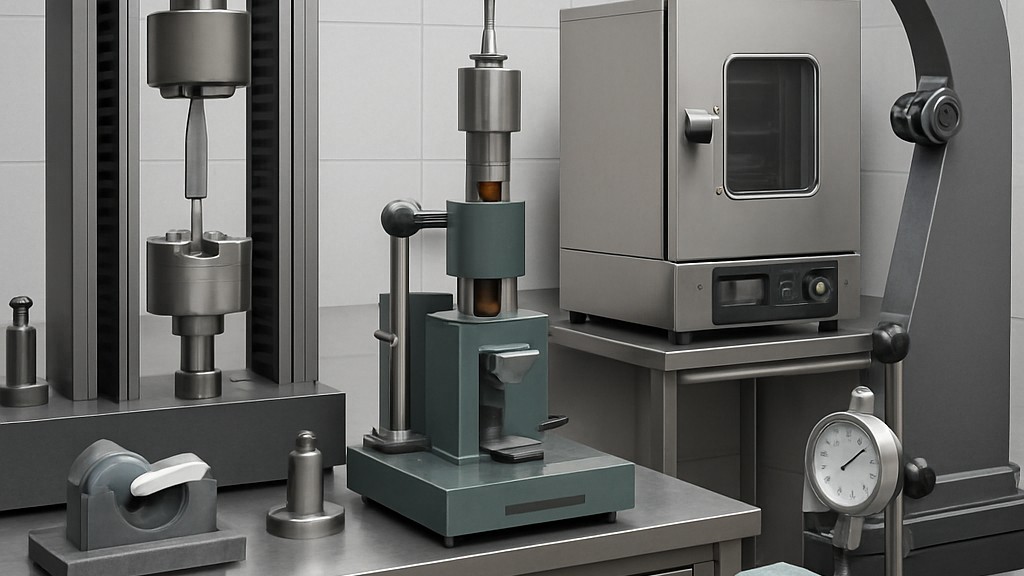
In the world of materials science and engineering, understanding how metals behave under stress is fundamental to designing safe and reliable structures, from bridges and aircraft to automotive components and consumer products. One of the most widely adopted standards in this regard is ISO 6892-1. This standard provides a precise method for performing tensile tests on metallic materials at ambient temperatures, allowing for consistent measurement of key mechanical properties such as strength and ductility.
The primary objective of the ISO 6892-1 standard is to define a standardized procedure for uniaxial tensile testing, which simulates the tensile forces a material may be subjected to in real-world applications. This test helps determine key properties that predict a metal's performance under load, such as its ability to withstand deformation without fracture.
This standard applies to metallic materials in various forms, such as sheet, rod, wire, pipe, or castings, at room temperature, specifically at 23°C plus/minus 5°C. It covers a wide range of metals, including steels, aluminum alloys, titanium, and more, but excludes brittle materials for which tensile strength may not be applicable. For high or low temperatures, supplementary standards such as ISO 6892-2 are recommended.
The ISO 6892-1 standard minimizes variability by standardizing test parameters, enabling global comparison of material quality and compliance with regulatory requirements. Tensile testing in this context reveals the stress-strain behavior of a material via a characteristic curve, from which various properties are derived:
These values are calculated using engineering stress (force divided by original cross-sectional area) as specified in the standard. For materials that exhibit complex behavior, such as strain hardening, additional agreements between the parties may be necessary.
This standard provides two methods for testing rates. The first method, Method A, is based on strain rates (including the crosshead separation rate), and the second method, Method B, is based on strain rates. Method A aims to minimize variation in test rates and measurement uncertainty of test results when determining strain rate-sensitive parameters. For this reason, and because the strain rate sensitivity of materials is often unknown, the use of Method A is recommended.
This method covers metallic materials in forms such as sheet, rod, wire, and tubing tested at temperatures between 10°C and 1.000°C, with a focus on temperatures above 35°C. Non-metallic materials and low-temperature applications (which are covered by ISO 6892-3) are excluded. Tests must maintain a constant temperature within plus/minus 5°C along the gauge length, emphasizing strain rate control to account for increased temperature sensitivity in material behavior.
By promoting repeatability, the ISO 6892-2 standard supports global compliance, quality assurance and innovation in industries pushing thermal boundaries for efficiency and sustainability.
To perform a tensile test at 4 K, the test piece, placed inside a cryostat, is fully submerged in liquid helium and tested using displacement control at a nominal strain rate of 10 −3 s −1 or lower.
The ISO 6892-4 standard standardizes tensile testing in liquid helium to evaluate the performance of metals under extreme cryogenic conditions, where brittleness and changes in mechanical behavior are common. At 4 K, materials exhibit unique properties (generally higher strength but significantly reduced ductility), making this standard indispensable for applications such as fusion reactors, particle accelerators, and deep space exploration.
This standard covers metallic materials (e.g., sheets, rods, wires) typically tested in a liquid helium environment at 4,2 K under atmospheric pressure. It focuses on uniaxial stress using engineering stress (force on the original cross-sectional area) and emphasizes precise control of strain rates due to increased sensitivity at ultra-low temperatures. By ensuring global consistency, this standard supports material qualification for high-risk cryogenic systems.
This standard supports applications in additive manufacturing, nuclear forensics, and electronics, where microspecimens are the norm, by enabling accurate measurement of key metrics such as yield strength and elongation. This standard covers miniaturized test pieces for metallic materials in forms such as foil, wire, or extruded sections, typically with gauge lengths below 10 mm and submillimeter cross-sections. It is applied at room temperature (23°C plus 7°C minus 5°C) and emphasizes non-standard guidelines that complement, rather than replace, ISO 6892-1. The tests focus on uniaxial stress, with provisions for strain rate control to reduce size effects on material behavior. This standard promotes consistency in research and quality assurance, particularly for industries working with rare or high-value samples.
This standard provides reliable measurements of properties such as yield strength and ductility, which are essential for applications such as solar cell substrates or microchip interconnects. This standard covers metallic materials in foil or strip form, tested at room temperature (23°C plus/minus 5°C) using computer-controlled testing machines. It emphasizes non-contact strain measurement and precise strain rate control to overcome challenges such as buckling and tearing. This standard complements ISO 6892-1 by focusing on fine geometries and provides non-mandatory guidelines as a working draft.
The ISO 6892 series of standards aims to provide standardized methods for conducting uniaxial tensile tests to determine mechanical properties of metallic materials, such as yield strength, tensile strength, elongation, and modulus of elasticity. These standards ensure consistent, reproducible, and comparable results across laboratories and industries worldwide. By specifying precise test conditions, equipment requirements, and procedures, these standards facilitate quality control, material selection, and compliance with engineering specifications for a variety of applications, from construction to aerospace.
The overarching goal is to enable reliable characterization of metallic materials under a variety of conditions, supporting innovation, safety, and global trade in industries that rely on precise material performance data.
Our organization, which has been operating for many years and meticulously follows global developments in science and technology, employs a team of experienced professionals and a broad infrastructure to conduct testing, measurement, and analysis in a wide range of areas for businesses across all sectors. In this context, we also provide testing services in accordance with the EN ISO 6892 Metallic materials - Tensile testing standard.
To get an appointment, to get more detailed information or to request an evaluation, you can ask us to fill in our form and reach you.

