

The ISO 4316 Surfactants - Determination of pH of aqueous solutions - Potentiometric method standard, published by the International Organization for Standardization (ISO), describes a method for determining the pH of aqueous solutions of surfactants. This method is only valid if specified in the particular standard for each product.
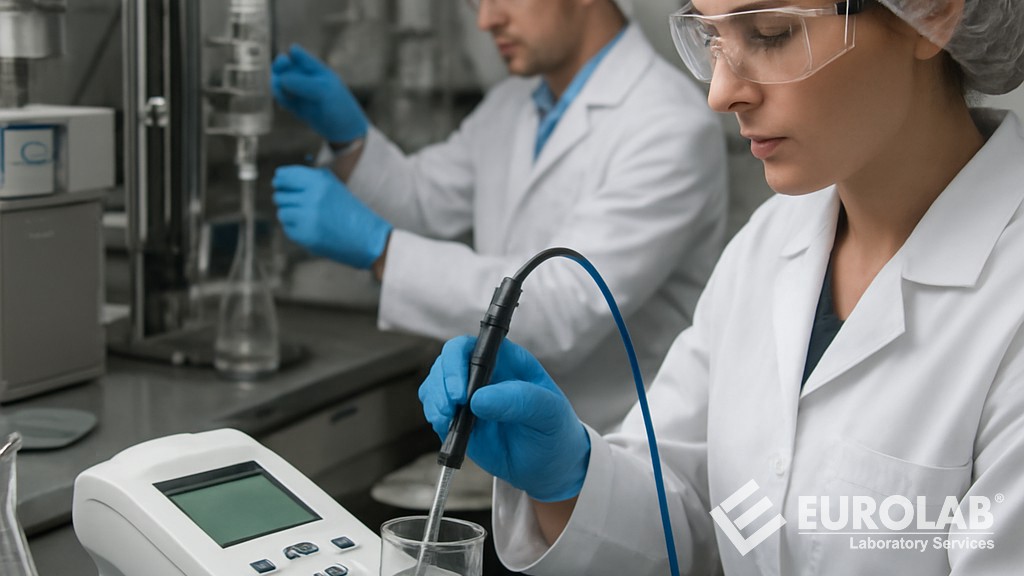
This method is based on the potentiometric measurement of the potential difference between a glass electrode immersed in an aqueous solution of the surfactant and a reference electrode. The surfactant sample should be prepared and stored according to the instructions given in the ISO 607 standard.
During testing, approximately 10 g of sample is weighed with a precision of 0,01 g. The preparation and concentration of the test solution taken from the test portion should be specified in the specific standard for each product. The pH meter is calibrated according to the manufacturer's instructions, using two selected standard buffer solutions at the specified temperature. When measuring pH, for all measurements, the temperatures of the electrodes, the water used for washing, and the standard buffer solutions or test solutions should be set to within 20 degrees plus/minus 1 degree and should be as close to each other as possible. The difference between these temperatures should not exceed 1 degree.
After the device is calibrated, the electrodes are washed first with water and then with the test solution. The test solution is mixed, a sufficient amount is poured into the measuring cup, and the electrodes are immersed in it. The pH meter reading is checked to be stable for 1 minute, and then the value is recorded.
The same procedures are repeated with a fresh portion of the test solution. If the second measurement differs from the first by 0,1 pH units or more, a third measurement is taken. If this value is uncertain, the test is repeated, including calibration. In the case of a cationic surface, the pH meter is checked after each measurement.
The average value should be rounded to the nearest pH unit. Results are expressed in pH units at 20 degrees Celsius.
In short, the ISO 4316 standard is a test method that measures a very specific property of anionic surfactants: their ability to disperse calcium soaps (typically lime soap dispersion or calcium soap dispersing power).
Simply put, it answers the question: how well does this surfactant prevent hard water soaps from forming those annoying, greasy residues? This is critical for laundry detergents, shampoos, dish soaps, and industrial cleaners used in hard water areas.
When ordinary soaps are used in hard water (water containing calcium or magnesium ions), they react to form insoluble calcium soaps. These calcium soaps are the grayish-white foam that appears in bathtubs, around sinks, or in the greasy layer left on laundry in hard water. They also significantly reduce cleaning efficiency.
Modern synthetic anionic surfactants (e.g., alkylbenzene sulfonates, alcohol ether sulfates, alpha-olefin sulfonates) are much more resistant to hardness ions, and most actively disperse these calcium soaps, keeping them suspended and preventing precipitation. The higher the dispersing power, the better the surfactant performs in very hard water without the need for extra enhancers (formerly phosphates or nowadays zeolites/polycarboxylates).
When applying the ISO 4316 test method, a standard calcium soap dispersion is prepared (calcium oleate or calcium stearate in water, a very unstable, flocculating suspension). Increasing amounts of the test surfactant solution are added. The mixture is shaken and allowed to stand. The endpoint is reached when 20% of the original calcium soap remains dispersed (measured by acid titration of the dispersed soap after filtration or centrifugation). The result is expressed as the dispersing power of calcium soap. This is usually the amount of surfactant in grams required to disperse 100 g of calcium soap. A lower numerical value indicates better dispersing power.
In previous years, as countries transitioned from soap to synthetic detergents, lime soap dispersion strength was one of the most important selection criteria for anionic surfactants, especially in countries where water is often very hard. This test formed the basis of many commercial requirements (e.g., “minimum lime soap dispersion strength value of 5” in tender specifications). This testing method has helped explain why some early alkylbenzene sulfonates, despite their good foaming properties, performed poorly in hard water.
The ISO 4316 standard remains important today. The main reasons why this standard is considered so important are as follows:
For many years, our organization, with its competent and experienced staff, has been understanding the needs of its clients, providing the advanced testing services they require, and assisting in the establishment, implementation, and improvement of management systems. Within this framework, we also provide testing services to businesses in accordance with the "ISO 4316 Surfactants - Determination of pH of Aqueous Solutions - Potentiometric Method" standard.
To get an appointment, to get more detailed information or to request an evaluation, you can ask us to fill in our form and reach you.

