

The European standard “EN 1931 Flexible sheets for waterproofing - Bitumen, plastic and rubber sheets for roof waterproofing - Determination of water vapor permeability properties” describes a method for determining the water vapor permeability properties of waterproofing sheets and calculating the moisture flow rate density and moisture resistance factor. This method is applicable to factory-produced bitumen, plastic and rubber roof waterproofing sheets.
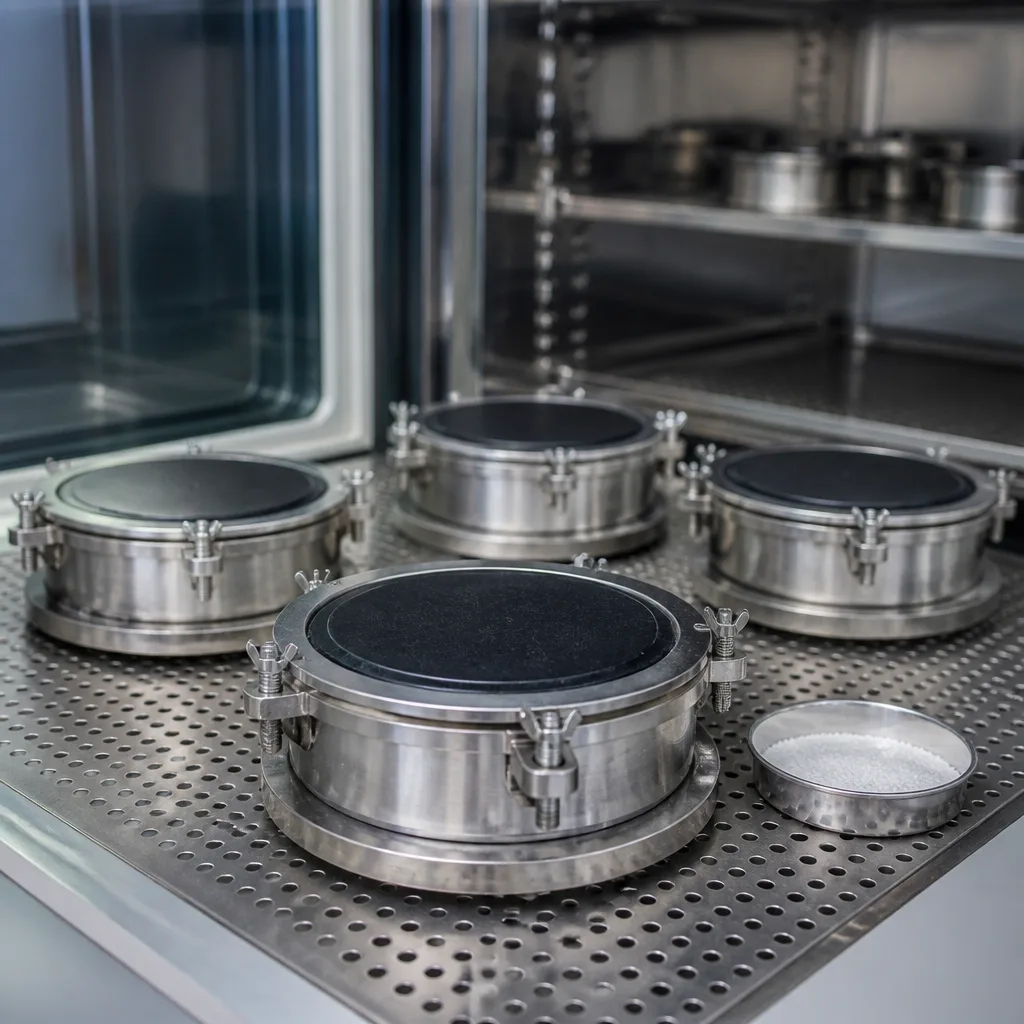
In principle, during testing, the test specimen is enclosed in an open flange of a test vessel containing a desiccant. The apparatus is then placed in an environment with controlled temperature and humidity. When the mass increase is linear over a specific period, the apparatus is weighed periodically to determine the intensity of the moisture flow rate.
Due to the nature of the bitumen, plastic, or rubber sheets in question, the test procedure given in this standard consists of two methods:
For the purposes of this standard, the following definitions apply:
EN 1931 is an important European standard that includes a test method for determining the water vapor permeability properties of flexible sheets used in roof waterproofing. This standard applies to bitumen, plastic, and rubber sheets, which are essential components in modern building construction to protect structures from moisture damage.
This standard plays a critical role in ensuring the long-term performance and durability of roofing systems by measuring how well these materials resist or allow the passage of water vapor.
In building physics, controlling moisture is just as important as keeping liquid water out. Even the best waterproof membranes can fail if they trap water vapor inside the structure, leading to:
The EN 1931 standard helps manufacturers, engineers, and testing laboratories measure these properties, leading to better material selection and building design.
This standard defines a precise laboratory method for performing the following operations:
The test typically involves creating a controlled moisture gradient across the sample (e.g., using the dry cup or wet cup method).
The sample is sealed in a test container containing a desiccant or saturated salt solution to maintain specific relative humidity levels. Weight changes over time are measured to determine vapor flow.
This applies to both homogeneous and heterogeneous flexible sheets, including reinforced materials commonly used in flat and low-pitched roofs.
The EN 1931 standard is widely used in the following areas:
The results of this standard are often combined with other tests (such as waterproofing, tensile strength, and UV resistance) to provide a complete performance profile of roofing membranes.
This standard belongs to the family of EN 13956 and EN 14967 standards for plastic and bituminous roof waterproofing sheets. It remains valid in countries that have adopted European Union standards for the regulation of construction products.
Roof waterproofing membranes must not only resist liquid water but also control the movement of water vapor within building structures. Excessive vapor transmission can lead to:
EN 1931 provides a standardized test procedure for measuring how effectively roofing membranes resist or allow moisture vapor diffusion. This standard applies to factory-manufactured roofing membranes and includes:
These materials are commonly used in the following areas:
The EN 1931 standard test method generally includes the following:
This method is based on the controlled diffusion of water vapor through the material.
The main reasons why the EN 1931 standard is important are as follows:
In conclusion, the EN 1931 standard is fundamental to modern, energy-efficient, and durable buildings. By standardizing how a material's breathability and vapor resistance are measured, it helps prevent costly moisture-related failures and supports sustainable construction practices.
For many years, our organization, with its competent and experienced staff, has been understanding the needs of its clients, providing the advanced testing services they require, and assisting them in the establishment, implementation, and improvement of management systems. Within this framework, we also provide testing services in accordance with the EN 1931 standard.
To get an appointment, to get more detailed information or to request an evaluation, you can ask us to fill in our form and reach you.

