Evaluation of the Corrosion Effect of Elastomers on Copper
Copper is widely valued for its excellent electrical conductivity, thermal conductivity, ductility, and inherent resistance to corrosion compared to many metals such as iron. However, it does corrode. This is a chemical or electrochemical reaction with its environment and affects its appearance, performance, and sometimes structural integrity. Copper corrosion usually forms a protective layer, but under certain conditions it can cause problems.
When exposed to air and moisture, copper initially oxidizes to form a thin, reddish-brown layer of copper oxide. Over time, especially outdoors or in humid environments, this transforms into a more complex, stable layer called a patina through reactions with carbon dioxide, sulfur compounds, oxygen, and other atmospheric elements. This patina is extremely beneficial: it acts as a barrier, significantly slowing further corrosion and protecting the underlying metal. Under most atmospheric conditions, the corrosion rate remains very low, and the patina enhances the material's durability rather than damaging it.
Although patina is protective in many cases, corrosion can have harmful effects under certain conditions:
- Material loss and structural weakening: In aggressive environments (e.g., acidic waters, high chloride soils, or polluted air), corrosion can become localized rather than homogeneous. Types include:
- Pitting corrosion: Deep, localized holes in pipes that can lead to pinhole leaks.
- Erosion corrosion: Accelerated by high-speed turbulent water flow, it strips away protective films and thins pipe walls.
- Galvanic corrosion: When copper comes into contact with less noble metals (for example, in mixed piping systems), it acts as a cathode and accelerates the corrosion of the other metal, but the copper itself is less damaged.
- Deterioration of properties: Excessive corrosion reduces mechanical strength, in some cases increases brittleness, and impairs conductivity if thick insulation layers are formed. In electrical or thermal applications, even minor surface changes can affect performance.
- Release of copper into water (plumbing systems): Corrosive water (low pH, soft water, high chloride/sulfate, stagnation) dissolves copper from pipes and leads to:
- Blue-green discoloration on the fixtures.
- A metallic or bitter taste in drinking water.
- High copper levels that may exceed health guidelines.
- Subsurface/soil corrosion: In some soils (high sulfate/chloride, poor drainage, moisture), protective films deteriorate, leading to accelerated erosion.
- Other specific effects: In biofuels or oils, copper corrosion (measured by copper strip tests) indicates fuel degradation. In nuclear waste storage facilities or marine environments, chloride ions can increase corrosion rates even at low oxygen levels.
In general, copper corrosion is usually self-limiting and protective, making it one of the most durable metals for roofing, plumbing, and electrical applications. Problems mainly arise in aggressive or stagnant conditions, and in these cases, preventative measures are necessary (e.g., water treatment, coatings, or alloy selection).
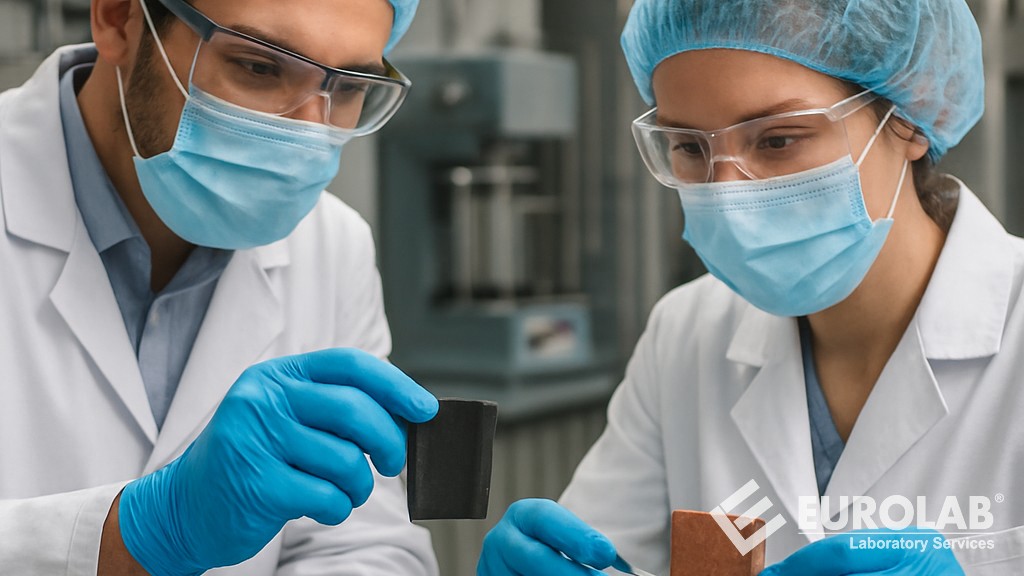
Various methods are used to evaluate the corrosive effect of elastomers—rubber-like polymers commonly used in gaskets, seals, or coatings—on copper.
Elastomers can be susceptible to corrosion through the leaching of compounds such as sulfur, acids, amines, or halogens. These compounds react with copper to form oxides, sulfides, or other corrosive byproducts. This is particularly important in applications where elastomers come into contact with copper components, such as automotive, electrical, or plumbing systems. Assessment typically involves controlled exposure tests followed by quantitative or qualitative evaluation.
The basic approaches are as follows:
- Contact exposure tests in controlled environments: These tests accelerate corrosion and provide faster results by simulating real-world conditions where elastomers are in direct contact with copper. For accelerated testing, corrosive environments such as a salt spray chamber (ASTM B117 standard) or a 3-5% sodium chloride solution are used to mimic marine or industrial environments.
The evaluation is done as follows:
- Visual inspection: A 5-point scale is used (0 no corrosion, 1 very slight, e.g., minor discoloration), 2 slight pitting, 3 moderate, visible patina or deposits, 4 strong, deep pitting, 5 extreme, structural damage).
- Gravimetric (weight loss) measurement: Copper samples are weighed before and after exposure. Corrosion products are cleaned with a mild acid, dried, and the mass loss is calculated. A high loss indicates high corrosion severity.
- Dimensional changes: Elastomer thickness is measured before and after to check for swelling or deformation. This may be related to the infiltration of aggressive compounds.
- Electrochemical methods: These provide quantitative data on corrosion kinetics and are suitable for precise laboratory evaluations.
- Electrochemical impedance spectroscopy: Copper-elastomer assemblies are immersed in an electrolyte. A three-electrode setup is used: copper as the working electrode, platinum as the counter electrode, and silver/silver chloride as the reference electrode. A small AC voltage is applied in the frequency range before and after exposure. Lower polarization resistance indicates a higher corrosion rate due to the elastomer effect.
- Potentialodynamic polarization: This is a setup similar to electrochemical impedance spectroscopy. The test is performed with and without elastomer contact. Higher current density means that the elastomer corrodes more rapidly. For copper alloys, the ASTM G61 standard is followed.
- Scanning Kelvin probe: Using a microfield electrochemical workstation, the copper surface is scanned before and after elastomer exposure. Volta potential differences are measured to map corrosion zones.
- The standardized tests specific to elastomers on copper are as follows:
- VW PV 3976 Wear resistance of glossy surfaces in vehicle interiors.
- ASTM E478 Standard test methods for chemical analysis of copper alloys.
- ASTM G38 Standard Practice for the Preparation and Use of C-Ring Stress-Corrosion Test Specimens
For many years, our organization, with its competent and experienced staff, has been understanding the needs of its clients, providing the advanced testing services they require, and assisting in the establishment, implementation, and improvement of management systems. Within this framework, we also provide services to businesses for evaluating the corrosive effects of elastomers on copper.



