

The “ASTM F3141-23 Standard guide for total knee replacement loading profiles” standard, developed by the American Society for Testing and Materials (ASTM), provides guidance for functional simulation used to evaluate the durability of knee replacement devices under force control in vitro.,
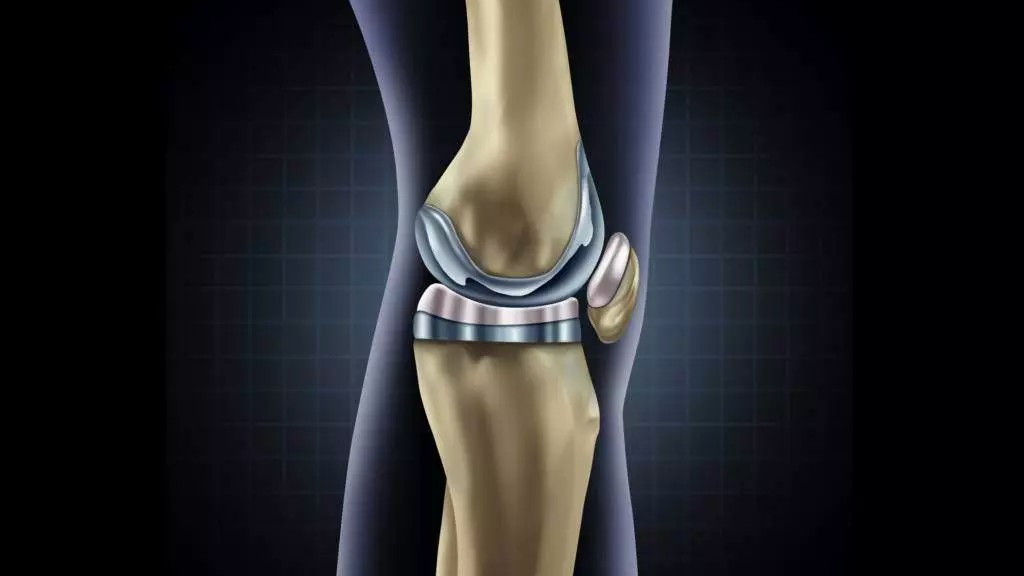
This standard specifies kinetic and kinematic test conditions for various activities of daily living, such as walking, turning navigation movements, stair climbing, stair descending, and squatting. The kinetic and kinematic test conditions are expressed as reference waveforms used to drive the relevant simulator machine actuators. These waveforms represent kinetic signals representing movement, as in flexion extension, or forces and moments resulting from body dynamics, gravity, and active muscles acting through the knee.
This standard does not address the evaluation or measurement of failure modes or wear or failure of the prosthetic device.
The path of motion, load history, and loading patterns all contribute to wear, failure, and failure of implanted prostheses. Simulating a variety of functional activities promises more realistic tests for wear and failure mode assessment. Such activities are often referred to as activities of daily living. Activities of daily living described in the literature include walking, ascending and descending stairs, sitting-standing, standing-sitting, squatting, kneeling, crossing the legs, entering and exiting the bathtub, turning, and cutting. Activities other than walking gait often involve a greater range of motion and higher imposed loading conditions that have the potential to cause damage and failure modes other than normal wear.
Functional simulation is defined as reproducing the loads and motions that may be encountered in activities of daily living, but does not cover every possible type of loading. Functional simulation differs from typical wear testing in that it attempts to operate the prosthetic device through a variety of loading and motion conditions that would be encountered in situ in the human body to reveal the various failure modes and failure mechanisms that may be encountered over the life of the prosthetic device.
In short, the purpose of this standard is to provide loading profiles and test procedures to develop tests that can be used for wear, durability, or other types of testing of total knee prostheses. This guideline provides guidance on testing, but does not require specific testing. So, for example, if a user cannot control a given force control mode in the load profiles, that user does not need to perform that loading mode.
The purpose of this test guide is to provide load profile information on how a total knee prosthesis can be tested to evaluate its function and wear in vitro during various knee movements. This test guide helps characterize the magnitude and location of implant wear when an implant is repeatedly moved according to specified load and displacement waveforms.
This test guide can also help characterize functional limitations of the total knee prosthesis as its motion is guided by these waveforms. These limitations are observed as high loading on impingement, subluxation, or soft tissue restrictions, whether physically or virtually represented.
In general, in vivo movements and loading conditions differ from the loads and movements described in this guide. Results from this guide cannot be used to directly predict in vivo performance. However, this guide is designed to allow comparisons in the performance of different knee designs when tested under similar conditions.
Among the numerous testing, measurement, analysis and evaluation studies that our organization has carried out for businesses in various sectors, our organization also provides testing services defined in the "ASTM F3141-23 Standard Guide for Total Knee Prosthesis Loading Profiles" standard with its trained and expert staff and advanced technological equipment.
To get an appointment, to get more detailed information or to request an evaluation, you can ask us to fill in our form and reach you.

