

In the "TS 13777 Composite panels - Polyethylene or mineral filled - Both sides covered with aluminum sheet" standard published by the Turkish Standards Institute (TSE), polyethylene or mineral panels are used as interior and exterior cladding in sound and heat insulation in buildings and in signboard and panel applications. The requirements for composite panels filled and covered with aluminum sheets on both sides are explained.
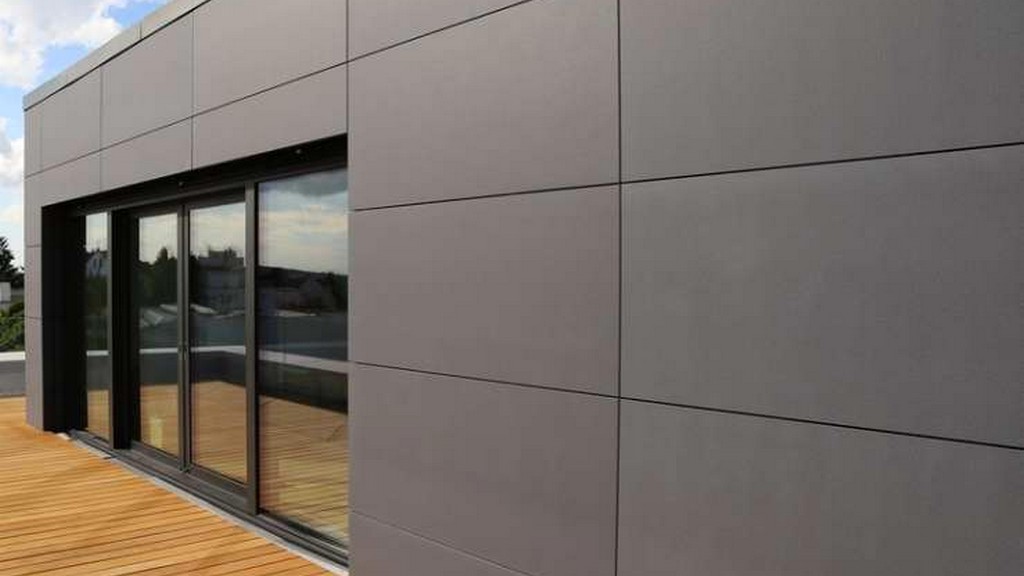
Composite panels are widely used in the construction industry due to their many benefits over traditional building materials. It has replaced more traditional materials such as steel and reinforced concrete, especially with its properties such as high hardness/weight and strength/weight ratios.
There are many applications of composite panels in construction. For example, composite panels are used in the production of coatings, facade flooring, paneling and elevators, and in the renovation and strengthening of existing structures.
Depending on the requirements, elevators must meet a certain weight limit or have a special appearance that fits the interior design. Standing out with their structural features, aluminum honeycomb composite panels are excellent materials for use around elevators and freight elevators for both functional and aesthetic reasons.
Composites require less material and are highly economical without compromising structural stability. They are also corrosion resistant, meaning they do not rust like metal alloys. It is lighter than traditional materials. It is resistant to water and moisture. It exhibits lower energy consumption. It is strong and resistant to pressure, tension, bending and harsh environments.
The composite panel is produced through a continuous lamination process in which a layer of the material that will form the core is extruded and compressed between two simultaneously rolled aluminum sheets. Finally, the flatness of the material is compressed and perfected and a protective film is applied.
Aluminum is the third most common element in the earth's crust. It is found in its natural form in many silicates and is extracted from the mineral known as bauxite, an inhabited rock with a high aluminum content. As a metal, its low density and resistance to corrosion make it an extremely useful element for many industrial processes, in addition to being a good conductor.
A composite panel is a material consisting of two aluminum sheets and a thermoplastic-based inner core that can accommodate the mineral load. It is specially designed for both newly constructed ventilated facades and their renovation or rehabilitation. The manufacturing standard consists of outer sheet 5005 aluminum alloy and inner sheet 3105.
In short, the most common use of composite panels is in ventilated facades, which is a several-layer cladding system that stands out with its effectiveness in solving the insulation problem of buildings thanks to its thermal behavior. The main feature of the ventilated facade is that it allows creating a chimney effect between its layers. This chimney creates continuous ventilation in the room, maintaining a constant temperature, which makes it more energy efficient compared to more traditional systems. Thus, in the summer, heat is released and the circulating air is renewed. In winter, air circulation slows down to preserve heat.
Composite panel properties are gradually improving and it has become a highly interchangeable product that allows different mounting styles, colours, conversions and uses.
Its main feature is high dimensional stability. Composite panel, as a material, does not undergo deformation in its dimensions and remains stable without losing its properties regardless of the size of the material. Composite panels are aesthetically versatile. From solid to textured or wood-type veneers, composite panel is adapted to almost any project. It is long-lasting and resistant to wear and corrosion. Most importantly, the core material and coatings of aluminum composite panels are recyclable and reusable (aluminum is an indefinitely recyclable element).
Among the numerous testing, measurement, analysis and evaluation studies carried out for businesses in various sectors, our organization, with its trained and expert staff and advanced technological equipment, carries out the tests defined in the standard "TS 13777 Composite panels - Polyethylene or mineral filled - Aluminum plate coated on both sides". It also provides services.
To get an appointment, to get more detailed information or to request an evaluation, you can ask us to fill in our form and reach you.

