

The ASTM F2790-10 standard, developed by the American Society for Testing and Materials (ASTM) , describes a procedure for guidance on static and dynamic characterization of lumbar total facet prostheses. These implants are designed to provide movement and support to one or more functional spinal units through the replacement of natural facets.
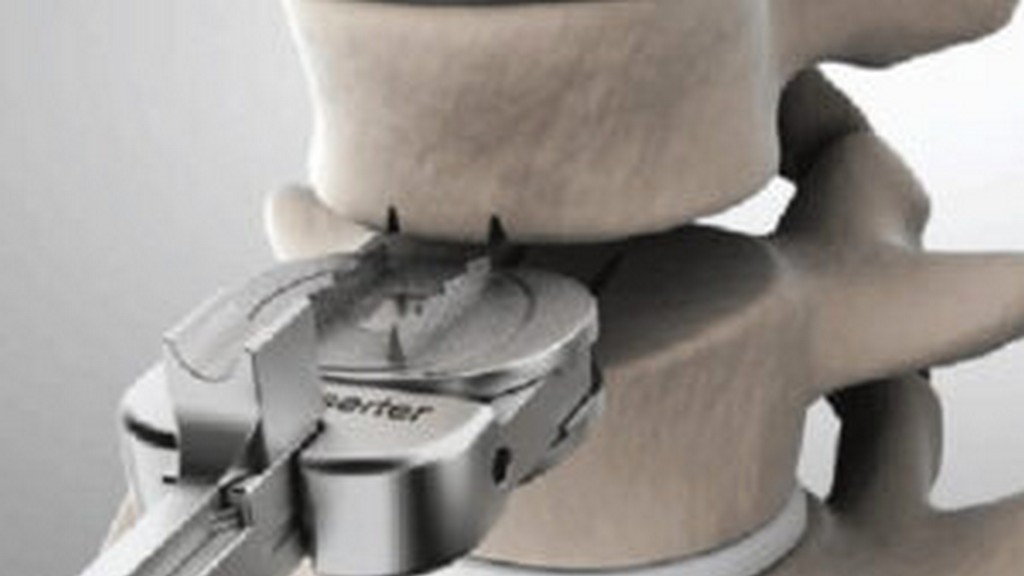
These test methods are intended to provide a basis for mechanical comparison among past, present, and future non-biological facet prostheses. These test methods allow for comparison of devices with different methods of application to the lumbar spine. These test methods are designed to allow the user to mechanically compare devices and do not purport to provide performance standards for them.
These test methods describe static and dynamic testing by specifying the types of loads and the specific methods of applying those loads. However, these test methods do not claim to address all clinically relevant failure modes for facet prostheses, some of which will be device-specific. For example, these test methods do not address implant wear resistance under expected live loads and movements. Additionally, these test methods do not address the biological response to wear debris.
Requirements have been established for measuring displacements and assessing the stiffness of the facet prosthesis. Some devices may not be tested in all test configurations.
Facet replacements can take on a variety of shapes and configurations. Forms include, but are not limited to, ball and socket joints, free-floating or semi-constrained third body joints, metallic load-bearing surfaces, and spring and damping mechanisms. They can also be a single-sided or bilateral design.
The test methods described in this standard are designed to measure the static and dynamic properties of different facet prosthesis designs. Tests are conducted in vitro to allow analysis of individual devices and comparison of the mechanical performance of multiple designs.
The loads applied to the facet prosthesis may differ from the complex loading seen in vivo, and therefore, results from these tests may not directly predict in vivo performance. However, the results can be used to compare mechanical performance across different devices.
Fatigue testing in a simulated body fluid or salt water may cause wear, corrosion, or lubricate interconnects and thus affect the relative performance of the devices under test. This test shall be performed in a 10 percent saline environment bath at 2 degrees at a maximum rate of 37 Hz for all metallic devices and 0,9 Hz for nonmetallic devices. Other test environments such as simulated body fluid, saline drip or fog, distilled water, other types of lubrication, or dry may be used with sufficient justification. Similarly, alternative test frequencies may be used with sufficient justification to ensure that they do not affect device performance.
It is well known that failure of materials is dependent on stress, test frequency, surface treatments and environmental factors. Therefore, care must be taken when determining the effect of varying these parameters, for example, frequency, material or environment, to allow appropriate interpretation of the results. In particular, it may be necessary to evaluate the effect of test frequency on device failure while holding the test environment, implant materials and processing and implant geometry constant.
Among the numerous testing, measurement, analysis and evaluation studies that our organization has provided for businesses in various sectors, our organization also provides testing services defined in the “ASTM F2790-10 Standard Practice for Static and Dynamic Characterization of Lumbar Total Facet Prostheses that Maintain Motion” standard with its trained and expert staff and advanced technological equipment.
To get an appointment, to get more detailed information or to request an evaluation, you can ask us to fill in our form and reach you.

