

In the “ASTM F2942-19 Standard guide for in vitro axial, bending, and torsional durability testing of vascular stents” standard developed by the American Society for Testing and Materials (ASTM), three separate cyclic deformation durability guidelines for vascular stents are presented: bending, axial, and torsional.
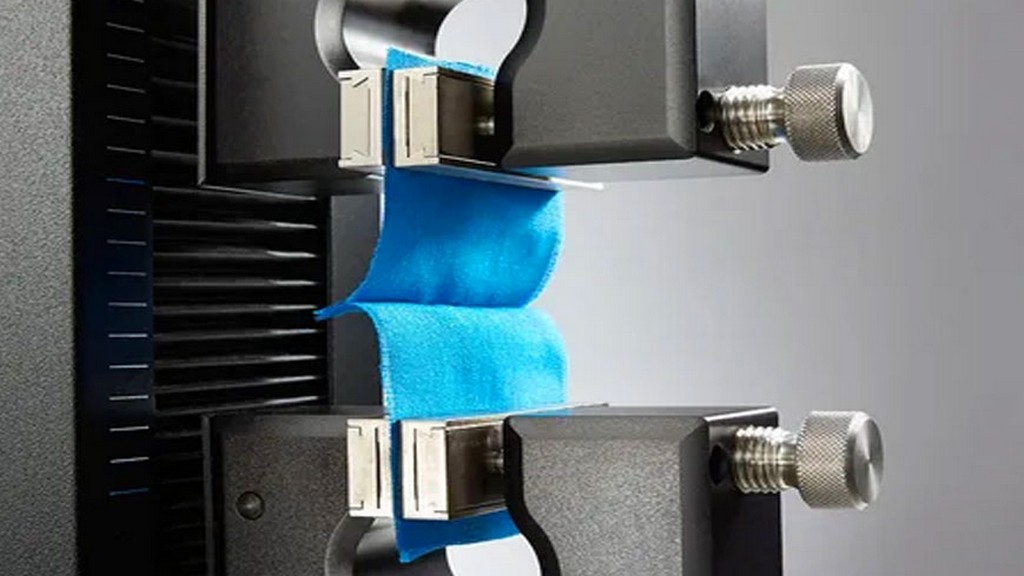
This standard does not address flat plate, local crush strength, or multimodal testing. However, the information contained herein may be applicable in the development of such tests.
This standard applies to balloon-expandable and self-expanding stents manufactured from metals and metal alloys. It does not specifically address any features specific to covered stents, i.e. stents with a surface layer of additional materials, monolithic polymeric stents, or absorbable stents, but the application of this standard to these products is not precluded.
This guideline applies to endovascular grafts (stent-grafts) and other conduit products commonly used to treat aneurysmal disease, peripheral vascular trauma, or to provide vascular access. However, the information provided herein does not address all issues related to testing these devices.
This guideline is applicable to testing stents or a representative section of a stent. While durability testing of coupon samples, for example a scaled section of the stent structure, may provide useful information, it is not within the scope of this guideline.
This guideline applies to in vitro modeling of stent durability from nonradial arterial motions. Such motions can result from musculoskeletal activities such as walking and breathing, and from cardiac motion. The test methods described in “ASTM F2477-19 Standard test methods for in vitro pulsatile durability testing of vascular stents” address the pulsatile (i.e., radial) durability of vascular stents.
This guideline does not provide in vivo physiological deformation conditions for the vascular stent. It is up to the user of the standard to develop and justify these boundary conditions in these endurance bench tests (e.g., through literature review, in vivo studies, cadaveric studies, or modeling of stent-vessel interaction). Additional conditions that may be considered include vessel calcification, vessel narrowing, eccentric lesions, loading excursions (e.g., exercise), and vessel remodeling.
ASTM F2942-19 covers in vitro durability testing of vascular stents using modes representative of those observed in vivo, such as bending, axial, or torsional deformation modes. Examples include, but are not limited to, axial and bending deformation of the superficial femoral artery during walking, bending of the renal artery during respiration, and bending of the coronary artery during the cardiac cycle.
This guideline provides details and guidance for separate testing for each deformation mode: axial, bending, and torsional. This guideline allows for direct fixation of the stent ends or indirect fixation within a dummy vessel. Direct fixation of the stent ends provides better control of stent deformation, however, such fixation may not represent in vivo conditions and care should be taken to minimize testing artifact from binding.
The purpose of the axial strength test is to subject the stent to a specified amount of cyclic axial deformation. If no justification is provided, the stent is placed in a sham vessel. This test method is described in detail in Appendix A1. The purpose of the flexural strength test is to subject the stent to a specified amount of cyclic flexural deformation. This test method is described in detail in Appendices A2, A3, and A4. The purpose of the torsional strength test is to subject the stent to a specified amount of cyclic torsional deformation. This test method is described in detail in Appendix A5. Each test uses either the “achievement-test” or “fatigue-fracture” methodology.
Among the numerous testing, measurement, analysis and evaluation studies that our organization has carried out for businesses in various sectors, our organization also provides testing services defined in the "ASTM F2942-19 Standard guide for in vitro axial, bending and torsional durability testing of vascular stents" standard with its trained and expert staff and advanced technological equipment.
To get an appointment, to get more detailed information or to request an evaluation, you can ask us to fill in our form and reach you.

