

The American Society for Testing and Materials (ASTM) standard "ASTM D6954-24 Standard guide for exposure and testing of plastics that degrade in the environment by a combination of oxidation and biodegradation" provides a framework or roadmap for comparing and ranking the rates of controlled laboratory degradation of polymers by thermal and photo-oxidation processes and the extent of physical property loss and biodegradation and ecological impacts in defined applications and disposal environments after degradation. Disposal environments range from exposure in soil, landfill, and municipal or industrial compost, where thermal oxidation may occur, to land cover and agricultural use, where photo-oxidation may occur.
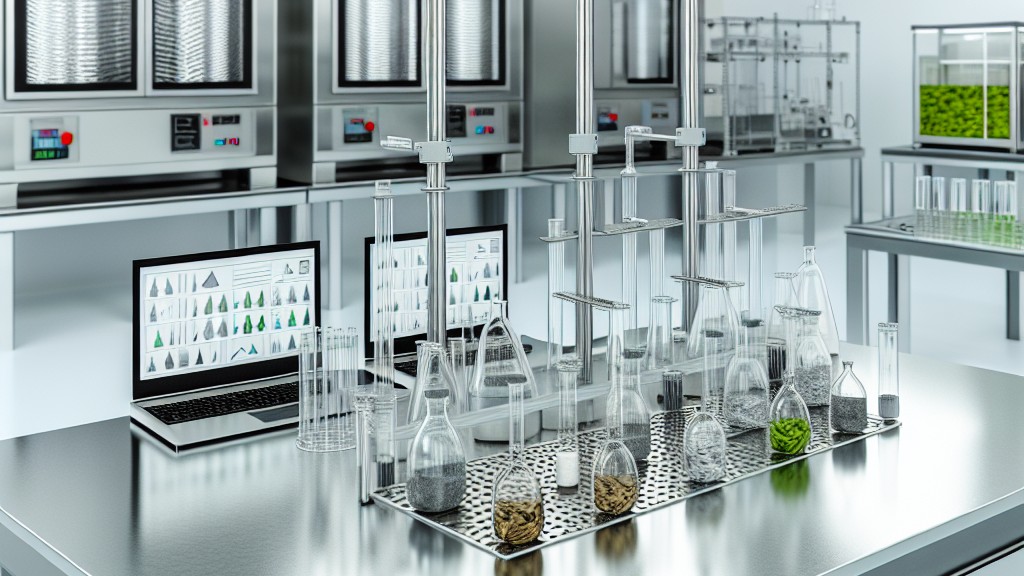
This standard uses three tiers of established ASTM standards to accelerate and quantify property and molecular weight loss by both thermal and photo-oxidation processes and other abiotic processes (first tier), to measure biodegradation (second tier), and to evaluate the ecological impact of products from these processes (third tier).
The first stage conditions selected for thermal oxidation and photo-oxidation accelerate the degradation that is likely to occur in a selected application and disposal environment. The conditions should include a range of moisture or water concentrations based on the application and disposal environment in mind. The degradation rate measured at typical oxidation temperatures is necessary to compare and rank polymers evaluated in the selected application, and these polymers will reach a molecular weight that will produce a biodegradable residue that can be demonstrated using ASTM biometrics tests for carbon dioxide evolution appropriate to the selected environment. For example, accelerated oxidation data should be obtained at temperature and humidity ranges typical of the selected application and disposal environment, such as soil (20 to 30 degrees), land (20 to 35 degrees), and municipal or industrial composting facilities (30 to 65 degrees). For applications in soils, local temperature and humidity ranges should be considered, as these vary greatly by geography. At least one temperature should be reasonably close to the final use or disposal temperature, but in no case more than 20 degrees from the temperature being removed. It should also be determined that the polymer does not undergo a phase change, such as the glass transition temperature, within the test temperature range.
Residues resulting from oxidations are then exposed to appropriate disposal or utilization environments in standard biometric testing methods to measure the rate and degree of biodegradation (second stage).
The data generated as part of the first-tier assessment and the time specified for biodegradation in the selected environment (second tier) allow ranking against other polymers evaluated under similar environmental conditions in this standard. The degree and time of biodegradation should be consistent with ASTM methods, and all residues resulting from the intermediate oxidation stage and biodegradation should be shown to be environmentally safe and non-persistent (third tier).
For the purposes of this standard, in addition to the terms and definitions given in ASTM D883 and ASTM D6002, the following definitions apply:
This standard can be used to compare and rank the rate and extent of thermal oxidative degradation of a plastic material based on a molecular weight range that can be determined to be biodegradable in a selected environment. The biodegradation of these degraded polymers in various environments such as soil, municipal or industrial compost, landfill, and water can then be compared and ranked using standard biometric testing methods and by measuring carbon dioxide evolution.
If municipal or industrial composting is the designated disposal route, ASTM D6400 is the only definitive and applicable standard for measuring biodegradation in the municipal or industrial compostability process. Biodegradation following oxidation under the conditions contained in this standard does not qualify as “municipal or industrially compostable” or imply that the practices are acceptable for composting in a commercial or municipal composting facility.
This standard uses a tiered criteria-based approach to evaluate the sequential oxidation and biodegradability of plastic products and the ecological impacts in defined applications. Each tier in this standard includes a summary presenting the objectives and test methods, method principles, test duration, and interpretation of results.
The stepwise approach is chosen to conveniently separate the oxidative degradation, biodegradation, and ecological impact stages in the laboratory, but in the real world all three are likely to occur simultaneously rather than sequentially.
Our organization, which has been trying to support businesses from every sector with its testing, measurement, analysis and evaluation studies carried out in a wide range for years, has a strong staff that closely follows the developments in the world in the field of science and technology and constantly improves itself. In this context, testing services in accordance with the "ASTM D6954-24 Standard guide for the detection and testing of plastics degraded in the environment by the combination of oxidation and biological degradation" standard are also provided to businesses.
To get an appointment, to get more detailed information or to request an evaluation, you can ask us to fill in our form and reach you.

