

The ASTM D1002 standard, developed by the American Society for Testing and Materials (ASTM), describes a test method used to determine the apparent shear strength of adhesives bonding metals together, when tested on a standard single-lap joint specimen under specified preparation and test conditions.
The test method described here can be applied to determine adhesive strength, surface preparation parameters, and environmental durability of the adhesive. Numerous ASTM standards exist for testing the shear strength of adhesively bonded materials. For example, ASTM D3163 is designed for plastic bonding, and ASTM D5868 is designed to determine the shear strength of fiber-reinforced plastics against themselves or metal.
This standard focuses on metal-to-metal bonds. There are various types of laps, including curved, double, double-bottomed, crimped, and single. There are various failure modes for lap shear testing. The adhesive may separate from the metal substrate, the adhesive may separate from itself, or the adhesive may be so strong that it shears and tears off a piece of the metal.
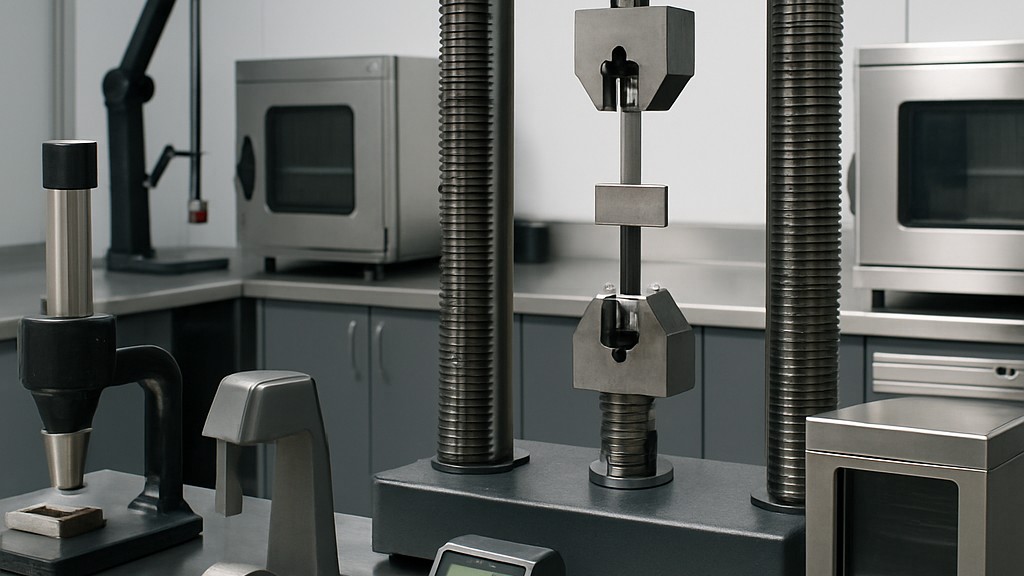
When using the ASTM D1002 test procedure, two metal plates are bonded together with adhesive and cured as specified. The assembly is then cut into overlapping shear specimens of uniform width. The test specimens are placed in the grips of a universal testing machine and pulled at a rate of 1,3 mm/min until failure occurs. The grips used to secure the ends of the assembly should be aligned so that the applied force is applied from the centerline of the specimen. The failure mode can be adhesive (separation of the adhesive from one of the substrates) or cohesive (separation of the adhesive within itself).
The recommended lap shear specimen is 25,4 mm wide with a 12,7 mm overlap length. The recommended metal thickness is 1,62 mm, and the total length of the bonded specimen is 177,8 mm. Specimen failure should occur in the adhesive, not the substrate. Therefore, metal thickness and overlap length can be adjusted as needed. Adhesive is applied according to the manufacturer's recommendations.
The equipment used in these tests includes:
The values reported for the bend shear test are relatively simple. The maximum force, often referred to as the shear strength, is actually just the peak load. The maximum shear stress is slightly different and requires the user to divide the maximum force by the area. The failure mode should be recorded.
The following types of test fixtures are used in the tests:
The ASTM D1002 standard is important because it provides a reliable and consistent method for testing the apparent shear strength of adhesives used to bond metal surfaces in a single-lap joint configuration. This standard is considered important across industries for the following reasons:
In short, the ASTM D1002 standard is important because it provides a reliable, standardized framework for evaluating adhesive bonding performance, informing material selection, ensuring quality, and protecting safety in critical applications.
Our organization, which has been supporting businesses across all sectors for years through a wide range of testing, measurement, analysis, and evaluation activities, boasts a strong team of employees who closely follow global developments in science and technology and are constantly improving themselves. In this context, we also provide testing services in accordance with ASTM D1002 Standard Test Method for Apparent Shear Strength of Metal Specimens Bonded with Single-Layer Joint Adhesive by Tension Loading (Metal-to-Metal).
To get an appointment, to get more detailed information or to request an evaluation, you can ask us to fill in our form and reach you.

