

The standard "ASTM D4218 Standard Test Method for Determination of Carbon Black Content in Polyethylene Composites by Muffle-Furnace Technique," developed by the American Society for Testing and Materials (ASTM), describes a test method for determining black polyethylene compounds containing channel or furnace black. This method is not applicable to thermal black. Furthermore, this test method is not suitable for plastics that carbonize during pyrolysis.
For the purposes of this standard, the terms and definitions given in ASTM D883, as well as the following, apply unless otherwise noted. For terms related to precision and bias and related topics, the terms used in this standard are defined appropriately in ASTM E456.
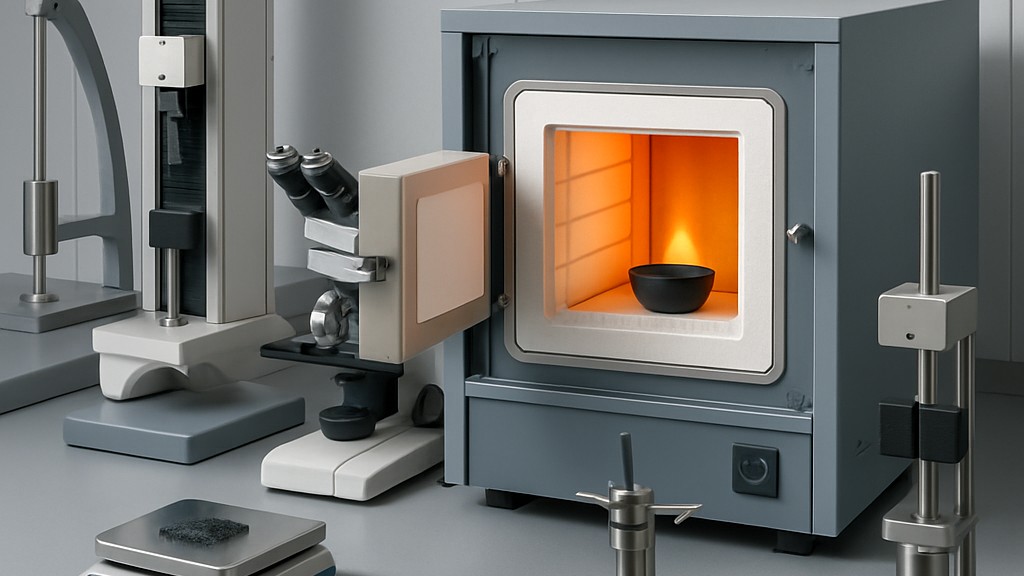
During the test, a black polyethylene compound contained in a disposable aluminum weighing container is pyrolyzed in a muffle furnace for a short time. During the pyrolysis of the polymer, the air in the muffle furnace is deoxygenated to prevent the remaining carbon black from burning. As described in the test method described in ASTM D2741, any soot generated by the initial combustion of the gases is consumed before the carbon black itself is consumed.
After cooling and weighing for remaining carbon black, the container and contents are placed back into the muffle furnace to determine the ash content, and the results are used to determine the actual carbon black content. This is only done if the compound is suspected to contain mineral fillers and carbon black.
This test method can produce duplicate test data in 20 minutes or less for a simple carbon black content determination. This test method is suitable for production quality control, technical service, and research studies. For referee requirements, the number of replicate measurements is increased. Alternatively, a control sample with known carbon black content is tested with the unknown sample. The necessary instructions for referee testing are included in ASTM D1603.
The main equipment used in these tests are:
A muffle furnace with exposed heating elements in the furnace base should not be used. Precautions should be taken to make the furnace electrically safe. Plastics that emit corrosive fumes during pyrolysis should not be tested. The muffle furnace door should not be opened during the test. Opening the door while fumes are emitting from the door seal will ignite the fumes. This test should be performed in a hood or under a ventilation hood to remove the resulting fumes.
Samples are obtained from the manufacturer's or buyer's sampling regimens or from a specifically identified part. Test samples are in the form of granules or cut pieces from a material such as a tube, jacket, film, or mold. Contaminated materials should be washed, and printed materials such as films should be wiped with a suitable solvent.
There is no need for conditioning.
During testing, the muffle furnace is placed inside a fume hood or under a ventilation hood. The controller dial is set to 600°C and allowed to stabilize between 600 and 610°C. An aluminum weighing container is marked with an identification mark on the tab. The container is placed on the muffle furnace screen, and the surface oil is burned off for 2 minutes. Using tongs, the container is transferred to the dryer and allowed to cool for at least 2 minutes. The container is weighed accurately on an analytical balance, and the results are recorded. Approximately 1g of sample is added, and the container and its contents are accurately reweighed, and the results are recorded.
Using tongs, place the weighed container and its contents in the muffle furnace and set the interval timer for 3 minutes. If there are no known ashing fillers, this time is sufficient. If there are other or additional fillers that will oxidize further, the following procedure is followed to achieve more complete pyrolysis. After the elapsed time, remove the container from the muffle furnace using tongs and place it in the dryer to cool for at least 2 minutes. Longer cooling times do not affect the test. The container and any remaining carbon black are accurately reweighed, and the results are recorded.
If ashable mineral fillers are suspected in the compound, use tongs to return the container and contents to the muffle furnace for 10 minutes or more until only light-colored ash remains. Using tongs, transfer the container and contents from the muffle furnace to a desiccator and allow to cool for at least 2 minutes. Accurately reweigh the container and ash, and record the results. At least two determinations are made for each sample.
Calculations are calculated using the equation given in the standard.
A muffle furnace is a type of muffle furnace and is a furnace in which the material is isolated from the fuel and all products of combustion, including gases and fly ash.
Our organization, which has been supporting businesses across all sectors for years through a wide range of testing, measurement, analysis, and evaluation activities, boasts a strong team of employees who closely follow global developments in science and technology and are constantly improving themselves. In this context, we also provide testing services in accordance with the "ASTM D4218 Standard Test Method for Determining Carbon Black Content in Polyethylene Compounds Using the Muffle-Furnace Technique."
To get an appointment, to get more detailed information or to request an evaluation, you can ask us to fill in our form and reach you.

