

Calorimetry is a technique applied to establish a connection between temperature and certain physical properties of materials and to determine the thermal properties of materials. Calorimeters are frequently used in chemistry, biochemistry, cell biology, biotechnology, pharmacology and more recently nanoscience to determine the thermodynamic properties of biomolecules and nano-sized materials. There are many types of calorimeters, but of these, differential scanning calorimetry (DSC) is the most popular.
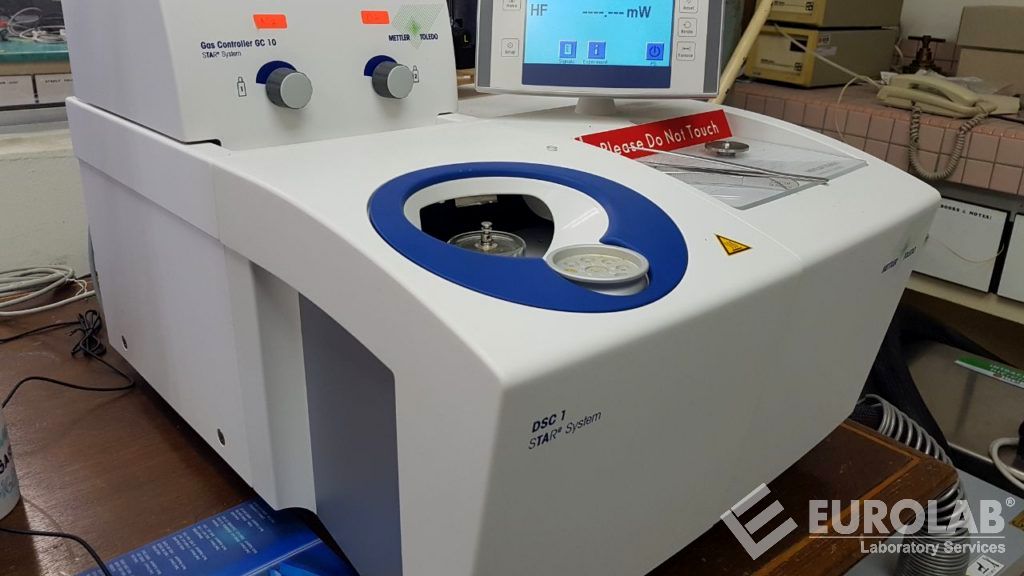
A differential scanning calorimeter is a thermal analyzer that measures how the physical properties of a sample change with temperature versus time. In other words, this device is a thermal analyzer that determines the temperature and heat flux associated with material transitions as a function of time and temperature. During a change in temperature, the differential scanning calorimeter measures the amount of heat excessively emitted or absorbed by the sample based on the temperature difference between the sample and the reference material.
Depending on their operating system, differential scanning calorimeters are divided into two groups: heat flow differential scanning calorimeters and power compensated differential scanning calorimeters.
In a heat flow differential scanning calorimeter, sample material in a pan and an empty reference pan are placed on a thermoelectric disk surrounded by an oven. The furnace is heated at a linear heating rate and heat is transferred to the sample and reference pan via the thermoelectric disc. However, due to the heat capacity of the sample, there is a measured temperature difference between the sample and reference pans and the resulting heat flux is calculated.
Differential scanning calorimetry is widely used for the study of biochemical reactions. The thermal transition temperatures (melting points) of the samples are also determined in mixed phases such as solution, solid or suspension.
In a basic differential scanning calorimetry analysis, a sample cell and a reference cell are energized simultaneously. The temperatures of both cells rise in the same way over time. The difference in input energy required to match the temperature of the sample with the temperature of the reference is the amount of excess heat absorbed or released by the molecule in the sample.
Our company also provides differential scanning calorimetry (DSC) analysis services with its trained and expert staff and advanced technological equipment, among the numerous test, measurement, analysis and evaluation studies it provides for businesses in various sectors.
To get an appointment, to get more detailed information or to request an evaluation, you can ask us to fill in our form and reach you.

