

The standard "ASTM D3574 Standard Test Methods for Flexible Cellular Materials - Sheet, Bonded, and Molded Urethane Foams," developed by the American Society for Testing and Materials (ASTM), describes test methods for sheet, bonded, and molded flexible cellular products, commonly known as urethane foams. Urethane foam is generally defined as an expanded cellular product produced by the interaction of active hydrogen compounds, water, and isocyanates.
This standard provides a standard method for obtaining data for research and development, quality control, acceptance and rejection of conformance to specifications, and special purposes. Data obtained by these test methods are applicable to the material under the relevant test conditions and may not be the same as those obtained in other in-service environments.
ASTM D3574 is a widely accepted standard developed for testing flexible cellular materials, particularly sheet, bonded, and molded polyurethane foams. These foams are widely used in industries such as furniture, bedding, and automotive, as well as packaging applications such as pillows, mattresses, car seats, and protective padding. This standard provides a comprehensive set of test methods to evaluate the mechanical and physical properties of these foams and ensure consistent quality, comfort, and durability.
This standard includes a set of standardized test procedures designed to evaluate the properties of flexible polyurethane foams. Unlike rigid foams, which have varying properties, this standard focuses solely on flexible foams, and the technical distinction between flexible and rigid is clearly defined in the standard. The tests measure properties such as density, indentation force deflection, compressive strength, tensile strength, tear resistance, and fatigue strength, providing critical data for manufacturers to ensure their products meet industry specifications and consumer expectations.
This standard is particularly valuable for comparative testing, allowing manufacturers to evaluate different foam samples based on chemical composition, density, and porosity. It is often used in conjunction with advanced pressure analysis to simulate real-world loading conditions, such as those imposed by the human body in seating or bedding applications.
The ASTM D3574 standard includes 18 different mechanical tests, some of which require specialized equipment such as universal testing machines. Some of the most commonly performed tests include:
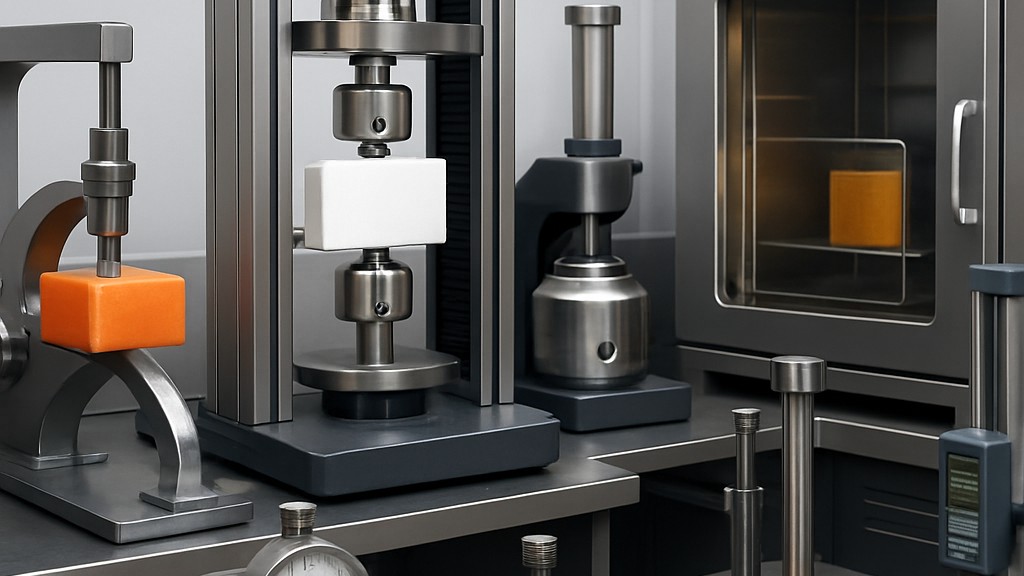
ASTM D3574 standard test methods are typically performed on universal testing machines. Compression tests such as B1, B2, and C generally require double-column systems due to the size of the specimens and fixtures. For tensile and tear tests, double-column or single-column systems with 5 kN or 10 kN capacities are used.
Dedicated apparatus is critical for consistent results. For the B1 and B2 tests, a pressure apparatus with a perforated base (defined hole diameter and spacing) reduces variability by allowing air to pass through the foam. The apparatus includes a spherical anvil mount to minimize decentralization. A perforated, rigid platen is used for the C test, while the D test uses standard, imperforate platens. Environmental conditioning is also required, with samples conditioned at 23 degrees Celsius and 50 percent relative humidity for at least 12 hours.
The ASTM D3574 standard provides standardized methods for obtaining data used for:
ASTM D3574 standard testing is widely applied in the following areas:
This standard's focus on flexible polyurethane foams makes it ideal for products designed to withstand daily use and environmental stress, while enhancing ergonomics and comfort.
As a result, ASTM D3574 is a fundamental standard for evaluating the performance of flexible polyurethane foams and ensuring they meet the requirements of various applications. Comprehensive test methods provide manufacturers with the data they need to optimize foam quality, comfort, and durability. By adhering to ASTM D3574, industries can deliver reliable, high-performance products that enhance consumer experiences.
This standard is critical for industries like automotive (seats, headrests), furniture (cushions, sofas), and bedding (mattresses, pillows), where foam performance directly impacts consumer comfort and product lifespan. By documenting test results against this standard, manufacturers can ensure comparability across different testing facilities, reduce confusion, and increase reliability.
Our organization, which has been serving for many years and meticulously following global developments in science and technology, employs a skilled team and extensive infrastructure to conduct testing, measurement, and analysis in a wide range of areas for businesses across all sectors. In this context, we also provide testing services in accordance with ASTM D3574 Standard Test Methods for Flexible Cellular Materials - Sheet, Bonded, and Molded Urethane Foams.
To get an appointment, to get more detailed information or to request an evaluation, you can ask us to fill in our form and reach you.

