

The standard "ASTM D3495-10 Standard test method for extraction of hexane from leather" developed by the American Society for Testing and Materials (ASTM) describes a test method covering the quantitative extraction of all types of leather with hexane. This test method is not applicable to wet blue.
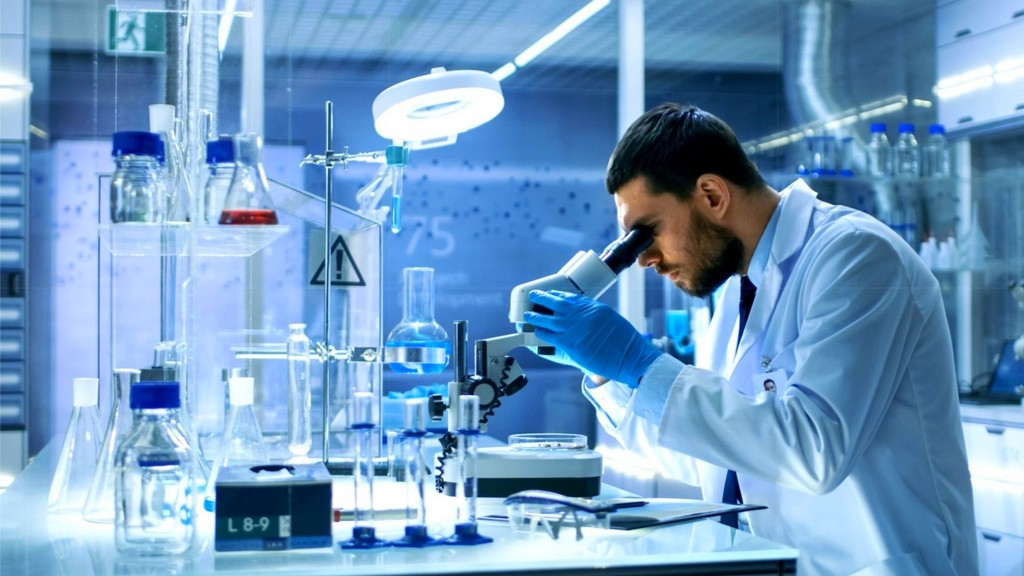
This test method measures the amount of hexane-soluble lubricant present in each type of hide. Adequate lubrication prevents abrasion of the hide fibers during flexing. This lubrication is usually obtained from the fat liquor added in tanning. Some lubrication is also obtained from natural greases produced during the animal's life.
Hexane is a colorless, volatile organic solvent classified as a straight-chain neutral aliphatic hydrocarbon. It is a petroleum distillate that is relatively insoluble in water and is a minor component of gasoline. Due to its low water solubility and volatility, it tends to migrate into the atmosphere following an environmental release and does not pose a hazard to the food web. Human exposure can occur via dermal contact or inhalation.
The hexane used in these tests must meet the following requirements:
Hexane in this class of reagents is usually a mixture of several hexane isomers.
Test samples shall be sampled in accordance with the standard “ASTM D2813-03 Standard Practice for Leather Sampling for Physical and Chemical Testing”. Leather test samples shall be obtained from a composite sample prepared by randomly sampling, cutting and mixing equal pieces of leather representing the batch being analyzed. The well-mixed leather pieces shall be ground in a mill equipped with a No. 5 (4 mm) sieve. The ground leather passing through this sieve shall be well mixed and used as the composite sample.
The moisture content of the composite sample from which the ground leather was taken for hexane extraction is determined according to the test method described in the standard “ASTM D3790-17 Standard test method for volatile matter (moisture) of leather by oven drying”. At the same time and under the same ambient conditions as the weight of the ground leather taken for hexane extraction, the moisture content of the ground leather taken from the composite sample is determined.
Weigh 5 g of ground leather from the composite to the nearest 0,001 g and record this value as W1. This material is placed loosely in an extraction thimble of suitable size and covered with a pad of oil-free cotton. The thimble is placed in a Soxhlet extraction tube. Dry an extraction flask in an oven at 100°C plus/minus 2°C for 1 hour, cool in a desiccator and weigh to the nearest 0,001 g. Record this value as W2.
The flask is filled approximately two-thirds with hexane, connected to the apparatus, passed through the water condenser, and heated until extraction of the hide continues for at least 50 cycles. If the Soxhlet cycle is dripping continuously instead, the hide is extracted for at least 5 hours using maximum heat. At the end of the extraction period, the flask containing the extraction solvent is removed and the hexane is removed. When 10 mL to 20 mL of hexane remains, it is gently heated on a steam bath until the odor of the solvent is no longer detectable.
The removal of hexane is facilitated by using a vacuum or a gentle flow of filtered (oil and water free) air. After the removal of hexane, the flask containing the extracted substance is dried in a forced circulation air oven at 100°C plus/minus 7°C for 2 hours, cooled to room temperature in a dryer and weighed. Drying is continued for successive 2-hour periods until constant weight is obtained. When successive weighings vary by less than plus/minus 2 g, the weight constant is taken into account. This weight is recorded as W0,005 to the nearest 0,001 g. No more than three successive 3-hour drying periods are permitted. If constant weight is not obtained after the third drying, the results of the second drying period are reported.
The percentage of hexane-soluble substance on a moisture-free basis is calculated according to the formula given in the standard. The hexane-soluble substance in the skin is reported as 0,01%, which is the closest average value obtained from the test results. It should be noted that the results are calculated on a moisture-free basis.
Among the numerous testing, measurement, analysis and evaluation studies that our organization has carried out for businesses in various sectors, it also provides testing services defined in the "ASTM D3495-10 Standard test method for hexane extraction from leather" standard with its trained and expert staff and advanced technological equipment.
To get an appointment, to get more detailed information or to request an evaluation, you can ask us to fill in our form and reach you.

