ASTM D2652 Standard Terminology for Activated Carbon
The standard "ASTM D2652 Standard Terminology for Activated Carbon," developed by the American Society for Testing and Materials (ASTM), provides terminology specifically related to activated carbon, encompassing finished products, applications, and test procedures. When any of the definitions in this terminology are quoted or published out of context, the limiting phrase "in activated carbon" must be added editorially after the hyphen following the term to appropriately limit the scope of application of the term and definition.
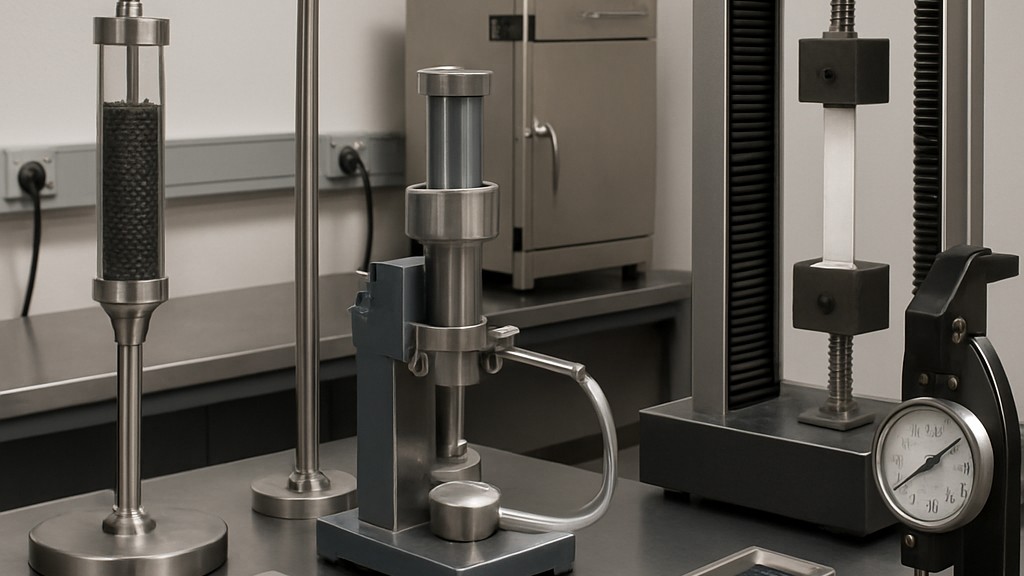
This terminology ensures that terms specific to activated carbon are adequately defined so that other standards using these terms can be correctly understood and interpreted.
This terminology is helpful for those unfamiliar with activated carbon terminology. However, it is a ready reference for those directly involved with activated carbon, particularly in the preparation of ASTM standards, to clarify differences and ensure commonality of use.
While this terminology is intended to ensure uniformity in the use of terms related to activated carbon, it can never be exhaustive, as new terms are constantly emerging. The existence of this terminology does not preclude the use or misuse of any term in another context.
A few terms defined in this standard are presented as follows:
- Wear resistance: The ability of a particle to resist abrasion or wear by friction.
- Absorption: It refers to a process in which liquid molecules are absorbed by a liquid or solid and distributed throughout the body of that liquid or solid.
- Accelerated adsorption tests: These tests are those in which the end point is accelerated by testing under more severe conditions than those anticipated in service.
- Acid extractable material: Refers to substances that are dissolved by an acid under specified conditions.
- Activated carbon: Refers to a family of carbonaceous substances produced by processes that improve adsorption properties.
- Activation: Refers to any process in which a substance is treated to improve its adsorption properties.
- Activity: For activated carbon, it refers to the adsorption capacity of an adsorbent, usually measured by a standard test.
- Adsorbate: Refers to any substance that is adsorbed.
- Adsorbent: Any solid that can concentrate significant amounts of another substance on its surface.
- Adsorption: It refers to a process in which liquid molecules are concentrated on a surface by chemical or physical forces or both.
- Adsorption zone: It refers to the mass transfer zone.
- Ash: Refers to the residue remaining after combustion of a substance under specified conditions.
ASTM D2652, in essence, provides clarity and consistency in communication in industries that rely on activated carbon, such as water treatment, air purification, and chemical processing. This standard defines key terms related to activated carbon, a highly porous material used for adsorption in a variety of industrial applications. It covers finished products (e.g., granular or powdered carbon), applications (e.g., filtration, catalysis), and test procedures (e.g., hardness, adsorption capacity). It ensures clear definitions of terms to prevent misinterpretations during technical documentation, quality control, and standards development.
This standard was developed by the ASTM Activated Carbon Committee.
The ASTM D2652 standard applies to:
- Manufacturers and suppliers: To ensure consistent terminology in product specifications, data sheets and quality control processes.
- Testing laboratories: To standardize communication on test methods such as spherical pan hardness defined in “ASTM D3802 Standard Test Method for Spherical Pan Hardness of Activated Carbon” or ash content defined in “ASTM D2866 Standard Test Method for Total Ash Content of Activated Carbon”.
- End users: In industries such as water treatment, air purification and food processing, where clear terminology helps select appropriate activated carbon products.
- Standards development: To provide a common language for the creation and interpretation of other ASTM standards related to activated carbon.
This standard is particularly valuable for those unfamiliar with activated carbon. It is also useful for professionals who need a training resource and a reference to resolve inconsistencies in terminology.
The ASTM D2652 standard includes:
- Comprehensive definitions: Covers terms related to the physical properties (e.g. pore volume, surface area), chemical properties (e.g. adsorption capacity), and applications (e.g. gas phase and liquid phase use) of activated carbon.
- Contextual clarity: Indicates that the definitions are specific to activated carbon and that the phrase “in activated carbon” should be added when quoted out of context to avoid misapplication.
- Support for other standards: Provides consistent understanding of terms used in other ASTM standards such as ASTM D3802 or ASTM D2854.
This standard recognizes that terminology evolves and, while it promotes uniformity, cannot encompass every new term that emerges in the field.
ASTM D2652 is critical for these reasons:
- Clarity and consistency: Standardizes terminology to avoid misunderstandings in technical communication and ensures that terms such as adsorption or microporosity have clear and agreed-upon meanings.
- Quality assurance: Supports reliable quality control in the production and use of activated carbon by facilitating the correct interpretation of test methods and specifications.
- Global standardization: Developed in accordance with World Trade Organization principles, this standard supports international trade by providing a universal language for activated carbon.
- Educational resource: Helps newcomers to the field understand specialized terms while serving as a reference for experts to ensure consistency across ASTM standards.
- Innovation support: By clarifying terminology, it helps the development of new activated carbon products and applications, such as advanced filtration systems or energy storage.
However, applying the ASTM D2652 standard presents some challenges:
- Evolving terminology: As activated carbon technology advances, new terms may emerge, requiring periodic updates to the standard.
- Contextual misuse: Without the qualifier “in activated carbon,” the terms may be misused in other fields, leading to confusion.
- Access costs: The cost of adopting this standard can be a barrier for smaller organizations or researchers.
- Global acceptance: Although internationally recognized, consistent use across various markets can be difficult to achieve.
As a result, ASTM D2652 is a foundational standard that provides clear, standardized terminology for activated carbon and supports industries such as water treatment, air purification, and chemical processing. It improves quality control by ensuring consistent communication, facilitates global trade, and supports the development of reliable ASTM test methods.
Our organization, which has been serving for many years and meticulously following global developments in science and technology, conducts testing, measurement, and analysis in a wide range of areas for businesses across all sectors with a skilled team and extensive infrastructure. In this context, we also provide testing services in accordance with ASTM D2652 Standard Terminology for Activated Carbon.



