

The French standard "NF T 30-049 Paints and varnishes - Coating paints - Accelerated aging test" describes accelerated aging tests for paints and similar preparations intended for outdoor use. Because these tests are conventional, the operator is given a degree of flexibility in selecting equipment and cycle combinations. A summary table is included at the end of this standard, which helps identify observed changes by reference to the standards.
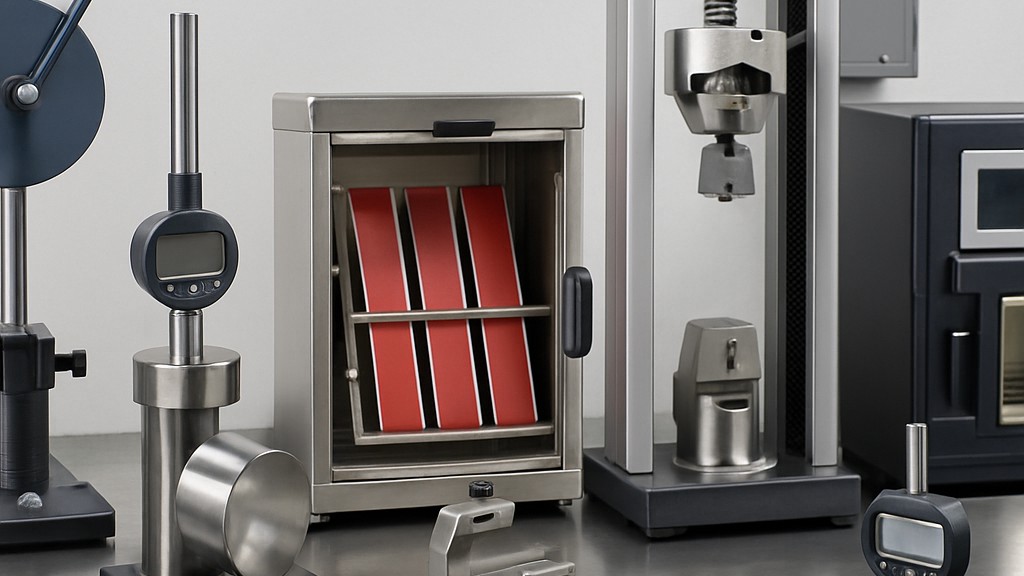
The purpose of this standard is to specify the conditions for artificial aging tests for paints, varnishes, and similar preparations for outdoor use. It is applicable to paints, varnishes, and similar preparations applied to metals, alloys, and all surfaces representative of actual use. It provides two types of instruments: single-chamber and multi-chamber. The results obtained are not systematically comparable. For results to be comparable, the cycles must be identical.
There is no systematic correlation between artificial and natural aging. Correlations must be established by comparatively examining the two techniques on the same samples.
In principle, artificial aging testing consists of subjecting specific samples to specific cycles. The operating conditions are necessarily conventional and aim to reveal specific deteriorations that can be observed during use. This testing can be performed in separate chambers or in a single chamber.
The severity of the test depends mainly on the frequency and intensity of ambient temperature changes.
The representativeness of the test depends on the following facts:
Test repeatability is ensured by:
The dimensions and shape of the test pieces depend on the type of apparatus used and the nature of the post-aging oxidation conditions. Test pieces can be made from:
Steel samples should be coated with primer as soon as possible after surface preparation. In the case of sandblasting, the time should be less than four hours. If the first coat is not applied immediately, the samples should be placed in a dry environment (temperature 50°C plus/minus 2°C, relative humidity 20% or less). Application and drying conditions for both surfaces of the samples should be specified in the product's technical specifications. Care should be taken to protect the edges.
Asbestos cement samples should be prepared in accordance with the NF T 30-800 standard.
During preparation, before being placed in the test chambers, the samples must be kept in an environment with a temperature of 23 degrees Celsius plus/minus 2 degrees Celsius and a relative humidity of 50 percent plus/minus 5 percent. The duration of this environment and any specific conditions (e.g., air renewal, darkness) are mutually agreed upon by the parties.
NF T 30-049 is a critical guide for assessing the durability of paints, varnishes, and related coatings used in exterior applications. This standard includes methods for conducting artificial aging tests to simulate the long-term effects of environmental conditions on coatings. This standard is essential for industries such as construction, automotive, and marine, where coatings must withstand harsh outdoor conditions.
The NF T 30-049 standard simulates environmental factors such as ultraviolet (UV) radiation, temperature fluctuations, humidity, and water exposure to evaluate how coatings degrade over time. By accelerating these conditions in a controlled laboratory environment, the standard predicts the long-term performance of coatings and ensures they maintain their aesthetic and protective properties when exposed to real-world outdoor conditions. This standard is particularly applicable to coatings applied to buildings, vehicles, and other structures exposed to weathering.
The NF T 30-049 standard applies to:
This standard is widely used by manufacturers, testing laboratories, and quality control professionals to ensure that coatings meet durability requirements. It is particularly valuable for evaluating resistance to weathering deterioration, such as discoloration, chalking, cracking, or loss of adhesion.
The general procedure includes these steps:
As specified in some applications, a typical test cycle consists of 25 cycles equivalent to 118 hours, but times may vary according to specific requirements.
A summary table provided within the standard helps identify changes by reference to relevant norms.
Tests are performed in accredited laboratories.
The NF T 30-049 standard is of critical importance for the following reasons:
As a result, the NF T 30-049 standard is a vital standard for assessing the durability of paints and varnishes used in outdoor applications. By simulating environmental influences such as UV radiation, temperature, and humidity, it ensures that coatings withstand real-world conditions while maintaining their aesthetic and protective properties. Its adoption in industries such as construction and automotive supports quality assurance, regulatory compliance, and customer satisfaction. For manufacturers and suppliers, compliance with the NF T 30-049 standard is essential for delivering high-performance coatings that stand the test of time.
Our organization, which has been operating for many years and meticulously follows global developments in science and technology, employs a team of experienced professionals and a broad infrastructure to conduct testing, measurement, and analysis in a wide range of areas for businesses across all sectors. In this context, we also provide testing services in accordance with the "NF T 30-049 Paints and varnishes - Coatings - Accelerated aging test" standard.
To get an appointment, to get more detailed information or to request an evaluation, you can ask us to fill in our form and reach you.

