

The ISO 11057 Air quality - Test method for determining the filtration properties of cleanable filter media, published by the International Organization for Standardization (ISO), describes a standard reference test method for the comparative characterization of pulsed jet cleanable filter media used in dry gas cleaning (e.g., bag filters, pocket filters, cartridge filters) under standardized test conditions. The primary objective of this method is to obtain information about both the operational performance and particulate emissions of cleanable filter media.
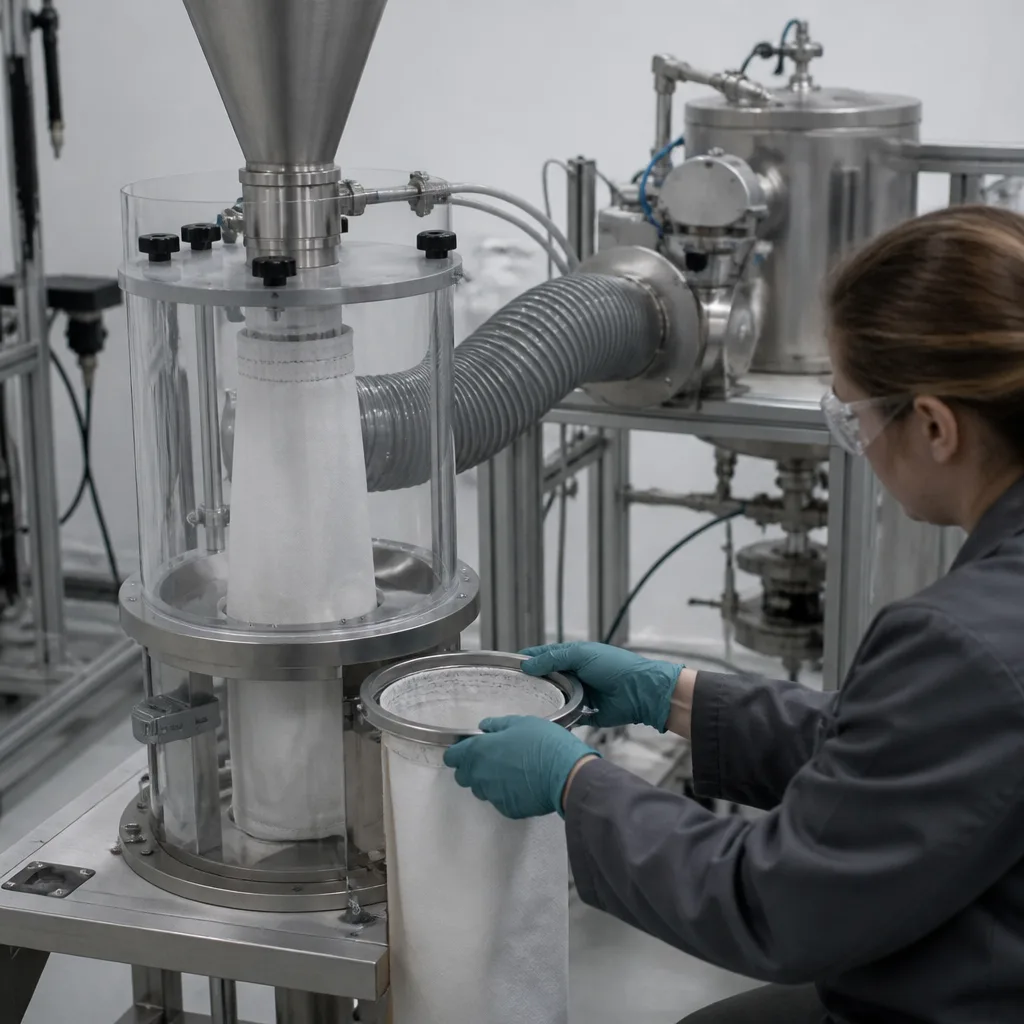
A test device and operating method have been selected and described here, but other devices and operating arrangements are also acceptable. For a candidate device to become an equivalent device, a comparison with a standard reference device is required according to a specified procedure. This standard includes the test procedure, the specifications of the required test facility and test conditions, and the evaluation and presentation of the results.
The results obtained from this test method are not intended to predict the absolute performance of full-scale filter systems. However, they are helpful for the selection and development of suitable cleanable filter media and for determining appropriate operating parameters.
Using the specified test method, additional tasks can be addressed, such as verifying filter media in terms of PM2,5 emissions, classifying different media according to their filtration performance, or assessing the cleanability and durability of filter elements (i.e., estimating bag life).
In short, the ISO 11057 standard includes a reference laboratory test method for evaluating the filtration performance of cleanable filter media used in industrial dust collection systems. This standard focuses on pulsed jet cleaned filter media used in dry gas filtration applications such as bag filters and cartridge filters.
The ISO 11057 standard provides a standardized method for comparing different filter media under controlled laboratory conditions, rather than evaluating complete filtration systems. This enables manufacturers, researchers, and end-users to assess filtration efficiency, cleaning behavior, pressure drop, and particle emissions in a consistent and reproducible manner.
ISO 11057 specifies a standard reference test method for the comparative characterization of pulsed jet cleanable filter media used in the following applications:
This method is designed for dry gas cleaning applications where particulate matter needs to be removed from industrial process gases. This standard specifies the following:
The results are primarily designed for comparing filter media, not for predicting the precise performance of a full-scale industrial filtration system.
The primary objectives of the ISO 11057 standard are to evaluate the following:
These parameters allow engineers to compare different filter materials using the same laboratory conditions.
The ISO 11057 standard is widely applicable in industries that rely on dust collection systems. These include:
Any facility using pulse jet dust collectors can benefit from filter media evaluated according to the ISO 11057 standard. This standard is applicable to many industrial filtration materials, including:
The ISO 11057 standard simulates real industrial filtration by running filter media in a laboratory-scale pulse jet filtration system. During testing,
This approach reproduces the operating behavior of industrial dust collectors under controlled conditions.
The ISO 11057 standard measures numerous performance indicators, including:
This standard specifies a controlled test powder with defined characteristics, thereby ensuring the following:
Typical results include:
These results allow for an objective comparison of different filter media.
Implementing the ISO 11057 standard offers several advantages:
The ISO 11057 standard plays a critical role in ensuring that cleanable industrial filter media are evaluated using a uniform, scientifically validated methodology. By standardizing the assessment of filtration efficiency, particulate emissions, pressure drop, and cleaning performance, it enables meaningful comparisons between different filter materials and supports the development of more efficient dust collection systems. This standard helps manufacturers optimize filter designs, end-users select appropriate media for specific applications, and contributes to improved air quality, regulatory compliance, reduced operating costs, and enhanced environmental protection.
For many years, our organization, with its competent and experienced staff, has been understanding the needs of its clients, providing the advanced testing services they require, and assisting them in the establishment, implementation, and improvement of management systems. Within this framework, we also provide testing services compliant with the ISO 11057 standard.
To get an appointment, to get more detailed information or to request an evaluation, you can ask us to fill in our form and reach you.

