ASTM G71 Conducting and Evaluating Galvanic Corrosion Tests in Electrolytes
The ASTM G71 Standard Guidelines for Conducting and Evaluating Galvanic Corrosion Tests in Electrolytes, developed by the American Society for Testing and Materials (ASTM), covers the performance and evaluation of galvanic corrosion tests to characterize the behavior of two different metals in electrical contact within an electrolyte under low flow conditions. This standard is adaptable to wrought or cast metals and alloys.
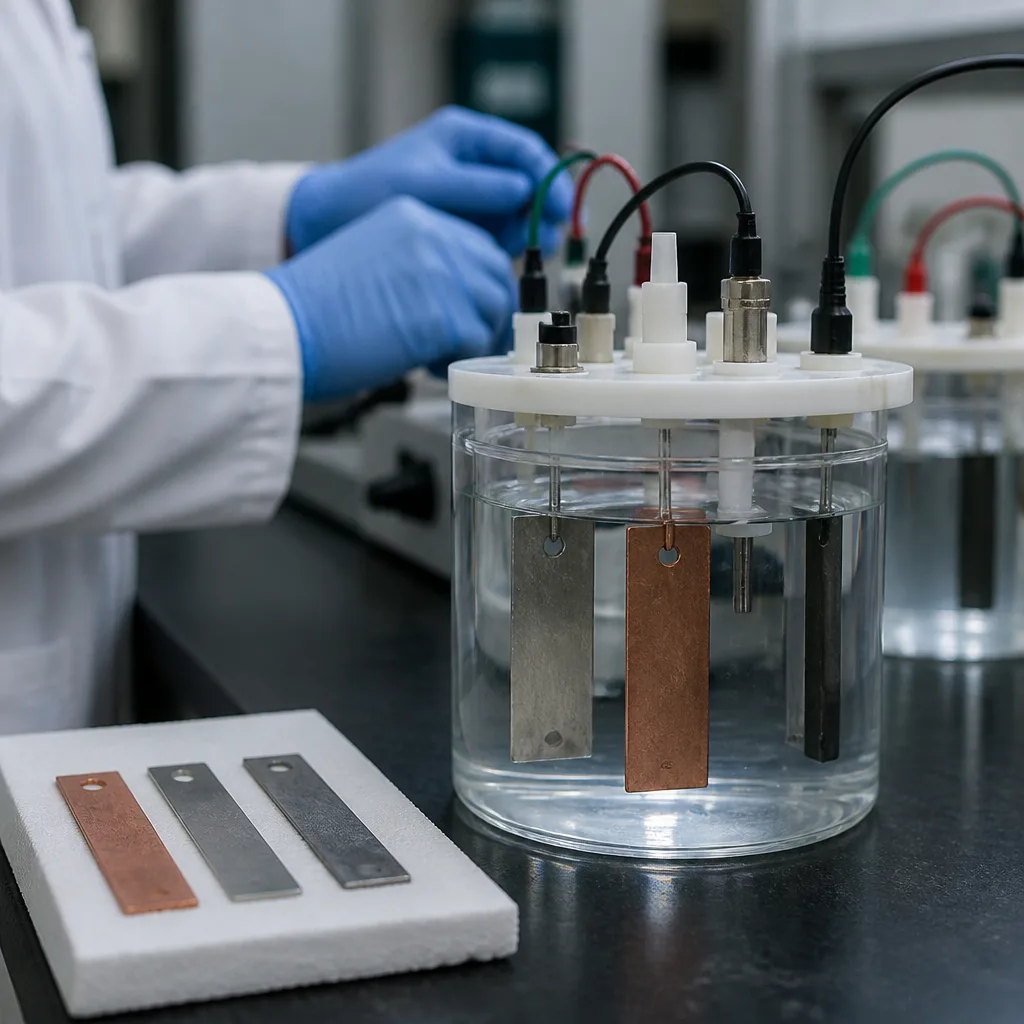
This guide covers material selection, sample preparation, test environment, exposure method, and evaluation of results for characterizing the behavior of galvanic pairs in an electrolyte.
The purpose of this guide is to provide information about galvanic corrosion of metals in electrical contact in an electrolyte that does not have a flow rate high enough to cause erosion-corrosion or cavitation.
ASTM G71 describes recommended procedures for designing, conducting, and interpreting laboratory and field tests that evaluate galvanic corrosion between different metals exposed to conductive electrolytes. This standard helps engineers select appropriate test methods, prepare samples, control environmental conditions, measure galvanic current, and interpret the resulting corrosion behavior.
The ASTM G71 standard is widely used in the following sectors:
- Automotive
- Aviation and space
- marine engineering
- oil and gas
- Chemical processing
- Construction
- Electronics
- Renewable energy
The recommendations of this standard are valuable in any situation where different metals are combined in humid or corrosive environments.
Galvanic corrosion occurs in the following situations:
- When two different metals are electrically connected
- When both metals are exposed to the same electrolyte (such as water, seawater, moisture, or salt solution)
- When there is an electrical potential difference between them
Under these circumstances,
- A less noble metal becomes the anode.
- A nobler metal becomes the cathode.
- Anodic metal corrodes at an accelerated rate.
Examples include:
- Aluminum bonded to stainless steel.
- Steel fasteners in aluminum structures.
- Copper pipes bonded to galvanized steel.
- Magnesium components combined with steel.
Understanding galvanic corrosion is crucial because it often causes localized failures long before homogeneous corrosion becomes significant.
The ASTM G71 standard helps engineers with the following:
- To evaluate the galvanic compatibility of metals.
- Comparing material combinations
- Measuring galvanic current.
- Estimating the severity of corrosion.
- Examining environmental impacts
- Evaluating coatings and protective systems.
- Supporting material selection during product development.
The ASTM G71 standard does not define pass/fail criteria. Instead, it provides scientifically accepted methods for producing reliable corrosion data. This standard covers:
- Laboratory galvanic corrosion test
- Field exposure test
- Electrochemical measurements
- Galvanic current monitoring
- Weight loss measurements
- Corrosion potential measurements
- Environmental simulation
- Preparing a test sample
- Data interpretation
The ASTM G71 standard applies to the following:
- Metals
- metallic coatings
- Surface-treated metals
- Connectors
- Source links
- Mechanical components
The severity of galvanic corrosion depends on several interacting factors:
- Electrode potential difference: A larger potential difference generally increases the galvanic current. For example,
- Magnesium steel: Very high risk.
- Aluminum-steel: Medium risk
- Stainless steel-titanium: Low risk.
- Electrolyte conductivity: Electrolytes with high conductivity increase corrosion. For example,
- sea water
- Road salt
- Industrial cooling water
Low conductivity media generally reduce galvanic attack.
- Area ratio: One of the most important concepts discussed in this standard is the cathode-anode area ratio:
- Large cathode + small anode: Very severe corrosion.
- Small cathode + large anode: Much lower corrosion rate.
The goal of this process is to test the role and privilege manipulation in order to access the resources of a
- Small steel rivets in aluminum panel
- Large stainless steel plate attached to a small aluminum bracket.
The second example poses a much greater galvanic risk.
- Temperature: Higher temperatures generally increase the following:
- Reaction rates
- Electrolyte conductivity
- Corrosion current
- Oxygen availability: Dissolved oxygen supports cathodic reactions. Poorly ventilated environments can produce different corrosion mechanisms compared to oxygen-rich environments.
The ASTM G71 standard addresses various test methods:
- Immersion tests: Samples are immersed in the following solutions:
- Sodium chloride solutions
- artificial seawater
- Industrial process fluids
- Freshwater
- Cooling water
The bonded metals remain electrically connected for the duration of the exposure.
- Electrochemical measurements: This standard recommends that the following measurements be performed:
- Galvanic current
- Galvanic potential
- Open circuit potential
- Polarization behavior
These measurements provide quantitative information about corrosion activity.
- Weight loss test: The corrosion rate can be determined using the following methods:
- Cleaning the samples
- Measuring the mass before exposure
- Measuring the mass after exposure
- Calculating material loss.
Weight loss is one of the most reliable methods for assessing long-term corrosion.
- Field exposure: Laboratory tests may not accurately represent actual service environments. Therefore, the ASTM G71 standard encourages field testing whenever possible. For example,
- Marine structures
- Offshore platforms
- Bridges
- Automotive components
- Aircraft components
Reliable results require consistent sample preparation. Key considerations include:
- Surface treatment
- Cleaning processes
- Surface roughness
- Dimensions
- Metal composition
- Electrical connection quality
- Edge preparation
Poor sample preparation can significantly affect corrosion results.
The ASTM G71 standard recommends that the following be checked in terms of environmental variables:
- Electrolyte chemistry
- Salt concentration
- PH value
- Temperature
- Dissolved oxygen
- flow rate
- Exposure time
- Humidity (for atmospheric tests)
Environmental consistency enhances the repeatability and reproducibility of test results.
Common measurements under the ASTM G71 standard include the following:
- Galvanic current
- Corrosion potential
- Weight loss
- Corrosion rate
- Surface appearance
- Pit depth
- Crevice corrosion
- Local attack
- Formation of corrosion products
The ASTM G71 standard emphasizes that galvanic current alone should not be used to predict service life. Engineers should evaluate the results in conjunction with the following:
- Environmental conditions
- Material geometry
- Area ratios
- Surface condition
- Exposure time
- Corrosion morphology
- Mechanical loading
- Protective coatings
The ASTM G71 standard is widely used in the following areas:
- Automotive:
- Aluminum body panels
- Steel fasteners
- Battery housings
- Electric vehicle chassis
- Cooling systems
- Aviation and space:
- Aluminum alloys
- Titanium structures
- Composite-metal connections
- Landing gear assemblies
- Marine:
- Ship hulls
- propellers
- Offshore platforms
- Seawater pipes
- Connectors
- Building:
- structural steel
- Roofing systems
- Curtain walls
- Anchors
- Bridges
- Oil and gas:
- Pipelines
- heat exchangers
- valves
- Pressure vessels
- Offshore equipment
The ASTM G71 standard is frequently used in conjunction with other corrosion standards, including:
- ASTM G1 Preparation, cleaning, and evaluation of corrosion test specimens.
- ASTM G3 Electrochemical measurement techniques
- ASTM G5 Potentiodynamic polarization test
- ASTM G31 Laboratory Immersion Corrosion Test
- ASTM G44 Alternative immersion testing of metals in chloride-containing media.
- ASTM G59 Polarization resistance measurements
- ASTM G102 Calculation of corrosion rates from electrochemical measurements.
Together, these standards provide a comprehensive framework for corrosion assessment.
For many years, our organization, with its competent and experienced team, has been understanding the needs of its clients, providing the advanced testing services they require, and assisting them in the establishment, implementation, and improvement of management systems. Within this framework, we also provide testing services in accordance with the ASTM G71 standard.



