

The standard “ISO 8296 Plastics - Films and sheets - Determination of wetting tension” developed by the International Organization for Standardization (ISO) describes a test method used to determine the wetting tension of plastic film and sheet surfaces in contact with drops of certain test solutions.
The ability of plastic films to retain inks, coatings, and adhesives depends primarily on the character of their surface and can be improved by one of a variety of surface treatment techniques. The same treatment techniques have been found to increase the wetting tension of a plastic film surface in contact with solvent mixtures. It is therefore possible to relate the wetting tension of a plastic film surface to its ability to accept and retain inks, coatings, and adhesives. The measured wetting tension of a given film surface can only be related by experience to acceptable ink, coating, or adhesive retention. Wetting tension, by itself, is not a completely acceptable measure of ink, coating, or adhesive adhesion.
Any contamination on the film surface and traces of surface active impurities in liquid reagents may affect the wetting tension. It is therefore important that no part of the film surface to be tested is touched or rubbed, that all equipment is scrupulously clean and that the purity of the reagent is carefully checked. Glass apparatus in particular is likely to be contaminated with detergents which have a very strong surface tension reducing capacity unless special precautions are taken to ensure their absence, for example by cleaning with an oxidising agent such as chromic-sulphuric acid or sulphuric acid-ammonium peroxydisulfate and rinsing with distilled water.
This test method cannot be applied when the surface of the material to be tested reacts chemically with the test solution. The surface properties of plastic film and sheet may change with ageing processes. Therefore, measurements must be related to the age of the film.
In carrying out the test, in principle, a series of solvent mixtures with gradually increasing surface tension are applied to the surface of the plastic film until a mixture is obtained that wets only the film surface. The wetting tension of the tested surface is approximated by the surface tension of this particular mixture.
Equipment used in performing this test includes a wire rod hand coater which deposits a film (alternatively, cotton-tipped wooden sticks or brushes may be used provided they give the same test result) and brown glass dropper bottles.
Test mixtures with graded wetting tensions should be prepared by mixing the reagent classes of ethylene glycol monoethyl ether, formamide, methanol and water in accordance with the table given in the standard. Test mixtures are stored in brown glass dropper bottles. If well preserved, the mixtures will change little over time. If used frequently, they should be renewed every 3 months. When using solvents, appropriate laboratory safety precautions should be taken.
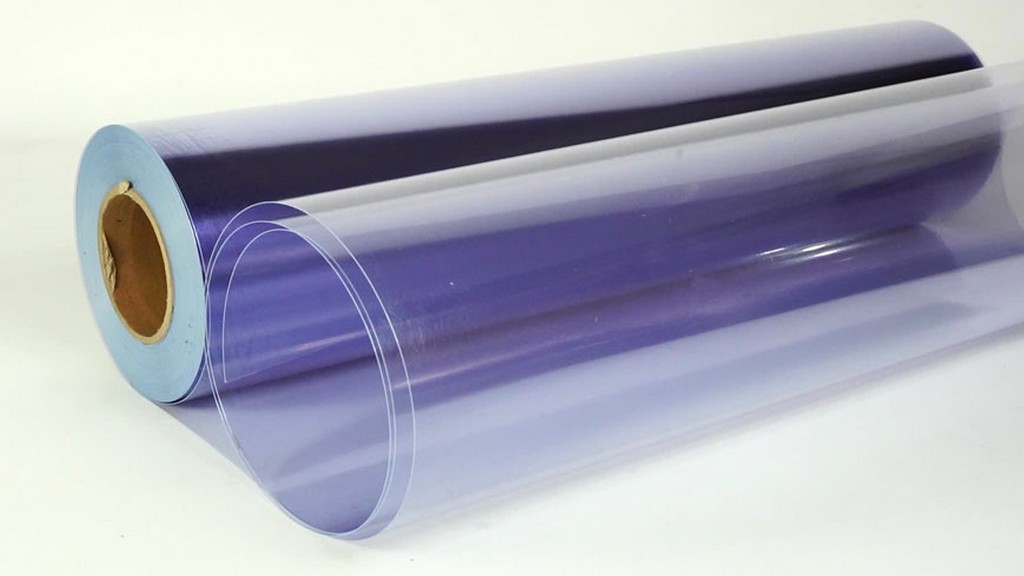
Films supplied in rolls or in stacked sheets are in contact with two surfaces. During sampling, care should be taken to ensure that the surfaces to be tested do not come into contact with any other material. In the case of a roll, this is achieved by discarding the outer layer and opening a sample without touching the areas to be tested. In the case of a stack, several sheets are stacked together and the outermost sheets are discarded before testing. Actual samples for testing should be taken from these samples immediately before the tests are carried out.
Tests are carried out in a standard laboratory atmosphere. The test sample is placed on the ground plate of a hand coating machine. A few drops of the test mixture are applied to the film in front of the wire rod and spread immediately by pulling the rod. If a brush or cotton swab is used to spread the test mixtures, the liquid should spread rapidly over a minimum area. The amount of liquid should be such that it forms a thin film without puddles.
The liquid film of the test mixture is observed under bright illumination and the time taken for the continuous liquid film to break up into droplets is noted. If the liquid film remains together for more than 2 seconds, the test is repeated on a new sample of the mixture with the next higher surface tension until the liquid film breaks apart in less than 2 seconds. If the liquid film remains together for less than 2 seconds, proceed to lower surface tensions until the film persists for 2 seconds.
Among the numerous testing, measurement, analysis and evaluation studies that our organization has carried out for businesses in various sectors, it also provides testing services defined in the “ISO 8296 Plastics - Films and sheets - Determination of wetting tension” standard with its trained and expert staff and advanced technological equipment.
To get an appointment, to get more detailed information or to request an evaluation, you can ask us to fill in our form and reach you.

